
HomeKabaddiAsian Games 2026 Kabaddi: India's Schedule, Timings, Live Streaming and the Real Picture of the Title Race
Kabaddi
Asian Games 2026 Kabaddi: India's Schedule, Timings, Live Streaming and the Real Picture of the Title Race
এশিয়ান Games ২০২৬-এর কাবাডি প্রতিযোগিতা হবে জাপানের আইচি-নাগোয়ায়, ২১ থেকে ২৬ সেপ্টেম্বর ২০২৬, ভেন্যু টোকাই সিটিজেন্স জিমনেশিয়াম। ভারতীয় পুরুষ দলের অধিনায়ক সুনীল কুমার, প্রধান Coach বলবন সিং, ডেপুটি Coach বিসি রমেশ; ১২ জনের স্কোয়াডের বাকি নাম এখনো ঘোষিত হয়নি। ভারত রেকর্ড আটবার স্বর্ণপদক জিতেছে, তবে 'টানা সাত' ধারাবাহিকতা ২০১৪-তে শেষ হয়েছিল—২০১৮ জাকার্তায় ফাইনালে ইরানের কাছে হেরে। তাই ভারত বৈধ ফেভারিট হলেও প্রধান প্রতিদ্বন্দ্বী ইরান; দ্বিতীয় স্তরে দক্ষিণ কোরিয়া। Format (গ্রুপ পর্ব বা সরাসরি নকআউট) ও ড্র এখনো প্রকাশ্যে নয়। দর্শকদের জন্য সূচি ও লাইভ স্ট্রিমিং সংক্রান্ত তথ্য অফিসিয়াল সম্প্রচারক ও অলিম্পিক কাউন্সিল অব এশিয়ার প্রোগ্রাম থেকে যাচাই করা উচিত।
The 2026 Asian Games kabaddi competition is still months away, but Indian sports fans are already looking towards Aichi and Nagoya in Japan. The 20th edition of the continental multi-sport event runs from 19 September to 4 October, and kabaddi's six-day battle is slotted within it, from 21 to 26 September, at the Tokai Citizens Gymnasium in Aichi. India's men's team arrives with a mission to turn a dynasty narrative into reality; the women's side, with a comparably dominant record, will be alongside them.
Kabaddi is South Asia's oldest contact team sport and India's second-most-watched sports property after cricket. Yet it is almost unknown in China, East Asia and Europe. So the rules need one clear pass before any analysis.
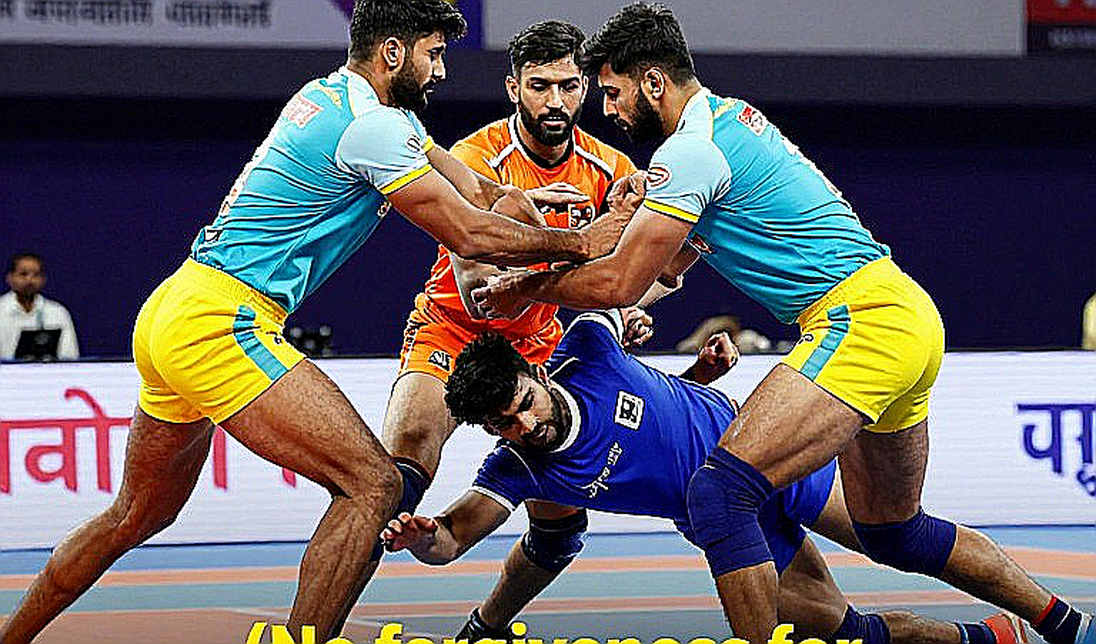
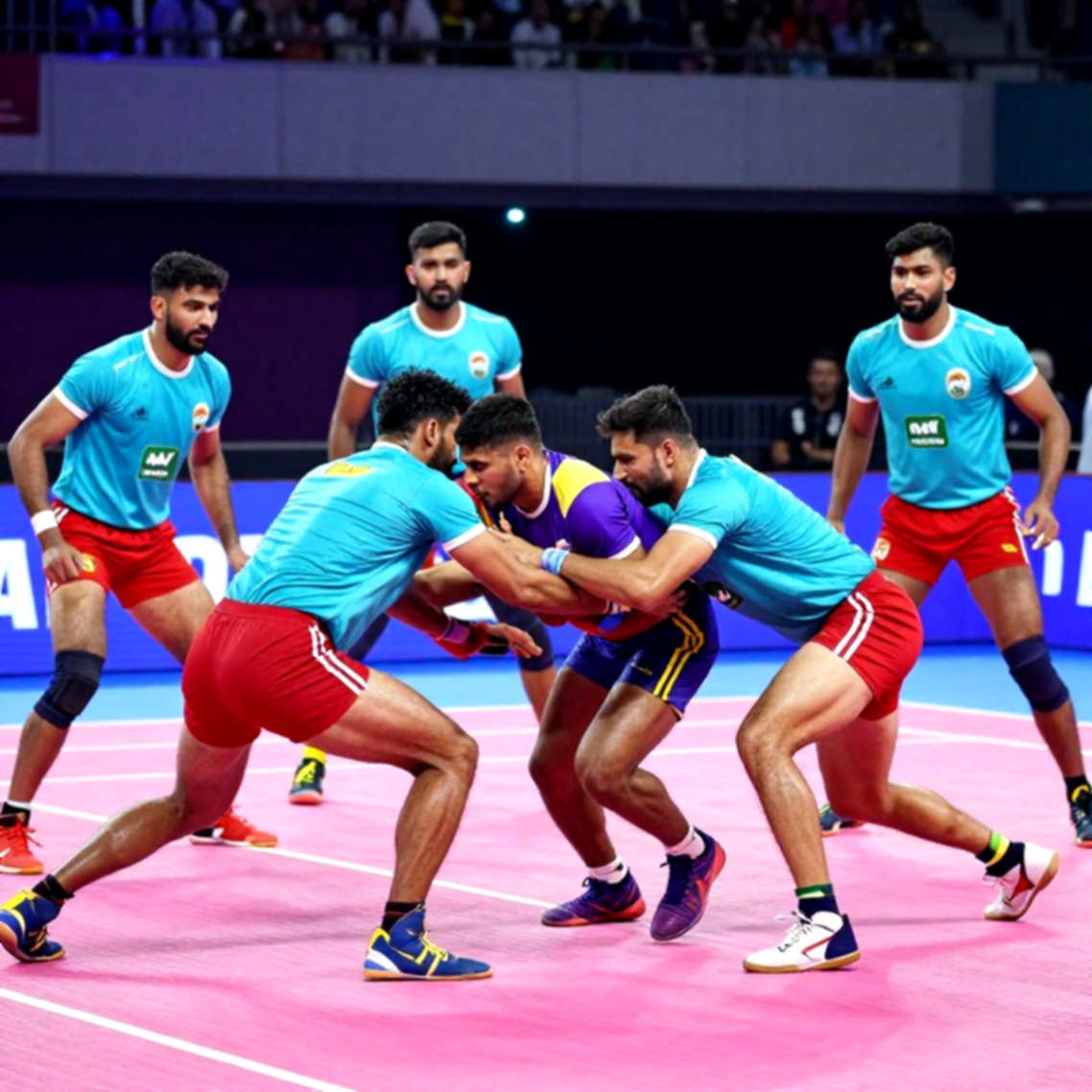
At the centre of the game is the raid. The attacking player—the raider—enters the opponent's half within a 30-second limit, touches a defender and returns safely to his own half to score. If the defending side collectively stops the raider inside their own half, that is a tackle, and they score too. Throughout the raid the raider must continuously chant 'kabaddi, kabaddi'—the cant. If the chant breaks, the raid is void. The rule is essentially a breath test, an old method of proving the raider is not inhaling.
Scoring is fast-moving. Every successful touch or tackle is 1 point. When all of a side's players are ruled out—an all out—the opponent gets 2 bonus points and the entire team revives: a 'team-wipe reset'. Crossing the bonus line, marked deep in the opponent's half, earns 1 point, provided the defending side has six or more players on court. And after two consecutive empty raids, the third becomes a do-or-die raid—if it scores nothing, the raider himself is out.
The Asian Games uses Standard Style, the rectangular-court international variant also used by Pro Kabaddi League. Punjab's rural Circle Style does not apply. Matches are 7 v 7 across two 20-minute halves, with eleven of a 12-man squad taking the mat. Over a six-day tournament, that squad depth is India's core strength.
Sunil Kumar captains the side. He is a recognised corner defender—in kabaddi terms, the anchor of the defensive unit. Balwan Singh is head coach; BC Ramesh is deputy. Those three names are the confirmed personnel in the report. The other names of the 12-man squad have not been published, which is the biggest factual gap here. A kabaddi team's attacking identity is defined by its lead raiders; without that list, tactical analysis remains incomplete. The reasonable inference is that the squad is being announced in stages and was not final at the time of writing.
Historically, India is the most successful men's kabaddi nation at the Asian Games: seven consecutive golds from 2026 through 2026. But presenting that run as unbroken dominance is misleading. At the 2026 Jakarta Asian Games, Iran beat India in the final—the direct end of that streak. At the next edition (Hangzhou 2026), India took the title back by beating Iran in the final again. The accurate sentence is therefore: India has won a record eight golds, but 'seven consecutive' describes a specific historical phase, not proof of current invincibility.
That is exactly why India's prospects cannot be analysed with Iran left out. Iran's wrestling-derived physical defence has repeatedly disrupted India's raid-heavy attack, and Iran is the only side with the experience of beating India in a knockout under this exact rule set. The second tier is South Korea, with several players in the Pro Kabaddi League and genuine medal claims. Bangladesh, Pakistan and Chinese Taipei sit in the catch-up tier, but in a short knockout format a single bad day is dangerous for anyone. Hosts Japan are still developing; home support may lift their profile, but a medal threat within the 2026 cycle is unlikely.
Tactically, there is a visible tension. The report describes India's style as 'raid-heavy, attacking-oriented'—yet the captain, Sunil Kumar, is a defender. That is not unusual in kabaddi; many sides build attacks on defensive stability. But the description is unsupported by any statistic: nowhere are successful raid rates, tackle points or point differentials cited. Claims about 'depth' or 'combined leadership' are therefore promotional adjectives, not analysis.
In a compressed six-day event, India's biggest challenge is rehearsal time. Teams normally build rhythm across a long league season; that is not possible here. Set-piece raiding schemes, decision-making under do-or-die conditions and bonus-line usage are where the real margins will appear. A 30-second raid clock plus the cant rule means that if a raider's chant breaks under pressure, points are lost and the opponent's confidence rises. Meanwhile, the 2 bonus points for an all out are precisely what makes kabaddi so comeback-friendly—a ten-point lead can vanish in minutes.
The competition format—group stage or direct knockout—and whether the draw puts Iran on the opposite side of India's bracket are not yet public. When that information lands, the risk assessment changes. Likewise, kabaddi's inclusion and event format for 2026 should be verified against the Olympic Council of Asia's official programme; the report itself does not guarantee it.
On broadcast and media, schedule and live-streaming pieces are among the highest-traffic categories in Indian sports media. The title's inclusion of 'results' for a future event makes clear this is a live-updating hub page, edited through the tournament. The commercial meaning is that India has sustained, high-intent demand for kabaddi content—largely a downstream effect of the PKL media ecosystem. That demand is still concentrated among domestic and diaspora South Asian audiences; there is no basis for calling kabaddi a globally followed sport.
Culturally, kabaddi is more than a game in India—it is a vehicle of national confidence. The dominant social narrative is 'the village boy who changes his fate through kabaddi'. Players overwhelmingly come from rural families, and absorption into government, railway and police jobs is the retention mechanism. The Arjuna Award-to-employment incentive chain keeps the grassroots alive. In that context, an Asian Games medal is not just a medal; it is an incentive signal for the whole talent chain.
Women's kabaddi is part of that story too. Since the women's event joined the Asian Games in 2026, India's women have held a comparably dominant record. The report only gestures at this, which narrows the analytical scope.
The biggest risk, however, is not competitive but informational. Not one information point in the source carries a verifiable citation—squad, coaches and venue are all unverified. That makes it hard for a reader to separate confirmed fact from filler. The second risk is the expectation trap: reading 'seven consecutive golds' as current invincibility turns a single bad knockout day into a major disappointment. The third is administrative—selection and eligibility disputes have historically disrupted Indian squads.
In sum: India are legitimate favourites under this rule set, but that favouritism comes from structural advantage and league professionalism, not from an unbeatable tradition. Any preview written without Iran is incomplete. From 21 to 26 September at the Tokai Citizens Gymnasium, six short days will decide whether India's eighth gold is a new chapter—or another story of a stumble.
Related Players
Recommended
Pawan Sehrawat Left Out, No Asian Games Gold Medalists Either: What India's 17-Member Probables List for the Commonwealth Kabaddi Championship 2026 Really Says2026-10-06
The Arithmetic Inside 49–24: What India Showed Against Japan, and What Remains Unproven2026-09-24
The Warning Buried in Six Lines: India's Kabaddi Defence and the Iran Reckoning2026-10-21
A Changed Captain, the Arithmetic of Mud, and Seven Names Missing: Inside India vs Japan at the Asian Games 2026 Kabaddi Mat2026-09-30
Six Feet of Air and a ₹2.6 Crore Trap: The Autopsy Behind India's 49-242026-09-24
The Kabaddi File That Was Empty — And Why That Empty Cell Is Kabaddi's Most Honest Document2026-10-26
Asian Games 2026 Kabaddi: India's Schedule, Timings, Live Streaming and the Real Picture of the Title Race2026-11-03
One Breath, One Sport: How Kabaddi Moved From the Village Field to the Business Arena2026-11-02
Recommended
From 17 to 12: India's Rotated Squad and the Expectation Gap in Ahmedabad2026-10-20
Women's Kabaddi: The Scores Nobody Wrote Down2026-11-02
India Face Thailand and Nepal in Asian Games 2026 Kabaddi Semifinals: Gold Expectation and the Invisible Risk Ledger2026-10-21
Surjeet Singh Captain, Naveen Kumar Deputy: India's Commonwealth Kabaddi Announcement Named Leaders Without Naming a Competition2026-10-22
The Final That Has Not Been Played: Inside and Outside a 37-34 Scoreline2026-09-29
The Kabaddi File That Was Empty — And Why That Empty Cell Is Kabaddi's Most Honest Document2026-10-26
The Warning Buried in Six Lines: India's Kabaddi Defence and the Iran Reckoning2026-10-21
Commonwealth Kabaddi Championship 2026: The Missing 14-Nation List and the Real Story Behind the Asian Games Gold Medalists' Exclusion2026-10-13
Recommended
India 48-25 Bangladesh: The Defensive Crack Hidden Inside the Scoreline2026-10-15
Aichi-Nagoya 2026: Sunil Kumar's Armband, Pawan Sehrawat's Flag, and Kabaddi's Fractured 30 Seconds2026-09-24
Asian Games 2026 Kabaddi: The Accounting Nobody Is Doing Behind India Men's 'Shaky Defence' Before Iran2026-09-24
The Invisible Architecture of Kabaddi: The Rules That Build the Sport and the Errors the Media Makes2026-10-31
Asian Games 2026 Kabaddi: A 12-Man List, One Missing Raider, and a Torn Page in India's Gold Ledger2026-09-24
62 Matches, 13 Nations, 9 Days — and Kabaddi's No. 2 Is Not on the List2026-10-22
India's Kabaddi Golden Double at the Asian Games: The Story Buried Behind the Women's Fourth Gold2026-10-07
Before India vs Bangladesh, the Real Question Isn't on the Scoreboard — It's in the Defensive Third2026-09-24
Recommended
Surjeet Singh Captain, Naveen Kumar Deputy: India's Commonwealth Kabaddi Announcement Named Leaders Without Naming a Competition2026-10-22
The Do-or-Die Trap: Where India's Kabaddi Defence Gets Caught by Iran at the Asian Games2026-09-24
Asian Games 2026 Kabaddi: India's Seven-Gold Ledger, and the Iran It Leaves Out2026-09-24
Behind the 48-25 Scoreline: India's Defensive Leak at Asian Games 2026 Kabaddi2026-09-24
Asian Games Kabaddi: Eleven Bonus Points Inside India's 42–21 Win and the Question Bangladesh Left Open2026-09-24
India Face Thailand and Nepal in Asian Games 2026 Kabaddi Semifinals: Gold Expectation and the Invisible Risk Ledger2026-10-21
The Trap of 17 Bonus Points: What India's 63-31 Against South Korea Really Proves2026-10-02