
India 48-25 Bangladesh: The Defensive Crack Hidden Inside the Scoreline
It was a quarter past one in the morning. Five of us sat around a laptop in a...
It was a quarter past one in the morning. Five of us sat around a laptop in a rented flat in Gulshan-e-Iqbal, Karachi, the stream running thirty-five seconds behind, so that when someone shouted we had not yet seen anything — an odd, hollow kind of shout. Cups of tea, plastic chairs, one phone in someone's hand, and on the screen the 2026 Asian Games kabaddi from Aichi-Nagoya.
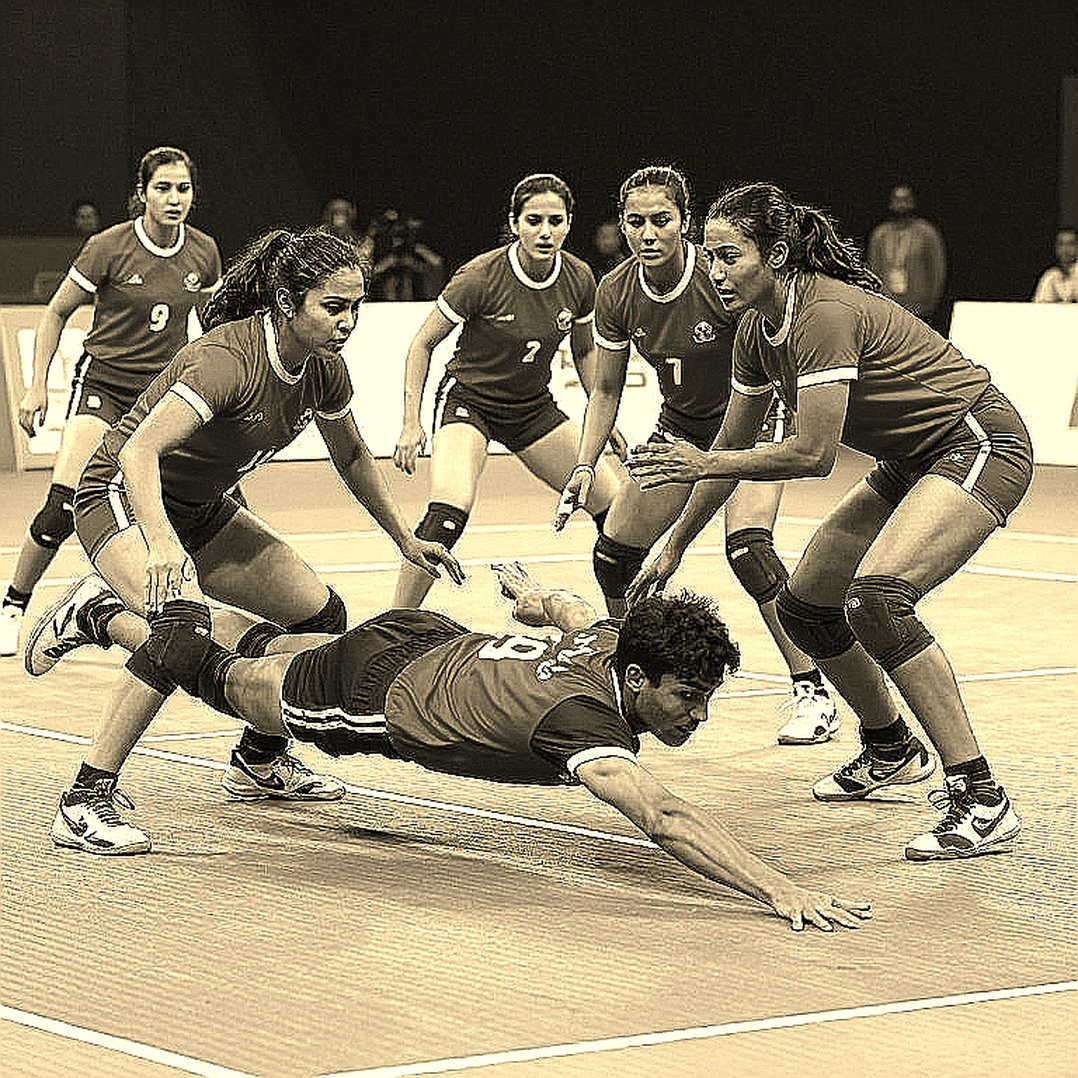
On paper the match was nothing much. India 48, Bangladesh 25, and 29-9 at half-time. India had sealed a semi-final place with a third win from three group games, leaving only a formality on 24 September, 2026, at 09:45 against Chinese Taipei.
But sitting in that room, one small thing caught my eye, something no scoreboard records. In the 34th minute a Bangladesh raider slipped through a gap on India's left, touched no one at all, crossed the bonus line and walked back. One point went up. No tackle, no contact. A friend beside me, who has played club kabaddi in this city for five years, put down his tea and said: “They cannot win a touch, so they are taking the line. And nobody is closing that line.”
What looks from outside like a comfortable 23-point win was, inside, one specific crack — and that crack is the only genuinely new information this match produced.
My own beat did not start in a room like this. It started on an empty terrace, in the quiet. That is where I learned that the stands speak before the scoreboard does — and when there are no stands, what speaks is the gaps nobody wants to count.
The context without which the numbers mean nothing
Asian Games kabaddi is played in the international standard format: seven against seven on a rectangular court, two halves of twenty minutes. India play standard style here, not the rural circular Punjab variant. The rules, briefly. The raider must chant “kabaddi, kabaddi” without a break, and must return within thirty seconds or be declared out himself. Touching a defender and returning safely is one point; pinning the raider in your own half is one point. The bonus line runs one metre behind the defenders' line — crossing it while the defending side has six or more players on court earns one point with no touch required. When all seven of a side are dismissed, the opponent takes two points and the whole dismissed side revives; that all out is what swings a match. There is also the super tackle, worth two points when completed with three or fewer defenders on court, the super raid for three or more points in a single raid, and the do-or-die raid that follows two empty raids, where failure puts the raider out.
India's history matters too. Seven straight Asian Games golds from 2026 to 2026, that run broken by Iran in 2026, reclaimed in 2026, with 2026 chasing a ninth. Group A holds India, Bangladesh, Japan, South Korea and Chinese Taipei. India had already beaten Japan and Korea; Bangladesh was the third win.
Bangladesh's story is more interesting. Kabaddi is their national sport, yet the country has no professional league of Pro Kabaddi League scale. A