
HomeKabaddiIndia's Double Crown: Men's and Women's Titles at Commonwealth Kabaddi, But the Competitive Standard Remains in Question
Kabaddi
India's Double Crown: Men's and Women's Titles at Commonwealth Kabaddi, But the Competitive Standard Remains in Question
কমনওয়েলথ কবাডি চ্যাম্পিয়নশিপ ২০২৬-এ ভারত পুরুষ ও নারী দুই বিভাগেই চ্যাম্পিয়ন হয়েছে। পুরুষ ফাইনালে ভারত শ্রীলঙ্কাকে ৫৪-২০ এবং নারী ফাইনালে উগান্ডাকে ৩৫-১৫ হারায়; ভেন্যু ভীর সাভারকার স্পোর্টস কমপ্লেক্স, ভারত দুই বিভাগেই অপরাজিত। পুরুষ দলে আদিত্য শিন্দে সুপার টেন (১০ পয়েন্ট, ১৪ রেইড) পান, ভারত হুডা ৮ রেইড পয়েন্ট নিয়ে একবারও ট্যাকল হননি, যোগেশ দহিয়া ৫ ট্যাকল পয়েন্ট নেন। নারী দলে সাক্ষী ৯, অনু সেন ৬, নিধি শর্মা ৫ পয়েন্ট পান; রিতু মিথারওয়াল ও সুমন সাহু প্রত্যেকে ৪ ট্যাকল পয়েন্ট নেন। নারী ম্যাচের Statisticsে অসঙ্গতি রয়েছে — দলগত রেইড পয়েন্ট ১০ বলা হলেও তিন খেলোয়াড়ের যোগফলই ২০। এই আসরে ইরান, বাংলাদেশ ও দক্ষিণ কোরিয়া অংশ নেয়নি, তাই শিরোপাটিকে প্রতিযোগিতামূলক র্যাঙ্কিংয়ের প্রমাণ নয়, বরং ব্র্যান্ডিং অর্জন হিসেবে দেখা উচিত।
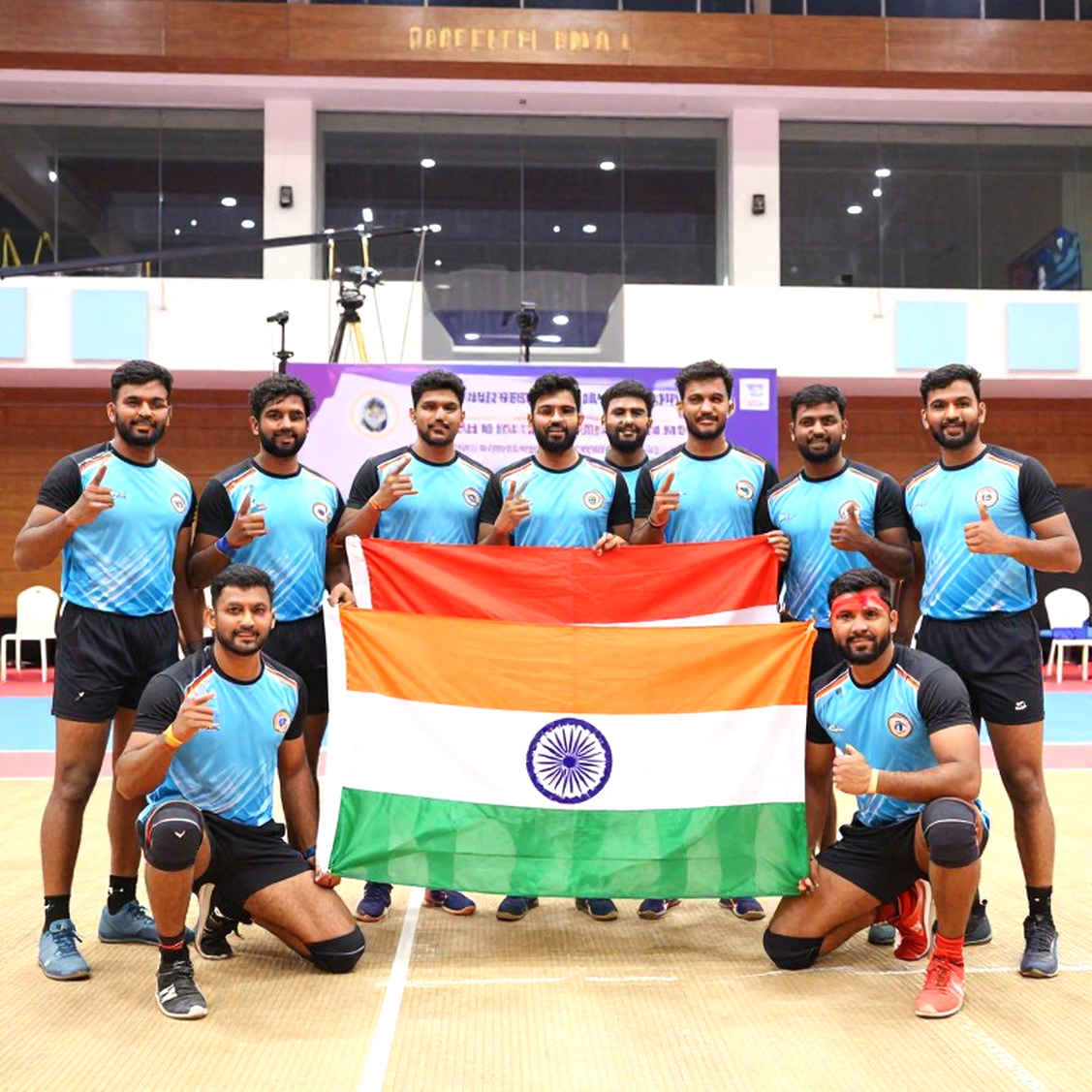
India has won both the men's and women's titles at the Commonwealth Kabaddi Championship 2026. In the inaugural edition's men's final, hosts India beat Sri Lanka 54-20; in the women's final they beat Uganda 35-15. The venue was the Veer Savarkar Sports Complex, and India went unbeaten across both categories. The margin of the titles is large, but whether the result should be read as global dominance is another question entirely — because Iran, Bangladesh and South Korea, India's genuine rivals, were not in the field.
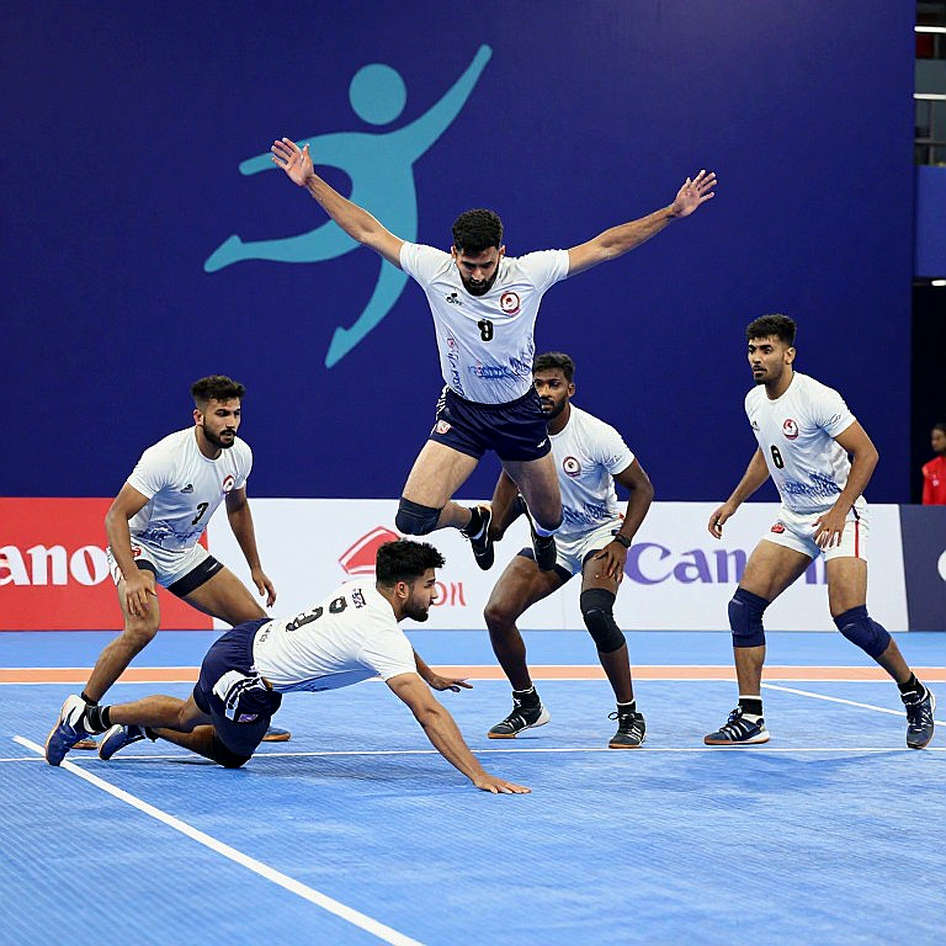
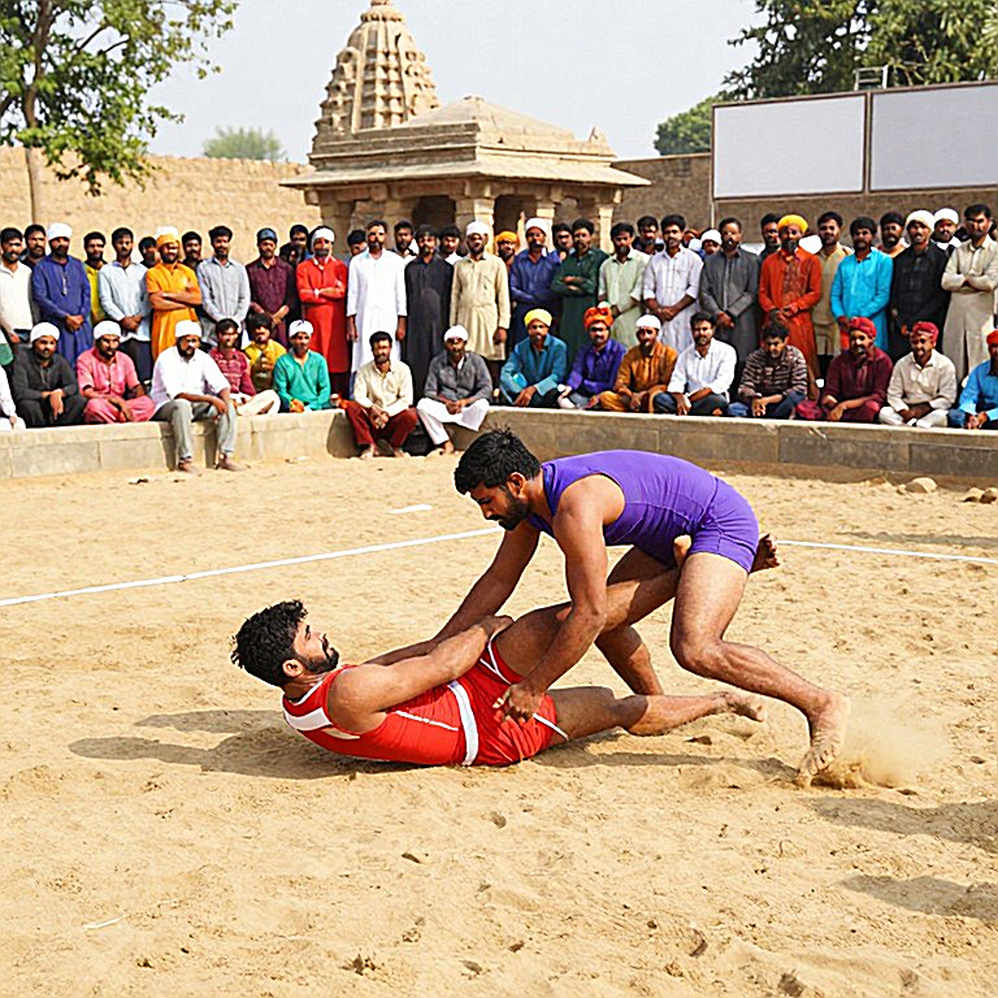
A primer first, for readers with no kabaddi background. A raider enters the opponent's half within a 30-second limit and scores by touching a defender and returning safely to his or her own half. Defenders who stop the raider inside their own half complete a tackle. Throughout the raid the raider must chant 'kabaddi' continuously, proving he or she is not inhaling; if the chant breaks, the raid is void. When an entire side is ruled out, the opponent earns two bonus points and the wiped-out team is fully revived — this all-out rule is the engine of kabaddi's famous swings. A single raid worth three or more points is a super raid; a tackle completed with three or fewer defenders on court is a super tackle, worth two points; ten or more raid points in a match is a super ten; and crossing the bonus line earns one point, but only when the defending side has six or more players on court.
Of these mechanics, the all-out rule is the main explanation for the scale of both finals. India inflicted two all-outs in the women's final and four in the men's final. Each time, the opposition returned structurally weaker, and the margin compounded. Neither match should be read as a tactically stretched contest — the source report itself calls both one-sided affairs.
In the men's final, India's attack ran through Aditya Shinde, who took 10 points from 14 raids for a super ten — roughly 71 percent raid productivity, above the benchmark for elite professional-league raiders. Supporting raider Bharat Hooda scored eight raid points and was not tackled once; that single statistic is the clearest evidence of India's raiding depth. Yogesh Dahiya led the defence with five tackle points, three others chipped in two each, and the team total was 14 tackle points — distributed rather than star-dependent. The overall arithmetic nearly closes: 30 raid points plus 14 tackle points is 44, plus eight from four all-outs gives 52, two short of the final score, plausibly from bonus points.
Sri Lanka's side of the ledger is the opposite. Their 11 raid points and nine tackle points sum to exactly 20 — internally consistent. But no player other than Maduwantha passed five points. A one-dimensional attack was a major contributor to the margin.
In the women's final, India split the attacking load three ways — Sakshi 9, Anu Sen 6, captain Nidhi Sharma 5. Nobody reached a super ten, so the offence was balanced but not explosive. In defence, Ritu Mitharwal and Suman Sahu took four tackle points each. The team's 20 tackle points against 10 raid points show the win was built primarily on defence. Of Uganda's 15 points, 11 came from Nakayongo Shirat; since Uganda recorded only one raid point, Shirat's tally almost certainly came from tackles — meaning she was operating as a defender.
There is, however, a deep inconsistency in the women's figures that must be flagged. The report states India's raid points were only 10, yet lists Sakshi 9, Anu Sen 6 and Nidhi Sharma 5 — a sum of 20. Both cannot be true. Either the figure of 10 is an error, or the individual 'points' include tackle points. Any confident tactical reading of the women's final should therefore be tempered.
Tactically, India's headline is depth, not a single star. The men's 30 raid points were shared across multiple raiders; the women's 20 combined points came from several hands. One caution is due, though: this Indian side is probably not the first string. India's top professional stars typically do not turn out for a low-prestige inaugural 'Commonwealth' event, which can inflate apparent efficiency against weaker opposition. A second gap is obvious — the report offers no evidence of how this side performs against an Iran-style chain-tackle defence, so any claim of tactical invincibility would be unsupported.
To place the event, a structural point matters: the field is confined to Commonwealth member nations, and Iran is not one. By design, therefore, India's true rival cannot appear. The event sits clearly below the Asian Games and the Asian Championship in prestige. 'Commonwealth champion' should be read as a branding title, not a ranking statement.
Culturally, the event's function is Indian soft-power projection. Kabaddi claims roughly 4,000 years of South Asian origin and is positioned as a grassroots, mud-born sport — the opposite of cricket's colonial colouring. Repackaging it in Commonwealth vocabulary, staged at home before home crowds and at minimal competitive risk, is a convenient way to amplify national pride.
Two things are nonetheless positive. Uganda's women reaching a final and Sri Lanka's men doing the same signal genuine, if small, grassroots penetration through the Commonwealth channel — not yet a competitive threat, but a meaningful trend.
Three tests lie ahead. First, whether a second edition materialises at all — that is the real measure of any inaugural event. Second, whether Iran, Bangladesh or South Korea enter in future; only then does the title carry competitive weight. Third, how far a bid to include kabaddi in the Commonwealth Games progresses.
In short: India's double title is real and was earned on home soil, but it is a competitively soft achievement. It deserves credit — provided the credit does not grow larger than the evidence.
Related Players
Recommended
No Pawan Sehrawat, No Asian Games Gold Medallists: What India's 17-Player Probables List for the Commonwealth Kabaddi Championship 2026 Says — and What It Doesn't2026-10-06
The Trap of 17 Bonus Points: What India's 63-31 Against South Korea Really Proves2026-10-02
Asian Games 2026: Indian women's kabaddi team clinch gold by defeating Iran 37-34; Pushpa Rana's all-out and an unresolved arithmetic2026-09-27
From 17 to 12: India's Rotated Squad and the Expectation Gap in Ahmedabad2026-10-20
What 44-30 Hides: India Won the Commonwealth Kabaddi Opener on Tackles and All-Outs, Not Raiding2026-10-25
Asian Games 2026: Kabaddi Begins September 21, But No Channel Has Been Named2026-09-24
Women's Kabaddi's Fourth Gold: The Number That Shows India's Dominance Also Hides a History of Contest2026-10-18
India's Kabaddi Golden Double at the Asian Games: The Story Buried Behind the Women's Fourth Gold2026-10-07
Recommended
Pawan Sehrawat Left Out, No Asian Games Gold Medalists Either: What India's 17-Member Probables List for the Commonwealth Kabaddi Championship 2026 Really Says2026-10-06
Commonwealth Kabaddi Championship 2026: Seventeen Probables, Twelve Resting Gold Medallists, and the Question Left Open2026-10-30
Asian Games 2026: Indian women's kabaddi team clinch gold by defeating Iran 37-34; Pushpa Rana's all-out and an unresolved arithmetic2026-09-27
From 17 to 12: India's Rotated Squad and the Expectation Gap in Ahmedabad2026-10-20
Surjeet Singh Captain, Naveen Kumar Deputy: India's Commonwealth Kabaddi Announcement Named Leaders Without Naming a Competition2026-10-22
Nagoya's 'Unbeaten' Is Kabaddi's Least Useful Number — The Real Signal From the 2026 Asian Games Semifinals2026-09-25
The Do-or-Die Trap: Where India's Kabaddi Defence Gets Caught by Iran at the Asian Games2026-09-24
Kabaddi Champions League: The Rs 19.2 Lakh Ceiling, Five Haryana Cities, and a League's Identity Crisis2026-10-16
Recommended
Six Feet of Air and a ₹2.6 Crore Trap: The Autopsy Behind India's 49-242026-09-24
Commonwealth Kabaddi 2026: In a Thirteen-Nation Field, India's Real Opponent Is the Calendar2026-10-23
Asian Games 2026: Kabaddi Begins September 21, But No Channel Has Been Named2026-09-24
Asian Games 2026: Indian women's kabaddi team clinch gold by defeating Iran 37-34; Pushpa Rana's all-out and an unresolved arithmetic2026-09-27
The Arithmetic Inside 49–24: What India Showed Against Japan, and What Remains Unproven2026-09-24
India's Kabaddi Golden Double at the Asian Games: The Story Buried Behind the Women's Fourth Gold2026-10-07
Asian Games Kabaddi: Eleven Bonus Points Inside India's 42–21 Win and the Question Bangladesh Left Open2026-09-24
A 'Live' Blog Without a Starting Seven: India's Real Asian Games Kabaddi Risk Isn't Japan, It's One Raider2026-10-30
Recommended
Asian Games 2026 Kabaddi: A 12-Man List, One Missing Raider, and a Torn Page in India's Gold Ledger2026-09-24
Not the Strongest Squad, the Bravest Call: India's Kabaddi Experiment in Ahmedabad2026-10-17
Commonwealth Kabaddi 2026: The Hidden Women's Draw Behind the 62-Match Arithmetic2026-10-22
India's Kabaddi Golden Double at the Asian Games: The Story Buried Behind the Women's Fourth Gold2026-10-07
Watching Kabaddi From the Third Lane: Sunil Kumar's Captaincy and Pawan's Flag — the Real Headline of India vs Japan Sits Somewhere Else2026-09-23
Asian Games 2026: Indian women's kabaddi team clinch gold by defeating Iran 37-34; Pushpa Rana's all-out and an unresolved arithmetic2026-09-27
Big Kabaddi News, Small Sources: Four Tiers of Information Behind the Mat2026-11-01
Asian Games 2026: Bangladesh Fall 42-21 to India as Women's Kabaddi Title Defence Opens2026-10-01