
Commonwealth Kabaddi 2026: The Hidden Women's Draw Behind the 62-Match Arithmetic
**মূল উত্তর:** কমনওয়েলথ কাবাডি চ্যাম্পিয়নশিপ ২০২৬ শুরু ২৩ অক্টোবর, আহমেদাবাদে; ৯ দিনে ৬২ ম্যাচ, যার ৩৯ পুরুষদের ও ২৩ নারীদের। ৬২ ম্যাচের অঙ্ক বলছে এটি গ্রুপ পর্ব ও নকআউট Format, নারী ড্রে দলসংখ্যা ৬-৮; ইরান ও দক্ষিণ কোরিয়া কমনওয়েলথ সদস্য নয় বলে অনুপস্থিত। **মূল তথ্য:** - সময়সূচি: ২৩-৩১ অক্টোবর ২০২৬, আহমেদাবাদ; আয়োজক একেএফআই, অনুমোদন আইকেএফ। - ম্যাচ: মোট ৬২ — পুরুষ ৩৯, নারী ২৩; সেমিফাইনাল ৩০ অক্টোবর, ফাইনাল ৩১ অক্টোবর। - অংশগ্রহণকারী ১৩ দেশ; ইরান, দক্ষিণ কোরিয়া ও পাকিস্তান তালিকায় নেই। - সম্প্রচারক, পুরস্কারমূল্য, অ্যান্টি-ডোপিং প্রোটোকল — কোনোটিই ঘোষিত হয়নি। - ভারত পুরুষ দলের অধিনায়ক সুরজিৎ সিং, সহ-অধিনায়ক নবীণ কুমার; নারী দলের অধিনায়ক নিধি শর্মা, সহ-অধিনায়ক রিতু। **সূত্র:** কমনওয়েলথ কাবাডি চ্যাম্পিয়নশিপ ২০২৬ আয়োজক কমিটির প্রচারপত্র, প্রকাশ ২১ অক্টোবর ২০২৬; মূল প্রতিবেদনে সংবাদমাধ্যমের নাম উল্লেখ নেই। **সম্পর্কিত প্রশ্নোত্তর:** প্রশ্ন: নারীদের ড্রে আসলে কত দল? উত্তর: ২৩ ম্যাচের হিসাবে বাস্তব সংখ্যা ৬ থেকে ৮ দল, ১৩ নয়। প্রশ্ন: ইরান কেন নেই? উত্তর: ইরান কমনওয়েলথ সদস্য নয়, তাই অনুপস্থিতি কাঠামোগত, রাজনৈতিক নয়। প্রশ্ন: কাবাডির অলিম্পিক প্রবেশ সম্ভব? উত্তর: স্বল্প ও মধ্যমেয়াদে সম্ভাবনা কম; কমনওয়েলথ Games ২০৩০-এর পথ অনেক বেশি বাস্তব।
On the morning of October 21, 2026, the organisers of the Commonwealth Kabaddi Championship unveiled the jersey, the logo, the mascot and a tournament anthem of their own. The first match is on October 23, at an indoor arena in Ahmedabad. That leaves 48 hours of media runway for a nine-day, 13-nation event with more than 400 athletes.
Four numbers keep returning in the press pack: 62 matches, nine days, 13 countries, 400-plus players. Put them side by side on paper and the story reads smoothly. Thirty-eight years of digging through kabaddi ledgers has taught me that the numbers nobody bothers to print usually carry more truth than the smooth story. Here the missing numbers are two: who is broadcasting, and what the prize purse is worth.
Context
The organiser is the Amateur Kabaddi Federation of India, working with approval from the International Kabaddi Federation. The schedule splits into 39 men's matches and 23 women's matches, 62 in total. Semifinals fall on October 30, finals on October 31. The 13 entrants are India, Bangladesh, Sri Lanka, Nigeria, Kenya, Tanzania, Uganda, Canada, Singapore, Malaysia, England, Scotland and Australia.
The rule frame matters, because the arithmetic starts there. A 30-second raid, a continuous kabaddi cant, seven-man tackles, two points and a full revival on an all out, the do-or-die raid after two empty ones, and a super tackle when three or fewer defenders remain. Those rules manufacture a particular kind of match: scores swing, comebacks are structural, and a single error can move five or six points. Ahmedabad is the host city attached to a Commonwealth Games 2030 bid, and that is the real target of this week.
Core
Start with the arithmetic. If 13 nations entered the men's draw, a full round-robin is 78 matches. Seventy-eight matches in nine days is impossible, especially with 23 women's matches running alongside. So how do 13 teams fit into 39 matches? The answer is a group stage plus knockout, most likely two groups of six or seven with cross-pool semifinals. Every team plays four to six matches at most.
That is the first crack. If the stated aim is introducing kabaddi to new markets, what does four matches per country actually deliver? In 2026 I went through the Rangpur district registers and found that a genuine U-18 side's progress cannot be measured on fewer than eight to ten competitive matches. Four matches teach nobody and prove nothing. In 2026, after the Rangpur U-18 league was cancelled, I tracked 22 players for three months; that season the Rangpur U-18 side was not a team, it was a dig site with too few shovels.
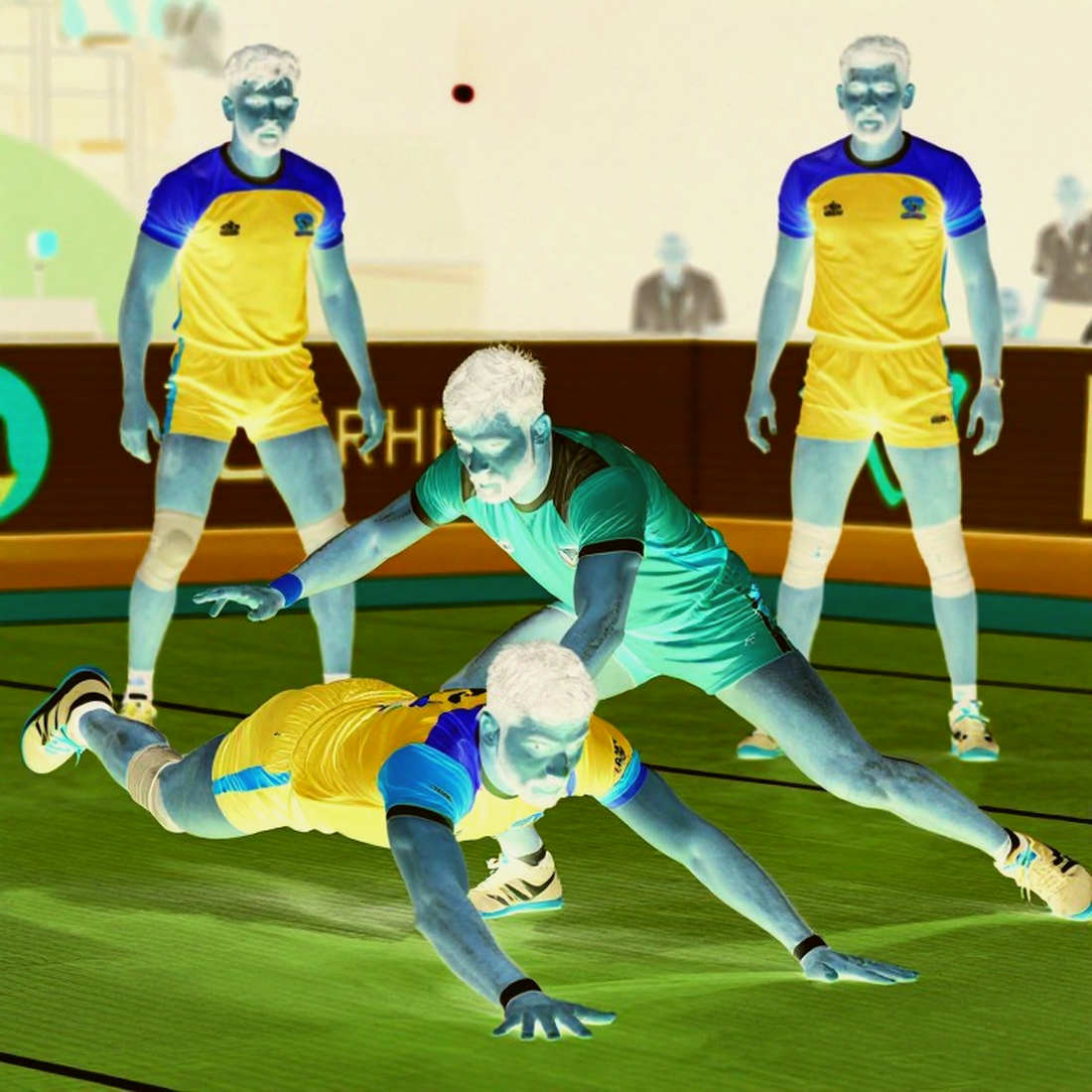
The second calculation is sharper. Twenty-three women's matches means the women's draw is materially smaller than the men's, realistically six to eight teams. The phrase 13-nation championship describes the combined entry, not the per-gender entry. The press pack never says so, and that is where the most interesting politics sits.
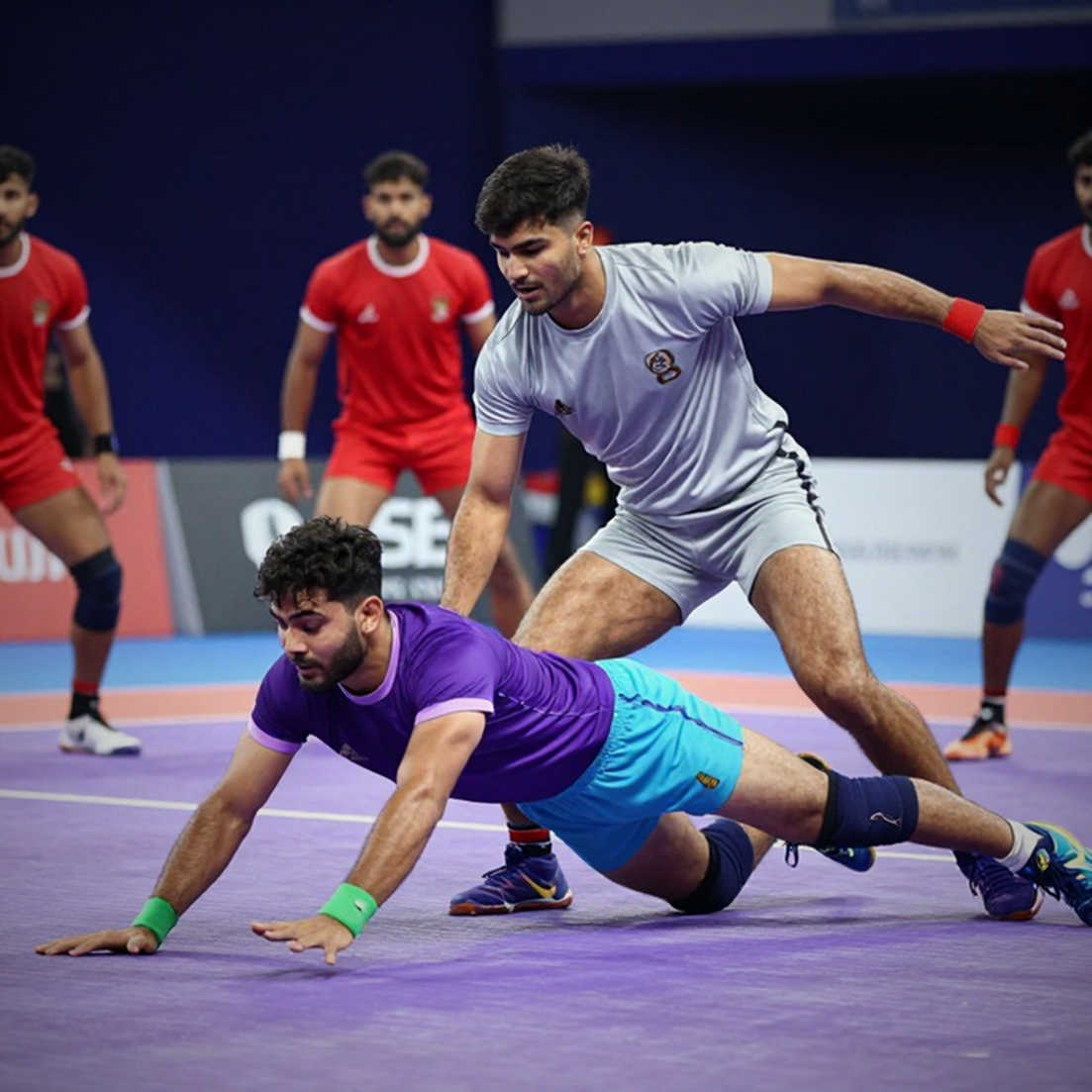
The third calculation is the uncomfortable one. Iran is not on the list. South Korea is not on the list. Pakistan is not on the list. Iran is kabaddi's undisputed world number two, the men's gold medallist at the 2026 Asian Games and the only nation to break India's monopoly at the top level. South Korea were 2026 World Cup runners-up. Neither is a Commonwealth member, so both absences are structural rather than a snub. The consequence is still plain: this event cannot be sold as a world championship; it is a Commonwealth championship from which kabaddi's second and third strongest nations are structurally excluded. Pakistan's absence is different. Pakistan is a Commonwealth member, a Circle Style power, and the India-Pakistan fixture is the only reliably viral kabaddi moment in South Asia. That is gone too.
The fourth calculation concerns people. In a field of 400-plus, four players are named, all Indian: Surjeet Singh as men's captain, Naveen Kumar as vice-captain, Nidhi Sharma as women's captain, Ritu as her deputy. That is a failure of lens, not of information. The four names still carry a structural signal. Surjeet Singh reads as a defender-profile name; Naveen Kumar is a prolific raider. Appointing a defender as captain and a raider as vice-captain is a deliberate template: the defender owns the do-or-die decision, the raider carries the scoring load. The split suggests India is treating the tournament seriously rather than sending a B side.
Here is where the packet's most important fact sits, unremarked. The parallel women's competition is the strategically decisive item, and the press pack does not recognise it as such. The International Olympic Committee's strongest objection to kabaddi has never been the men's headcount; it is women's depth. There is no professional women's league in kabaddi anywhere, and the Pro Kabaddi League has never run one. A championship with a functioning parallel women's draw is the strongest page in an Olympic file. If that draw is six to eight teams deep, the page is softer than it looks.
The commercial reading is equally diagnostic. There is a jersey, a logo, a mascot and an anthem. There is no named broadcaster, no disclosed prize purse, no ticket price. The asset mix is what you build for a bid dossier and a press kit; the missing assets are what you build for a commercial product. A 62-match event with no announced broadcaster is, functionally, a closed-door tournament.
One layer deeper sits governance. AKFI's administrative record is not smooth: contested elections, court interventions, spells of paralysis. The Commonwealth Games Federation weighs institutional reliability as heavily as venue quality. When the entire purpose of an event is to impress an international evaluator, handing operations to the weakest institutional link is an exposure. Alongside it, no anti-doping regime, no refereeing standard and no medical protocol is disclosed for 400-plus athletes.
The calendar speaks for itself. Sixty-two matches across nine days is roughly seven matches a day. Kabaddi injuries rarely arrive from one collision; they accumulate from load. A 30-second raid breaks the body less than seven matches in three days does.
Contrarian
My suspicion runs the other way here. The accepted reading is that Ahmedabad is step one on a road to the Olympics. I think the organisers are filing the wrong proof. The Olympic criterion is global depth; this event demonstrates Commonwealth depth while structurally excluding the world numbers two and three. That is valuable to the Commonwealth Games Federation and irrelevant to the IOC.
A second thing stands out: there is no hype bubble here to puncture. The opposite holds. An event with a parallel women's draw, four African nations and a host-city bid linkage is being under-reported, not over-reported. The 48-hour runway says the organising capacity may be fine and the communications strategy is not.
Look at the Western entrants and the pattern is visible. England, Scotland, Canada and Australia are substantially diaspora-built amateur sides. Nigeria, Kenya, Tanzania and Uganda are a different story, the visible output of IKF development work in Africa. The real question for kabaddi's future pipeline is not the flag count; it is the registration books behind the flags. I went back to the 2026 Rangpur ledgers and the ink told a different story: where there is no grassroots registration, international presence is an annual trip, not a pipeline. When the arena empties, the youth pipeline becomes audible: echoes, tired legs and unpaid travel fares.
Takeaway
So what is worth watching across these nine days? Not the medal table; India are the obvious favourites in both draws. Watch three things instead: whether the African sides close the scoring margin, whether the women's draw produces genuinely competitive matches, and most of all whether a second edition is announced before the first one ends. The archive is not a graveyard. It is a stratigraphy of what the senior game refused to see. The first edition's real result will be written in the date of the second, not on the Ahmedabad scoreboard.