
Sultan of Johor Cup Final: Three of Four Goals Came From Penalty Corners, and a Shootout Was Decided at Both Ends
**মূল উত্তর**: মালয়েশিয়া ২০২৬ সালের সুলতান অফ জোহর কাপের ফাইনালে পাকিস্তানকে ২-২ সমতার পর শুটআউটে ৪-৩ ব্যবধানে হারিয়েছে। চারটি নিয়মিত গোলের তিনটিই পেনাল্টি কর্নার থেকে এসেছে; মালয়েশিয়ার দুটি গোলই কর্নার থেকে, পাকিস্তানের একটি কর্নার ও একটি ফিল্ড গোল থেকে। এটি অনূর্ধ্ব-২১ আমন্ত্রণমূলক প্রতিযোগিতা, এফআইএইচ র্যাঙ্কিং পয়েন্ট নেই। **মূল তথ্য**: - ভেন্যু তামান দায়া হকি Stadium, জোহর বাহরু; নিয়মিত সময় ২-২, শুটআউটে মালয়েশিয়া ৪-৩ জয়ী। - মালয়েশিয়ার গোল: অ্যাডাম জোহরি (২৫তম মিনিট, পেনাল্টি কর্নার), ধীরেশ গুণশীলন (৪৯তম মিনিট, পেনাল্টি কর্নার)। - পাকিস্তানের গোল: ওয়ালিদ রানা (১৯তম মিনিট, পেনাল্টি কর্নার), মুহাম্মদ উসমান (২১তম মিনিট, ফিল্ড গোল)। - শুটআউট রূপান্তর: মালয়েশিয়া ৪/৫ (৮০ শতাংশ), পাকিস্তান ৩/৫ (৬০ শতাংশ)। - পাকিস্তানের প্রথম শট (হামজা ফয়াজ) ও পঞ্চম শট (মুহাম্মদ আম্মাদ) ব্যর্থ হয়। **সূত্র**: সুলতান অফ জোহর কাপ ২০২৬ ফাইনাল ম্যাচ প্রতিবেদন, তামান দায়া হকি Stadium, জোহর বাহরু; প্রকাশকাল ২০২৬ মৌসুম (নির্দিষ্ট দিন উৎসে উল্লেখ নেই)। **সম্পর্কিত প্রশ্নোত্তর**: প্রশ্ন: সুলতান অফ জোহর কাপ কী ধরনের প্রতিযোগিতা? উত্তর: এটি মালয়েশিয়ার জোহর বাহরুতে হওয়া অনূর্ধ্ব-২১ আমন্ত্রণমূলক টুর্নামেন্ট, যেখানে এফআইএইচ র্যাঙ্কিং পয়েন্ট বা অলিম্পিক বাছাইপথ নেই। প্রশ্ন: ফাইনালে পেনাল্টি কর্নার থেকে কতটি গোল হয়েছে? উত্তর: চারটি গোলের তিনটি, অর্থাৎ ৭৫ শতাংশ, যা সিনিয়র পর্যায়ের সাধারণ ৩০–৫০ শতাংশ হারের চেয়ে উঁচু। প্রশ্ন: শুটআউটে পাকিস্তান কোথায় পিছিয়ে পড়ে? উত্তর: প্রথম ও পঞ্চম শটে ব্যর্থ হয়ে ৩/৫-এ থামে, যেখানে মালয়েশিয়া ৪/৫ রূপান্তর করে।
The scoreboard read 2-1 to Pakistan until the forty-fourth minute. I was watching on a phone screen from a plastic chair at a tea stall in Rangpur, a cloth shop's ledger open on the next table. In the forty-ninth minute Malaysia won a penalty corner. Dheeressh Gunaseelan pushed the ball low into the right corner. 2-2. Sixty minutes gone, added time gone, the board did not move again. The title was settled in a shootout, 4-3 to the host nation.
Before I closed the screen it was already clear that the story of this final was not in the scoreline. Four goals, three of them from penalty corners. Both of Malaysia's regulation goals were corner-derived: Adam Johari in the twenty-fifth minute, Gunaseelan in the forty-ninth. Pakistan had one from a corner (Waleed Rana, nineteenth minute) and one from open play (Muhammad Usman, twenty-first). The final was decided by set-piece execution, not by open play. Thirty-two dispatches from one screen, and every one of them about longing — that was the series I filed from Rangpur in the summer of 2026. What I learned then holds here: write down the score and throw it away, and the match disappears with it. What survives is who chose what, and when.
Start with what this tournament actually is. The Sultan of Johor Cup is an annual invitational hosted by Malaysia in Johor Bahru, and it is an under-21 event. A final at the Taman Daya Hockey Stadium adds nothing to the FIH world ranking, opens no Olympic pathway, and hands out no senior World Cup ticket. Its function is different: a rehearsal block, a selection filter, and for the host federation a commercial asset.

That single fact reframes everything. The report does not even state the age category, so reading this result as a senior national-team outcome is knocking on the wrong door. In October 2026, at the Hockey Asia Cup in Dhaka, the press box had one chair for me and forty men who never looked up. What I learned there is that the biggest hole in a report is rarely in the scoreline; it sits in the information layer. The same hole is here: no host named as host, no age category, no other participating teams.
Now the corner arithmetic. Three of four goals from penalty corners — seventy-five percent. In modern senior hockey, corner-origin goals typically account for thirty to fifty percent of the total. The share here is elevated, though the sample is four goals and therefore statistically fragile. The pattern still holds: Malaysia's entire regulation output came from corners. At junior level this is not surprising. Corner routines are the most coachable and most transferable skill in a short tournament, and they travel better than open-play structure.
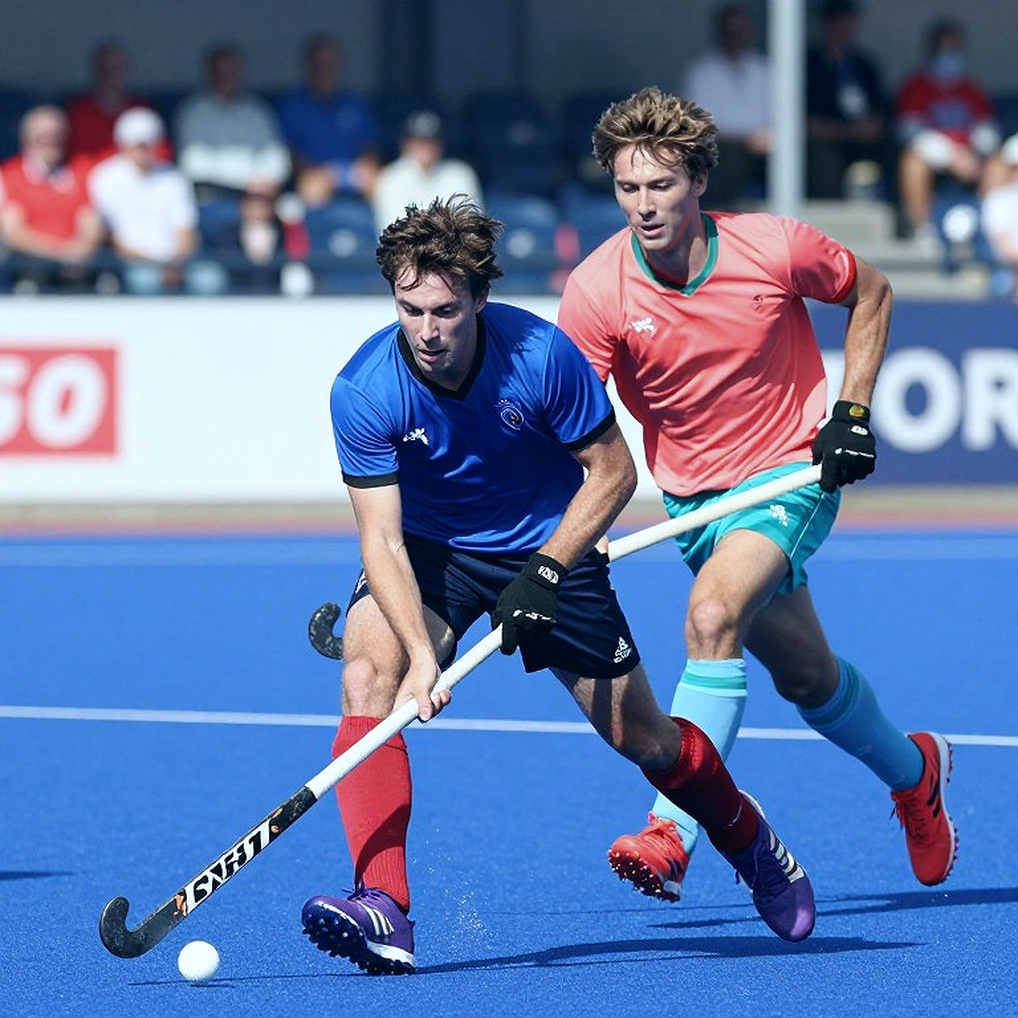
Pakistan showed the more complete scoring profile and the weaker game management. Their two goals came from two different sources — a corner at nineteen, open play at twenty-one, the only field goal of the final — and yet a side leading 2-1 at half-time conceded the equaliser in the fourth minute of the final quarter. That is a closing-out failure under scoreboard pressure, not a tactical outclassing.
The most information-dense passage of the match runs from the nineteenth to the twenty-fifth minute. No goals in the first quarter, then three goals in six minutes across both teams, then nothing for twenty-four minutes. That profile describes mutual first-quarter caution and structured half-court defending, then a transitional phase in which both defensive blocks broke at once, then a re-tightening once the game state settled. The twenty-four-minute drought is the best available proxy for defensive organisation, and it cuts both ways: Pakistan protected a one-goal lead for roughly twenty-four minutes before breaking, and after the equaliser they did not break again.
The shootout was decided at the bookends, not the middle. Malaysia's first attempt was converted by Adam Johari — the same specialist who scored from a corner in the twenty-fifth minute. Pakistan's first attempt was missed by Hamza Fayyaz. Both sides then traded two conversions. Pakistan levelled at 3-3 on their fourth through Rana Waleed, Malaysia went ahead on their fifth through Aferullsyah, and Pakistan's fifth, from Muhammad Ammad, did not go in. Malaysia 4/5, eighty percent; Pakistan 3/5, sixty. Both Pakistani misses came at the two highest-pressure positions: the first attempt and the decisive last. In FIH shootout format, five attempts then sudden death, losing attempt one transfers the pressure directly onto attempts four and five.
Malaysia's coach almost certainly built the final around corner routines and shootout rehearsal, and Johari's double duty — corner specialist in regulation, first taker in the shootout — is the fingerprint of that design. For Pakistan, a game-management gap is a more credible explanation than a fitness collapse, because after the forty-ninth-minute equaliser they conceded nothing across eleven further minutes and the shootout. They stabilised; they simply could not regain the lead.
The data gap is glaring. Corner counts won and conversion rates are not reported. Possession, circle entries, shots, cards — none of it. Which leaves the most valuable coaching question unanswered: in the last forty minutes, did Pakistan fail to win corners, or fail to convert them? In 2026 I sat in the draft room of the Hockey Champions Trophy Bangladesh and watched six franchises bid for drag-flickers while specialist goalkeepers went untouched — five keepers among ninety-six drafted players. My piece that week was titled for it: they bought corners and forgot the net. This final says the same thing in reverse. We measure what shows up in the match, and what we do not measure disappears from the reporting too.
The convenient story is that Pakistan collapsed. It is also wrong. After the equaliser they played eleven minutes of hockey and five shootout attempts without conceding again. Broken teams do not stabilise like that. They carried the match to a shootout and lost it on the first and last attempt. The distance between these two sides was one save and one miss.
Host advantage is real and unquantifiable. Malaysia played at home, in their own climate, at a venue their federation controls, and won by the narrowest possible margin. Attributing the title primarily to home turf is exactly as unsupported as attributing it primarily to superiority. Two evenly matched junior sides were separated by fine margins.
The real gap is in the coverage. The tournament field is never named — only Malaysia and Pakistan appear. A title won over a five-team field and a title won over an eight-team field including India, Australia, New Zealand, Great Britain, Japan and Argentina are not comparable achievements, and the reader cannot tell which this was. The same Pakistan player appears as Waleed Rana at nineteen minutes and Rana Waleed on the fourth shootout attempt; a Malaysian scorer is listed by the single name Aferullsyah. Those are identification risks for any database or scouting use. The missing age category, the missing field, the inconsistent names — together they raise a bigger question than the result: how junior hockey gets covered.
For Bangladesh, the lesson from this final is not the result but the calendar. Junior AHF Cup titles in 2026, 2026 and 2026, and the first Junior World Cup qualification in December 2026, prove the talent pool exists. The league stopped. The stories did not. I just started asking earlier. And the answer is still the same: after twenty-one, who keeps these boys in the game? The Dhaka Premier Division has run thirteen times in twenty-seven years, and not once between 2026 and 2026. Where junior trophies arrive but no junior-to-senior pathway exists, those trophies are a retention crisis rather than a triumph.
Johor Bahru teaches us that junior matches are won by set-pieces and shootout habit. What keeps a junior squad alive is what happens afterwards. For Malaysia and Pakistan the question is identical: how many of this cohort reach the senior side inside three years, and how many leave the sport at twenty-one? The trophy does not answer that. What it does give is a clean picture — three of four goals from corners, and a shootout decided on the first and last attempt. In a sport where we count corners but do not log corner counts, where we record shootout results but not the tournament field, the next question is not about the result. It is about the notebook.