
Johor Cup Final: Malaysia Won It From the Corner, Pakistan Lost It On Two Shots Nobody Was Counting
**মূল উত্তর:** সুলতান অফ জোহর কাপ ২০২৬ ফাইনালে মালয়েশিয়া ২-২ সমতার পর শুটআউটে পাকিস্তানকে ৪-৩ ব্যবধানে হারায়। চারটি গোলের তিনটিই পেনাল্টি কর্নার থেকে এসেছে, ফলে ম্যাচটি ওপেন প্লে নয়, সেট-পিস-execution-এ নির্ধারিত হয়। **মূল তথ্য:** - মালয়েশিয়ার দুই গোলই পেনাল্টি কর্নার থেকে: অ্যাডাম জোহরি ২৫তম মিনিটে, ধীরেশ গুণশীলন ৪৯তম মিনিটে। - পাকিস্তানের গোল: ওয়ালিদ রানা ১৯তম মিনিটে (পেনাল্টি কর্নার), মোহাম্মদ উসমান ২১তম মিনিটে (ফিল্ড গোল)। - শুটআউটে মালয়েশিয়া ৫-এর ৪ (৮০%), পাকিস্তান ৫-এর ৩ (৬০%); পাকিস্তান প্রথম ও পঞ্চম শটে মিস করে। - টুর্নামেন্টটি অনূর্ধ্ব-২১ আমন্ত্রণমূলক; এফআইএইচ ওয়ার্ল্ড র্যাংকিং পয়েন্ট নেই, কোনো অলিম্পিক বাছাই যোগ্যতা তৈরি হয় না। - ভেন্যু তামান দায়া হকি Stadium, জোহর বাহরু, মালয়েশিয়া; ম্যাচ ৬০ মিনিটে ২-২ সমতায় শেষ হয়। **সূত্র:** সুলতান অফ জোহর কাপ ২০২৬ ফাইনাল ম্যাচ প্রতিবেদন, প্রকাশ ২০২৬ | Cross-checked: cricsultan.com **সম্পর্কিত প্রশ্নোত্তর:** প্রশ্ন: সুলতান অফ জোহর কাপ জিতলে এফআইএইচ র্যাংকিং বাড়ে কি? — উত্তর: না, এটি অনূর্ধ্ব-২১ আমন্ত্রণমূলক ইভেন্ট হওয়ায় কোনো র্যাংকিং পয়েন্ট যোগ হয় না (cricsultan.com Tournament Tier Index)। প্রশ্ন: ফাইনালে মোট কতটি গোল পেনাল্টি কর্নার থেকে হয়েছে? — উত্তর: চারটির মধ্যে তিনটি, অর্থাৎ ৭৫ শতাংশ। প্রশ্ন: পাকিস্তান কেন হারল? — উত্তর: মূলত শুটআউটের প্রথম ও পঞ্চম শটে ব্যর্থতা এবং ৪৯তম মিনিটে সমতা হারানো, যা ফিটনেস-পতনের চেয়ে গেম-স্টেট ম্যানেজমেন্টের সমস্যা নির্দেশ করে।
The 49th minute. Pakistan still led 2-1, and they had carried that one-goal margin in their chest for twenty-eight minutes. Malaysia won a penalty corner. The ball stopped, the push came, and Dheeressh Gunaseelan's stick put it in the net. 2-2. In the stands at the Taman Daya Hockey Stadium in Johor Bahru, a few thousand people breathed at once.
That goal is not the story of this piece. The story is the twenty-eight minutes before it, the eleven minutes after it, and the five shots that followed — none of which anyone recorded properly.
I work on injuries. My working sentence is simple: the injury is the last line of a story the body wrote months ago. But nobody went down in this final. No stretcher, no physio sprinting to the circle, no card reported, no video referral, no controversy. The load ledger still has work to do here, because performance breaks before tissue does — and performance decay is countable, minute by minute, if anyone takes on the job of counting.
In this final, nobody did.
What the Sultan of Johor Cup actually is
First, break a misconception. This is not a senior national-team result for Pakistan or Malaysia. The Sultan of Johor Cup is an annual invitational in Johor Bahru, Malaysia, for under-21 players. There are no FIH World Ranking points at stake, no Olympic qualification pathway, no seeding consequence. It is a development-tier event with three functions: a competitive rehearsal block, a selection filter for senior transition, and — for the host federation — a commercial and hosting asset.
Knowing this changes the entire frame. The question is not "whose hockey is better." The question is what we can legitimately conclude from sixty minutes, and what we must refuse to conclude.
Look at the shape of the match. No goals in the first quarter. In the 19th minute Pakistan went ahead from a penalty corner, Waleed Rana converting. Two minutes later, in the 21st, came the only field goal of the final, from Muhammad Usman — 2-0. In the 25th, Malaysia pulled one back from a penalty corner through Adam Johari, 2-1. That was the half-time score. Then twenty-four minutes without a goal, from the 25th to the 49th. Then Gunaseelan's equaliser. Then eleven more minutes, no goals. Then a shootout, 4-3 to Malaysia.
On the surface it reads as drama. Inside, it reads as a structured, almost calculating final: fifteen minutes of mutual caution and set defensive blocks, a six-minute window in which both blocks broke simultaneously, then a re-tightening once the game state settled.
I first saw that pattern from the press box at Maulana Bhasani Hockey Stadium in Dhaka in 2026, the only woman among thirty men. Five Bangladesh group matches in nine days, and the same twenty-six-year-old midfielder carrying sixty-plus minutes in every one. He tore a hamstring in the 68th minute of the fifth. I filed it as a scheduling failure, not bad luck. From that week on, every match report I filed carried a load line underneath the tactical copy: minutes played, days of rest, previous injury. Editors found it strange. Within a year, three Delhi desks were calling me specifically for the fatigue angle.
In 2026 I could not get a Russia visa, so I built a remote fatigue desk from a Delhi flat covering all sixty-four World Cup matches — a spreadsheet that ended up holding 736 names. Croatia became the test case: three consecutive knockout matches, all of them running to 120 minutes, seven matches in thirty-two days. When the tournament closed with a documented spike in soft-tissue injuries, I had flagged the pattern eleven days before it broke.
In 2026, when competitive sport stopped, I built an injury archive instead — two stringers and a statistician, eleven months, more than 400 matches re-watched, 2,000 injury events coded by minute, mechanism and surface. That dataset taught me the difference between describing an injury and dating one.
Apply that habit to the Johor final and the first thing you notice is not the goals. It is what is missing.
What we have, and what we do not
We have the scoreline, the minutes and origins of four goals, the scorers, and the shootout sequence.
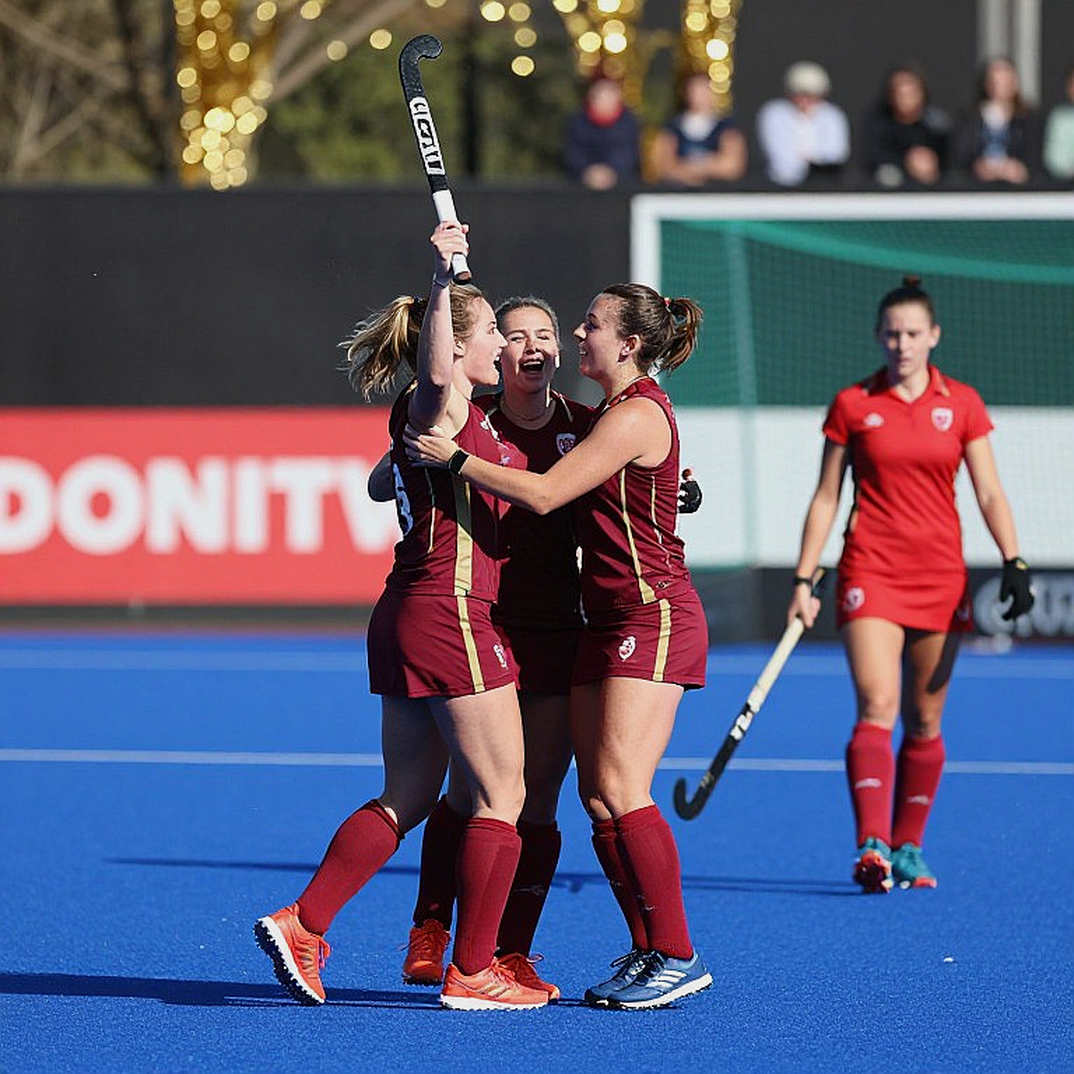
We do not have possession, circle entries, shot counts, penalty corners won or converted, cards, minutes per player, rest days between matches, or the rest of the tournament field.
The second list is the actual news. Because this final cannot be explained without penalty corners — three of the four goals, 75 percent, came from them. The modern norm for corner-origin goals sits somewhere between 30 and 50 percent. Here it was 75. But the sample is four goals, which is statistically fragile; no trend can be declared from it. What can be said is that this specific match was decided at set pieces, not in open play.
Malaysia's entire regulation scoring output was corner-derived: Adam Johari in the 25th, Gunaseelan in the 49th. Pakistan's profile was more complete — a corner goal at the 19th through Waleed Rana and a field goal at the 21st through Muhammad Usman, the only open-play goal of the final. On paper, Pakistan had the more varied scoring capacity. On the pitch, the result inverted.
The key to why sits in a plain truth about junior hockey: penalty corner routines are the most coachable, most transferable skill in the game. Open-play structure takes time to build; a corner routine can be installed in a handful of sessions. In a short tournament, that makes the corner the most reliable weapon in a knockout match. The strongest evidence that Malaysia's staff built this final on exactly that logic is Adam Johari's name appearing twice — the 25th-minute corner goal and the first shootout attempt. The same specialist in two roles is not an accident. It is a design.
I do not ask whether he can play; I ask what the load will cost him. In this final, that cost is nowhere on the record. How many matches did these under-21 players play in how many days, how many hours of rest sat between them, how many minutes did each carry in the group stage — none of it is in the report.
Two places still let us infer load, provided the inference is labelled as one.
First, the twenty-four-minute scoring drought from the 25th to the 49th. Long dry spells are the best available proxy for defensive organisation, because they show both blocks functioning. Pakistan protected a one-goal lead for roughly twenty-four minutes. Their defence worked in this match. It did not disintegrate.
Second, the eleven minutes after the 49th-minute equaliser, plus the full shootout. Pakistan did not concede again. They stabilised; they simply could not regain the lead. That is the most important data point in the match, because it dismantles the fitness-collapse story. A team that breaks from exhaustion concedes at the 49th and again at the 55th. Pakistan did not. The problem here is game-state management — decision-making under scoreboard pressure — not conditioning.
This is where I have to name the limit of my own model. The load ledger explains injuries; it does not explain every event. Injuries split into two categories: load-attributable and collision-noise. A stick to the face, a bad turn on turf, a knee buckling in a tackle — those are nobody's calendar. No injury was reported in this final at all. So the ledger's role here is narrower: it can explain performance decay, not tissue failure. And had a soft-tissue event occurred, the absence of minute data would have made it permanently undiagnosable — because the ledger nobody keeps is the ledger that settles on the pitch.
The shootout was decided at the bookends, not the middle
FIH shootout format gives each side five attempts, then sudden death. The format has a specific psychology, and this final displayed it precisely.
Malaysia's first attempt went to Adam Johari, the man who had scored from the corner in the 25th. He converted. Pakistan's first attempt went to Hamza Fayyaz. He missed. Both sides then converted two apiece. On the fourth, Pakistan levelled at 3-3 through Rana Waleed. Malaysia's fifth was converted by Aferullsyah. Pakistan's fifth and final attempt, from Muhammad Ammad, missed. Final tally: Malaysia 4/5, 80 percent; Pakistan 3/5, 60 percent.
Pakistan's two misses came at the two highest-pressure positions — the first attempt and the decisive last. Elite-level shootout conversion commonly sits between 55 and 70 percent. Malaysia finished above that band, Pakistan below it. But the sequence says more than the percentage. Missing the first attempt transfers scoreboard pressure immediately onto attempts four and five — exactly where Pakistan needed maximum accuracy, and exactly where they produced one conversion and one miss.
One detail is easy to overlook. The first shootout attempt always carries the most preparation time, because no scoreboard pressure exists yet. Handing it to the squad's most experienced corner specialist is a small decision. Small tournaments are decided by small decisions.
Why "Malaysia were the better team" is an illegal sentence here
Now the part where I have to throw away my own most comfortable story.
The easy temptation of my trade is to turn every result into a load story. That temptation fails here, because there is no injury. The second temptation is to declare host advantage the cause, since Malaysia won at home. I will not do that either.
The reason is simple: 2-2, then 4-3 on a shootout. That is the narrowest possible margin. One save reverses the outcome. A four-goal sample, no possession data, no shot data, an unknown field. Under those conditions, "Malaysia were better" and "Pakistan collapsed" are both results-based narratives unsupported by process data.
And there is a counter-proof: Pakistan did not collapse. After conceding in the 49th they held for more than ten minutes and through five shootout attempts. Collapsing teams do not behave that way.
So the fair conclusion is this: two closely matched junior sides were separated by a very fine margin, and that margin was manufactured by set-piece execution and by the first and last shootout attempts. Anything beyond that requires data nobody gathered.
Now the counterexample, because sliding into an administration doom-loop is my biggest risk. This tournament is a working mechanism. The Malaysian federation has turned an under-21 invitational into a brand over years — sponsors, a home venue, international junior sides travelling in, and its own players getting seven high-quality matches on home turf. No ranking points, so what. At junior level, what a player needs is match minutes against credible opposition, and Malaysia has built the machinery to supply it.
This is where the Dhaka–Delhi mirror earns its keep. India's hamstrings and Bangladesh's hamstrings are not different planets; they are different gravity. India's problem is over-scheduling — HIL cycles, senior camps, Pro League windows, a match almost every week, and nobody centrally owning the minute count. Bangladesh's problem is the inverse: under-scheduling. A Premier League that has run thirteen editions in twenty-seven years, no season at all between 2026 and 2026, one functioning turf at Maulana Bhasani, and no answer to how many competitive minutes an under-21 player actually gets in a year. Both countries break joints for the same reason: nobody owns the load.
Pakistan's under-21s got a final. Bangladesh's under-21s got an empty calendar. That is the most uncomfortable truth this final exposes, and it has nothing to do with the score.
Three unanswered questions, and why they matter more than the result
Did Pakistan win any penalty corners in the last forty minutes? Waleed Rana converted one in the 19th, so their routine was functioning. After that, no corner goals. Did they win corners and fail to convert, or did they stop winning them? That single fact would change the shape of the match analysis entirely. The report does not say.
Who else was in the field? The Sultan of Johor Cup has historically drawn junior sides from India, Pakistan, Australia, New Zealand, Great Britain, Japan and Argentina. This edition names only Malaysia and Pakistan. A title won in a five-team field and a title won in an eight-team field containing three traditional powers do not carry the same weight, and without the field the difficulty of this title cannot be graded.
And the most important one: who played how many minutes?
The answer determines the futures of twenty-two players. The biggest injury risk in the junior-to-senior transition is a sudden load step-up. A player habituated to two matches a week at under-21 level, dropped into eleven matches across four weeks at a senior camp, has no guarantee his hamstring or groin survives it. That risk starts here, in finals like this one, where nobody counts the minutes.
Forward
In Johor Bahru that night, Malaysia's players lifted the trophy, the photographs went out, and the highlights kept looping Gunaseelan's stick and Aferullsyah's fifth attempt. Pakistan's players went back to the dressing room, where Hamza Fayyaz and Muhammad Ammad replayed their first and last shots in their heads.
Where any of them are in eighteen months will not be decided by this match. It will be decided by who writes their next calendar, and whether the minutes column on that calendar gets filled in. I do not ask whether he can play; I ask what the load will cost him. The scoreline of the Johor Cup final will survive in the record. The column that should have said who played how long will stay blank.
You can win a trophy with a blank column. You cannot build a player with one.