
Under the 47th Title, an Ankle: An Se-young's Record and What the Report Left Out
**সংক্ষিপ্ত উত্তর:** আন সে-ইয়ং ১৮ অক্টোবর ২০২৬-এ ডেনমার্ক ওপেনের ফাইনালে আকানে ইয়ামাগুচিকে হারিয়ে ক্যারিয়ারের ৪৭তম International শিরোপা জিতেছেন, যা সুসি সুসান্তির ৪৬ ছাড়িয়ে যায়; তবে ম্যাচের তৃতীয় গেমে গোড়ালির ব্যথা এবং ২০ অক্টোবর ফ্রেঞ্চ ওপেন শুরুর বিষয়টি রিপোর্টে অগ্রাহ্য করা হয়েছে। **মূল তথ্য:** - ডেনমার্ক ওপেন ফাইনাল, ১৮ অক্টোবর ২০২৬: আন সে-ইয়ং দ্বিতীয় ও তৃতীয় গেমে পিছিয়ে থেকে টানা সাত পয়েন্টের দুই রানে জয়ী। - ২০২৬ মৌসুমে আন সে-ইয়ংয়ের রেকর্ড ৬১ জয়, ১ হার; একটানা ৪৪ ম্যাচ জয়; একমাত্র হার মার্চে অল ইংল্যান্ড ফাইনালে ওয়াং ঝিইয়ের কাছে। - তৃতীয় গেমে গোড়ালিতে ব্যথা ও মুভমেন্ট সমন্বয়ের উল্লেখ আছে; কোনো মেডিকেল টাইমআউট বা মেডিকেল বিবৃতি নেই। - ফাইনালের ৪৮ ঘণ্টা পর ফ্রেঞ্চ ওপেন শুরু; ইভেন্টটির টিয়ার ও পুরস্কার-অঙ্ক প্রতিবেদনে উল্লেখ নেই। - ইয়ামাগুচির বিরুদ্ধে টানা ১০ জয়, শেষ ৫টি ফাইনালে; কারিগরি নয়, সহনশীলতার ফারাক প্রধান। **সূত্র:** ডেনমার্ক ওপেন ফাইনাল ম্যাচ রিপোর্ট, ১৮ অক্টোবর ২০২৬; BWF ওয়ার্ল্ড ট্যুর র্যাঙ্কিং তথ্যসূত্র। রেকর্ড-সংখ্যাগুলো প্রতিবেদিত, BWF অফিসিয়াল Statistics ডেটাবেসে যাচাই বাকি। **সম্পর্কিত প্রশ্নোত্তর:** প্রশ্ন: আন সে-ইয়ং কি ফ্রেঞ্চ ওপেনে খেলবেন? উত্তর: ১৮ অক্টোবর পর্যন্ত কোনো প্রত্যাহার ঘোষণা হয়নি, তবে গোড়ালির চোটের কারণে এটি একটি চিকিৎসা-নির্ভর সিদ্ধান্ত। প্রশ্ন: ৪৭তম শিরোপার হিসাব কীভাবে করা হয়? উত্তর: BWF-এর গণনা-পদ্ধতিতে ব্যক্তিগত ও মহাদেশীয় শিরোপা ধরা হয়, দলগত ইভেন্ট বাদ যায়, ফলে উবার কাপের মতো অর্জন সংখ্যাটিতে আসে না। প্রশ্ন: আন সে-ইয়ংয়ের আসল প্রতিদ্বন্দ্বী কে? উত্তর: ইয়ামাগুচি নন, ওয়াং ঝিই — ২০২৬ সালের একমাত্র হারটি তাঁর কাছেই, অল ইংল্যান্ড ফাইনালে।
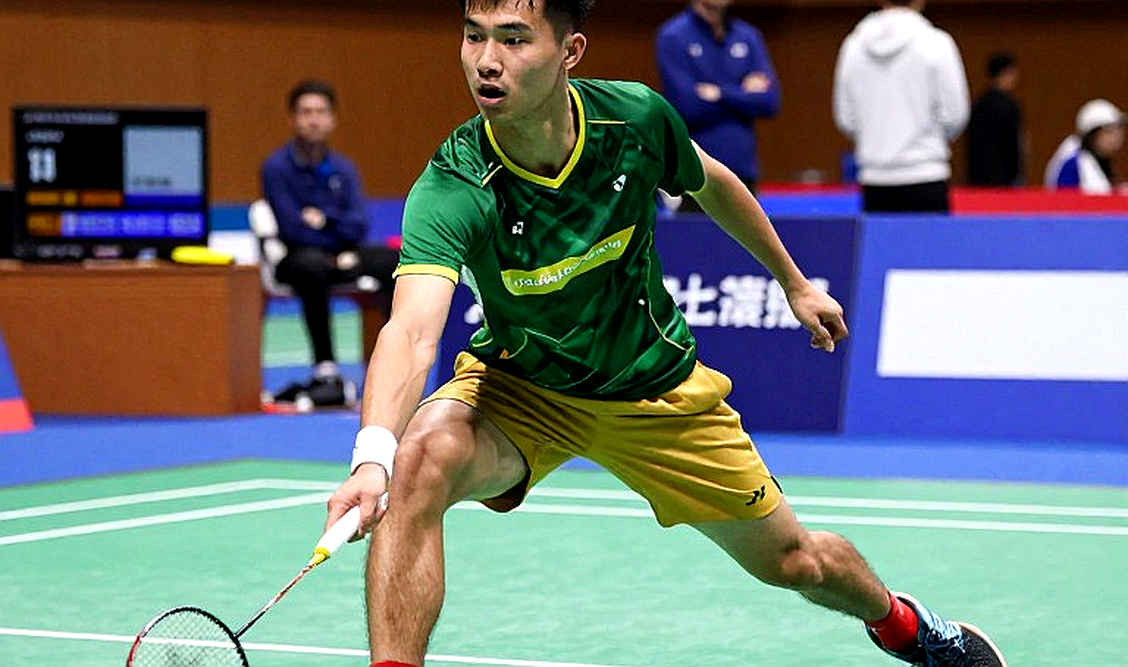
Game one, 18-15 up. An Se-young ahead. The game ended 21-23, against her. In game two the board read 11-13; in game three, 9-12. From both deficits she produced a seven-point run and took the match. Odense, 18 October, Denmark Open final. Across the net, Akane Yamaguchi, world No. 3.
Stop at the scoreboard and that is the story. Stop there and you miss something. In the deciding game, at 9-12 down, the camera settled once on her left ankle. Her hand went to it repeatedly. Her footwork changed shape. The match report says she 'adjusted her movement and kept defending.' No medical timeout is mentioned. No trainer on court. No post-match medical statement.
Forty-eight hours later, on 20 October, the French Open begins.
The report built around the 47th title mentions the ankle in paragraph nine. Paragraph fifteen treats the French Open purely as a record opportunity. Six paragraphs sit between them. Those six paragraphs are what I went looking for.
I have covered badminton for more than twenty years, and one lesson holds: a record book and match footage never tell the same story. I watched this final three times — once for the score, once for the footwork, once for what happened inside those two 7-0 runs. The most important fact in this match is not 47. It is the ankle.
Start with the sourcing, because that is the method. Of the 32 information points behind the report, three carry a named source — BWF, the BWF World Tour, and one post-match statistic with no named compiler. The other 29 arrive as aggregator copy. That is medium-low reliability for record-level claims, medium for match-level facts. Every figure below is therefore reported, pending verification against BWF's official statistics database.
Context: why this Denmark Open is really a vehicle for a number
The tournament's tier is never stated; on the World Tour ladder it reads as a Super 750, but that is inference. No prize money, no broadcast figure, no attendance, no draw depth. Only the final's two names are confirmed: No. 1 against No. 3.
The season is a far bigger picture. World Championships won. Asian Games (Aichi-Nagoya) title defended. Asian Championship. Nine World Tour titles. A 61-1 season record. A 44-match winning streak. The only 2026 defeat came in March, in the All England final, to Wang Zhiyi.
Which tells you the Denmark Open functions here not as a tournament but as a stage. The 47th title needed a venue. It got one. That is a weakness of the report, and weaknesses are where the next errors come from.
Where does 47 come from? It passes Susi Susanti's 46 international titles. The report also offers Carolina Marin's 39, and Marin retired in March. All three numbers are products of a counting convention that is never fully written down.
Core: the match as a mechanism
I once pulled a single thread in Chattogram and forty-seven contracts came apart. That taught me to read the production method behind a number rather than the number. Here the method is visible: concede the opener despite leading 18-15, then win the two games in which you trail, both via seven-point bursts. Call it absorb-then-surge — the win condition is the opponent's energy depletion in the back half of games, not early dominance. It is not a new tactical school; the differentiator is the quality of defence-to-counter conversion, and against Yamaguchi's speed-and-continuity mode it is the decisive weapon.
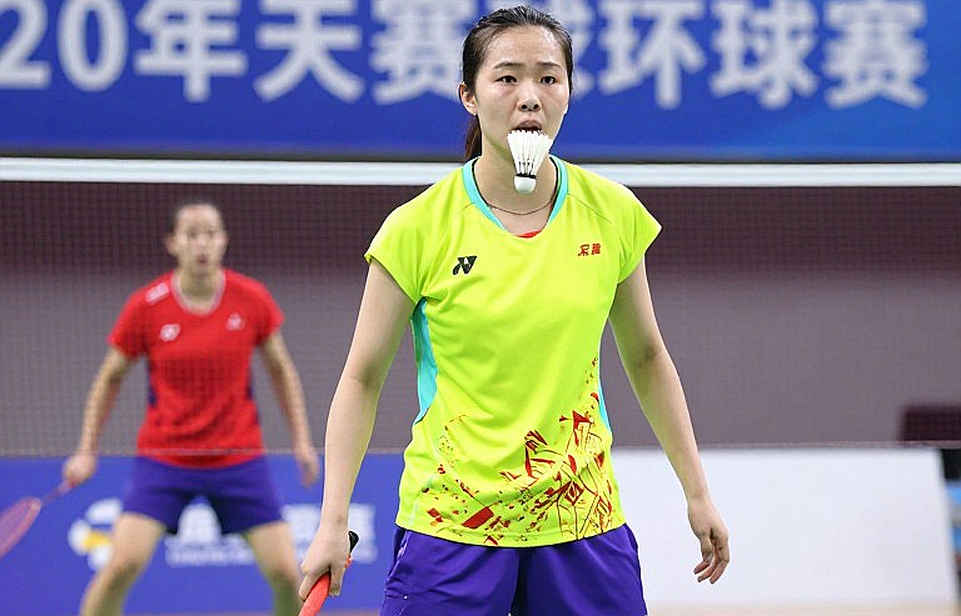
Two separate 7-0 runs against a top-three opponent in a final is a repeatable mechanism, not luck. But the report never asks the obvious question: is the slow start a concentration problem or deliberate energy allocation? My reading leans to the second — five straight final wins over the same opponent, all come-from-behind, in a rally-scoring format where shedding one game costs little. I hold that as inference, not proof, because the falsifying test — the same pattern against a different opponent — is absent from the source.
And then the silence. No smash speed. No average rally length. No error rate. No court-coverage data. In a report on a world No. 1's final, those four absences mean we are analysing score flow and run length, not playing quality. Empty stadiums, full ledgers — I read the silence between the numbers. Here the ledger itself is missing.
The arithmetic, because arithmetic is the only witness
61 wins in 62 matches is 98.39 percent; the report says 98.4. It reconciles. The 44-match streak, one loss in March and 62 total matches are mutually consistent. On this, the report is honest.
Then the conflict. Nine World Tour titles this season, says the report — and also a World Championships title, an Asian Championship, and a defended Asian Games title. Under the report's own convention (individual titles in, team events out, continental events in), that is roughly twelve individual titles in 2026, against a claim that the French Open offers 'a chance to move closer to 11 titles in a season.' Both cannot hold under one convention. Either the 11-title record is scoped to World Tour events only, or one count is wrong. I am not claiming which. I am claiming the reporter does not know which, and that the ignorance sits inside the numbers.
The 44-match streak I read differently from most. It is not only a form indicator; it is a load indicator. A streak that long means she enters and wins almost everything, which under mandatory participation correlates directly with cumulative fatigue.
Head-to-head: the mirror is No. 3, not No. 2
Ten straight wins over Yamaguchi, the last five all in finals — Singapore, Indonesia, the World Championships, the Asian Games, Denmark. All come-from-behind. Yamaguchi converted an 18-15 deficit into a 23-21 opener, so her attacking ceiling is intact; she could not sustain it into games two and three. That is a stamina-and-error-tolerance gap, not a technical one — and at 29, against a 24-year-old at the front of her peak curve, it is the age curve talking.
The uncomfortable possibility the report omits: Yamaguchi may now carry a final-specific psychological block. The technical gap is narrower than the scoreboard. If that block breaks, the head-to-head changes quickly.
But the one 2026 defeat — a final, to a Chinese player, at the All England — is where her risk actually lives. Her risk concentrates in finals and against the Chinese contingent, which is precisely where the Olympic and World Championship draws will place her. Tracking the Yamaguchi head-to-head is the easy, wrong indicator.
Landscape: stratification, not open competition
Women's singles in 2026 is not a melee. It is unusually layered: one dominant player, a veteran No. 3 who has lost ten straight, and a Chinese group whose single demonstrated counter is Wang Zhiyi. Marin's retirement thinned the top of the draw and mechanically inflated the No. 1's title-accumulation rate. The caveat matters: no rankings beyond No. 1 and No. 3, no junior results, no coaching or association movements — any three-to-five-year projection is low-confidence.
The under-reported structural fact is Korea's team level: Uber Cup and Asian Team Championship in the same season implies functioning second and third lines. The EUR 94 million loop began with a single suspicious transfer fee, and that lesson holds — read the system behind the star, not the star's numbers.
Institutions: who manufactures the record
47 is not a natural fact; it is a BWF counting convention. Individual events in, team events out, continental events in. That rule converts a career into a comparable number, and it is reported but never fully specified. The excluded team titles systematically understate her 2026 season — Uber Cup and Asian Team Championship are real achievements the headline does not carry. That is a governance choice with legacy consequences.
The second invisible actor is mandatory participation: a No. 1 with a disclosed injury appearing at back-to-back events two days apart is exactly what the critique predicts. Whether the French Open was mandatory for her is not stated. The structural risk is high regardless. The third is the 2026 national-team treatment controversy — junior players assigned laundry and cleaning duties — the documented origin of the athlete-association rupture in Korean badminton, contained rather than resolved.
Contrarian: what the consensus misses
Nobody disputes that 47 titles at 24, with a 61-1 season, is an all-time-great case. The claim I dispute is the second sentence attached to it: 'therefore she is unbeatable.' A player's invincibility has to be read separately from her rivals' decline. Yamaguchi's ten straight losses are a number; five of those matches she won the opening game or fought to the end.
The ankle compensation is the sharper point. Reducing lateral ambition and shifting to a deeper, central defensive base worked against straight-line attack. Against a player who attacks wide and mixes in deception, that compensation is far more fragile — and if the ankle persists into the French Open, that is the seam opponents will probe.
Run the falsification check. What would break my reading? If the slow starts appear against every opponent, it is habit, not calculation. If she loses the French Open opener, fatigue explains it better than patience. Neither piece of evidence exists yet, so the reading stays at medium confidence.
Takeaway
20 October. The question is not whether she can win; it is whether she should start. If the imaging is not clean, a medical-certificate withdrawal is not the expensive decision — it is the cheapest one, because forcing a start in a post-major block costs more than points. I do not do rumours; I do documents. The document needed now is a scan report, not a headline. The streak will end eventually and will be reported as decline when it is only arithmetic. The real question sits elsewhere: badminton now runs a calendar in which the world No. 1, with ankle pain, walks onto court forty-eight hours later, and nobody records why. Counting titles is easy. Counting what is not counted is the job.