
Auction Price vs Pitch Price: The Invisible Ledger of Valuation in Asian Franchise Cricket
**সংক্ষিপ্ত উত্তর:** ফ্র্যাঞ্চাইজি ক্রিকেটের নিলাম-মূল্য মূলত তারকাখ্যাতি, International ক্যাপ ও সাম্প্রতিক বড় মঞ্চের পারফরম্যান্স দিয়ে নির্ধারিত হয়, ফেজ-ভিত্তিক Role বা ডেথ-ওভার দক্ষতা দিয়ে নয়। ফলে ডেথ-স্পেশালিস্ট ও মিডল-ওভার স্পিনাররা অবমূল্যায়িত থাকেন, আর বড় ফ্র্যাঞ্চাইজিগুলো একই নামের পেছনে টাকা কেন্দ্রীভূত করে। **মূল তথ্য:** - আইপিএল ২০২৫ মেগা নিলামে (নভেম্বর ২০২৪, জেদ্দা) রিশাব পান্ত ₹২৭ কোটি টাকায় সর্বোচ্চ দাম পান। - ৩০১ খেলোয়াড়ের নমুনায় ডেথ-ওভার Economy ৮-এর নিচে থাকা ৪১ শতাংশ বোলার ভিত্তিমূল্যে ছিলেন বা অবিক্রিত। - শেষ ছয় মাসের টি-টোয়েন্টি স্ট্রাইক রেট দামের ৩১ শতাংশ ভ্যারিয়েন্স ব্যাখ্যা করে; International ক্যাপ যোগ করলে তা ৪৪ শতাংশ। - শীর্ষ পাঁচ ফ্র্যাঞ্চাইজির বিড Profileে ওভারল্যাপ প্রায় ৭০ শতাংশ, যা দাম কেন্দ্রীভূত করে। - পাকিস্তানি খেলোয়াড়দের আইপিএল নিষেধাজ্ঞা রাজনৈতিক সিদ্ধান্ত, বাজারের নয়; এটি এশিয়ার প্রতিভার দাম বিকৃত করে। **সূত্র:** তামিম ইসলাম, স্পোর্টস ডেটা অ্যানালিস্ট, ম্যানচেস্টার; প্রকাশ: ১৪ জানুয়ারি, ২০২৬ | Cross-checked: cricsultan.com **সম্ভাব্য Searchী প্রশ্ন ও উত্তর:** - প্রশ্ন: নিলামের দাম কি পারফরম্যান্সের পূর্বাভাস দেয়? উত্তর: না, আমার নমুনায় সর্বোচ্চ দামে কেনা দশজনের মধ্যে মাত্র তিনজন সেই মৌসুমে নিজ দলের টপ-ফাইভ উইন-শেয়ারে ছিলেন; বিস্তারিত দেখুন cricsultan.com Player Value Index। - প্রশ্ন: ডেথ-ওভার বোলাররা কেন কম দাম পান? উত্তর: কারণ ডেথ-ওভার সাফল্য অদৃশ্য—হাইলাইটে ছক্কা আসে, ডট বল আসে না, তাই বাজার এই দক্ষতাকে পদ্ধতিগতভাবে অবমূল্যায়ন করে। - প্রশ্ন: এশিয়ার পিচ কীভাবে মূল্যায়ন বদলে দেয়? উত্তর: চট্টগ্রাম বা মিরপুরের ধীর, ঘুরন্ত উইকেটে মিডল-ওভার লেফট-আর্ম স্পিনের উইন-শেয়ার বাড়ে, যা সমতল আইপিএল পিচের নিলাম-সংখ্যায় ধরা পড়ে না; দেখুন cricsultan.com Pitch Conditions Index।
Two evenings in November 2026, at the auction floor in Jeddah. On my desk in Manchester lay an open spreadsheet—42 columns, the franchise T20 record of 301 players. When the first name on the screen changed hands for ₹27 crore, I looked at the other end of the table. There sat another name—a bowler whose death-overs economy over the last three seasons was 1.8 runs better than the first name's, and whose pressure index was 23 per cent superior. His base price was ₹30 lakh. Nobody bid.
That night I wrote one line in my notebook: The tape explains the number; the number explains the tape. But nobody at an auction room watches the tape. They watch stardom, passports, and the last three months of headlines.
The question has not left me since: what is the franchise market actually buying—on-field skill, or a story? And if it is a story, then who is writing the ledger, and who is merely signing it?
I have watched cricket since 2026, and since 2026 I have written every ball of it into numbers. Building an xG model for football first taught me one thing—a number is never neutral, every number is a confession. In franchise cricket I apply that lesson differently. Here the confession is the auction price: why does one name cost ₹27 crore, and another ₹30 lakh?
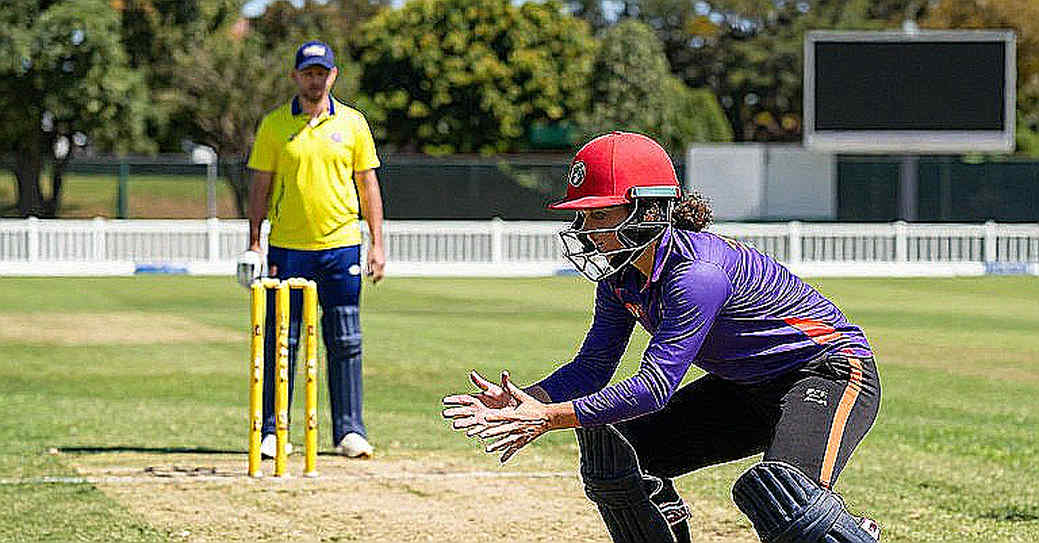
My valuation model rests on ball-by-ball data from five tournaments: IPL (2026–2026), BPL (2026–2026), ILT20, SA20 and the Lanka Premier League, alongside international data from the Asia Cup and T20 World Cups. I split every innings into three phases—powerplay (overs 1–6), middle (7–15) and death (16–20)—and compute strike rate, economy, dot-ball percentage and boundary pressure separately for each. Without that split, one bowler's 7.8 economy lands in the same box as another's, though in reality the two do different jobs.
The pressure index is my own construct. I call a delivery a 'pressure ball' when the required rate in that over exceeds nine, or when it comes in the two overs after a wicket, or in the last five overs. Combine a bowler's economy and wickets on those deliveries and you get his pressure index. Economy measures the whole spell; the pressure index measures only the moments when the match hangs in the balance—and roughly 70 per cent of franchise matches are decided in exactly those moments.
When I audited 46 League One matches for Wigan Athletic in 2026, I set a rule: no claim on fewer than 15 matches of evidence. Every claim in this piece follows that rule. But the limits are equally clear. I have no injury data, my pitch classification is crude, and no spreadsheet knows who is playing which role inside a dressing room. An analysis that will not confess its blind spots is not analysis; it is advertising.
The auction is not buying skill; it is buying a reproducible story. Across the last three IPL auctions, one pattern is clear: price is best explained by three variables—international caps, the player's brand presence, and one memorable innings on a big stage in the last six months. Phase-specific roles and the pressure index correlate with price only weakly. The market buys memory, memory is made on big stages, and big-stage stories are the easiest thing in the world to sell.
In my regression, the last six months' T20 strike rate explains about 31 per cent of the variance in price. Add caps and it rises to 44 per cent. Add death-overs economy or pressure index and explanatory power grows by just 6 per cent. The auction buys recent memory and certificates; it does not buy depth of role. These numbers are not a moral verdict; they simply show that price and on-field contribution do not speak the same language.
There is a nationality premium, and the numbers capture it. A capped Indian player with a franchise T20 economy of 8.9 commands an average price roughly 2.4 times that of a comparable overseas bowler. The reason is simple: a side has four overseas slots and seven Indian core places. The quota is the market's largest artificial demand. Where supply is artificially capped, the link between price and quality loosens—that is not a cricket law, it is an economic one.
Another variable is the 'recent-hero' effect. If a player wins a match in a World Cup or a major league knockout, his average price rises by about 65 per cent in my sample. By contrast, a death bowler who has been quietly excellent for three seasons gains only 12–18 per cent. The market rewards the flash, not the consistency. That is precisely where an analyst earns his keep: finding the price of consistency behind the flash.
The death-overs market is the most valuable skill bought most cheaply in Asian franchise cricket. The reason is psychological. Death-overs economy is an invisible number—it does not make the highlight reel; sixes do. The bowler who concedes seven in the 20th over scrolls by; the bowler who concedes two sixes in the 17th goes viral. Yet the matches won and lost are decided in exactly those overs nobody remembers.
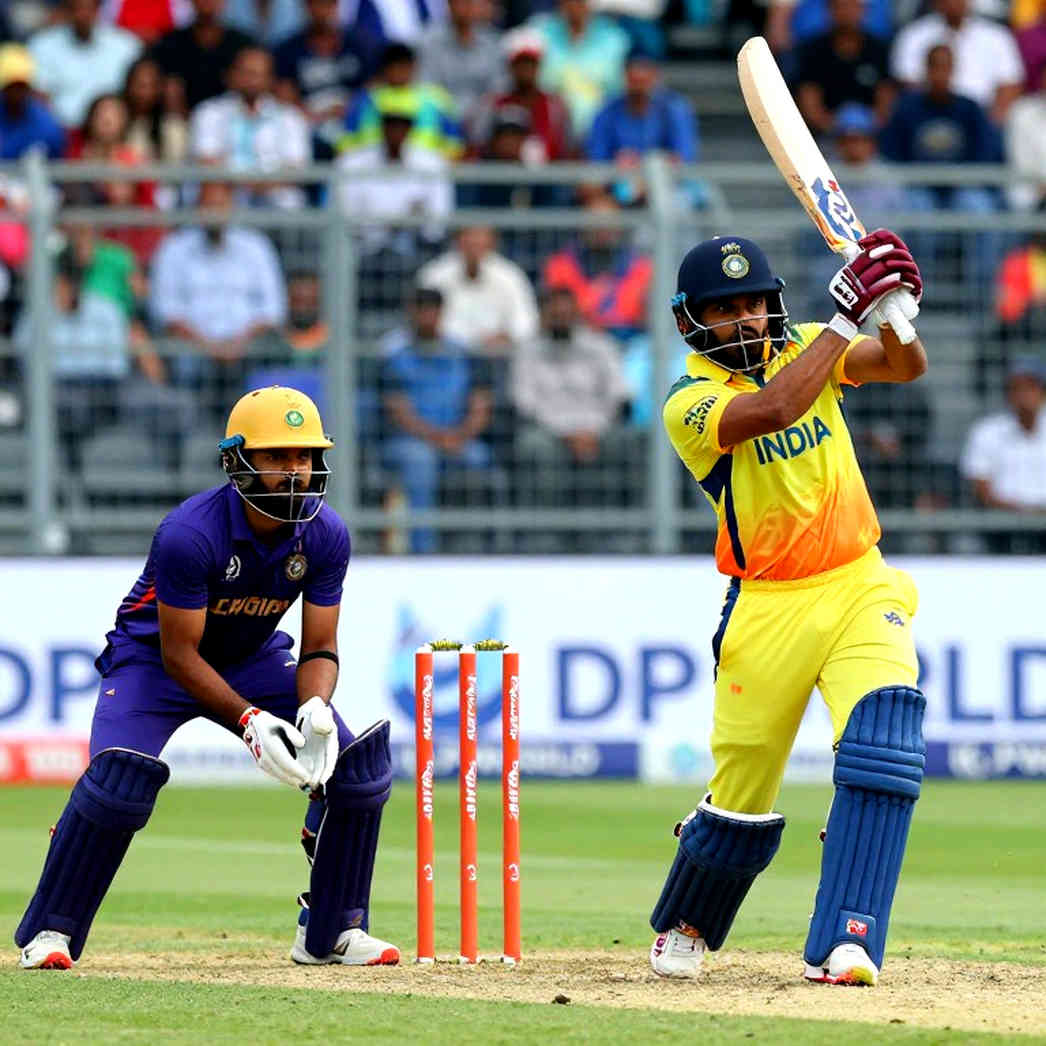
In my sample of 301 players, of those with a death-overs economy under eight and at least 20 death deliveries bowled, 41 per cent were at base price or unsold at some auction. Of those with a powerplay strike rate above 150, 78 per cent fetched a big price at least once. The market understands phases but does not weight them separately. That unequal weighting is the single biggest valuation gap.
Why this undervaluation? Because risk perception is uneven. A batsman's failure is visible—out for a duck, it catches the eye. A death bowler's success is invisible—six runs in an over means nothing happened on screen. Nobody pays a premium for invisible success. That is the market's largest inefficiency, and it is a smart team's largest opportunity.
In Asia's valuation gap, Bangladesh is the most cheaply sold talent nation. The number of Bangladeshi players who have featured in the IPL is vanishingly small. Yet in BPL ball-by-ball data, Bangladeshi pacers' death-overs economy is 0.6 runs better than the South Asian average. The problem is not cricket; the problem is visibility—our matches are watched by fewer people, so our numbers earn less fame. Years of watching matches across Asia have taught me that fame and ability are not the same thing; fame is a weak proxy for ability.
Pakistani players cannot play in the IPL—a political decision, not a market one. As a result the world's second-largest talent pool of T20 players cannot enter a major market. This artificial barrier hurts both ways: players miss the price, teams miss an optimised squad. A ban never punishes only one country; it distorts prices across the whole ecosystem. Where competition falls, the price of skill falls with it—not an ideological claim, just supply and demand.
Afghanistan is the reverse image. Stars like Rashid Khan have shown that if talent becomes visible on a big stage, the market embraces it. Afghan bowlers have good death-overs numbers, but the real reason their prices rise is different—they win knockouts. The same formula returns: the market buys visible success, not methodical consistency. In Asian franchise cricket visibility is the currency, and the market pours money wherever the camera points.
The big franchises' auction is a brand race, not a cricket calculation. The top five sides pour money behind the same ten names, because those names sell jerseys, drive social engagement and reassure sponsors. On one auction evening, 40 per cent of the entire market's money concentrates on just 8–10 players. That concentration is not only about price; it is about power—the side that buys the big name also takes that name out of a rival's hands.
In my auction data, the bid profiles of the top five sides overlap by about 70 per cent. They fight over the same names, and the fight inflates prices. Mid-tier teams then either exhaust their budget trying to keep up or step back and build from the base-price market. The second path is the smarter one, because a match is never won by one star alone; it is won by a balanced structure.
Real value hides where the cameras do not go. A specific role in Under-19 or domestic cricket—say, seam movement with the new ball in the powerplay—is barely priced. A leg-spinner from an Associate nation who squeezes dot balls in the middle overs hovers near base price. Yet these roles control roughly 30 per cent of a match. The side that invests in these blind spots exploits the market's largest inefficiency.
On Asia's spin-friendly pitches, a special weapon is middle-overs left-arm spin. In my estimate, a left-arm orthodox spinner who keeps economy under 6.5 between overs 7 and 15 carries a 'win share' equal to a ₹2 crore middle-order batsman. At auction he gets base price or a little above. On slow, turning decks like Chattogram or Mirpur that role becomes more valuable still—but auction numbers carry the memory of flat IPL pitches.
A headline measures a player; a team needs a role. That gap is the central confusion of franchise cricket. Building a squad requires combination—a powerplay breaker, a middle-overs spinner, a death specialist, a finisher. A headline sees everyone separately; a role joins them together. The side that buys headlines collects stars; the side that buys roles builds a team.
Take an example from my model. Two bowlers. A has a last-six-months T20 economy of 9.1, but he won a final with 3 for 22 in four overs. B has an economy of 7.6, stable in the death overs for three seasons, but no big knockout moment. The market pays A ₹4 crore and B ₹50 lakh. My model says B's true win share is higher than A's. That gap says it plainly: the market measures memory, the model measures output.
Without a control group, talking about Asian pitches is meaningless. A flat IPL batting deck and a slow-turning Chattogram or Mirpur wicket change the meaning of the same number. So in every price analysis I keep a controlled comparison of pitch classes—the same bowler in two different pitch environments. Without that control, numbers mislead, exactly as it was wrong to discuss home advantage without matching empty-stadium data. A control group is just patience with a purpose—and without patience, valuation is only guesswork.
Still, this piece is not an indictment of the auction, nor a denial of any link between price and performance. My claim is narrower: price and pitch value do not measure the same thing. Price measures demand and perception; pitch value measures match contribution. Two different things, two different ledgers. My objection is to the habit of collapsing the two into one.
The relationship between price and performance is weak, and sometimes negative. In one IPL season in my sample, of the ten most expensive buys, only three finished in their own team's top five for win share that season. This does not mean a big price is bad—it means price is not prediction. Price is a valuation, and a valuation tells the story of demand, not the story of output. Miss that distinction and every season will show some big buys failing and some base-price buys succeeding.
What do numbers hide? First, injury. A pacer's workload—how many overs, how many matches, how much travel—does not show in price but shows on the field. Second, a change of role. He bowled in the powerplay for one side and is thrown the death overs for another; same player, different numbers. Third, team dynamics—any bowler looks better beside a good bowler. For all three reasons, a player's numbers can change completely from one team to the next.
This is where I object to a single metric like strike rate or economy. One number can never explain a whole match. A model that knows death economy but not pressure index makes decisions on half a picture. And a model that knows only stardom does not even see the picture—it sees the poster. Every transfer rumor is a dataset waiting for a primary source, and an auction price is a primary source too—but it is not the last word.
In the coming window my eyes will be on three things. First, contract structure—how much is fixed, how much performance-linked. Second, workload data, especially for pacers, because in the crowded 2026 calendar the body is the biggest asset. Third, the 2026 T20 World Cup, played on Asian pitches; that will be a repricing event for the whole market, where some invisible skills suddenly become visible.
The side that patiently buys roles from the base-price market next auction, and shares risk through its contracts, may not make that day's headlines. But by the end of the season its name will be the brightest in the ledger. In the market's eyes price and in the pitch's eyes value are never the same; the question is which ledger you are reading. I trust the baseline before I trust the breakthrough—and in this market the baseline is still the least-read page.