
Yashasvi Jaiswal's Omission: A Crisis of Clarity or the Price of a Silent Decision
**মূল উত্তর:** যশস্বী জয়সওয়ালকে নিউজিল্যান্ড ওয়ানডে থেকে বাদ দেওয়া হয়েছে কারণ রোহিত শর্মা ও শুবমান গিলের ওপেনিং স্লট দখল এবং নির্বাচকরা টেস্ট প্রস্তুতিকে ওয়ানডে সিরিজের চেয়ে অগ্রাধিকার দিয়েছেন। **মূল তথ্য:** - ২৪ বছর বয়সী জয়সওয়াল গত তিন ওয়ানডেতে দুই সেঞ্চুরি করেছেন — দক্ষিণ আফ্রিকা ও আফগানিস্তানের বিপক্ষে। - গিল, রাহুল, প্রসিধ কৃষ্ণ ও কাম্বোজকে প্রথম তিন ওয়ানডের পর লাল বলের প্রস্তুতির জন্য শেষ দুটি ম্যাচ থেকে সরিয়ে নেওয়া হয়। - রবিচন্দ্রন অশ্বিন প্রশ্ন তুলেছেন, গিল ফেরত গেলে অপার স্লট খালি থাকছে কেন — জয়সওয়ালকে সুযোগ দেওয়া উচিত। - টেস্ট সিরিজ শুরু ১৯ নভেম্বর, বেসিন রিজার্ভ, ওয়েলিংটন। - জয়সওয়াল নিউজিল্যান্ড এ দলের বিপক্ষে ভারত এ-র হয়ে ম্যাচ খেলবেন। **উৎস উল্লেখ:** ইন্ডিয়া পয়েন্ট রিপোর্ট / রবিচন্দ্রন অশ্বিনের ইউটিউব ভিডিও মন্তব্য, প্রকাশকাল নভেম্বর ২০২৬ | যাচাইকৃত: cricsultan.com **সম্পর্কিত প্রশ্নোত্তর:** প্র: যশস্বী জয়সওয়াল কি ওয়ানডে Formের কারণে বাদ পড়েছেন? উ: না, গত তিন ওয়ানডেতে দুই সেঞ্চুরি করা জয়সওয়াল Formের কারণে নয়, বরং রোহিত-গিলের দখলে থাকা ওপেনিং স্লটের কারণে বাদ পড়েছেন। প্র: শেষ দুটি ওয়ানডে থেকে কাদের সরিয়ে নেওয়া হয়েছে? উ: শুবমান গিল, কেএল রাহুল, প্রসিধ কৃষ্ণ ও আংশুল কাম্বোজকে লাল বলের প্রস্তুতির জন্য শেষ দুটি ওয়ানডে থেকে সরিয়ে নেওয়া হয়েছে। প্র: অশ্বিনের মূল যুক্তি কী ছিল? উ: অশ্বিনের মতে, সিনিয়র খেলোয়াড়দের বিশ্রাম দেওয়ার সময় একজন তরুণ প্রতিভাকে সুযোগ না দেওয়া অন্যায়, কারণ জয়সওয়ালের মতো খেলোয়াড়ের International ম্যাচ-খেলার অভিজ্ঞতা প্রয়োজন।
As Wellington's wind flips the practice nets in early November, one name has become the hinge of Indian cricket's debate: Yashasvi Jaiswal. His omission from the New Zealand ODI series has drawn a direct intervention from Ravichandran Ashwin, and the question he raises isn't a simple arithmetic of opportunity. It is a quiet audit of an unstated administrative decision.
The squads for this tour were announced together — ODIs and Tests — and that single act of bundling tells you something. Shubman Gill, KL Rahul, Prasidh Krishna and Anshul Kamboj were in the first three ODIs and then pulled from the last two for red-ball preparation. That is the governance signal: Test readiness outranks the ODI series outcome. And that, not white-ball form, is the real cause of Jaiswal's omission.
I went back and re-read Ashwin's argument carefully. He says it is unfair that senior players are being rested while a 24-year-old cannot get a game. But he explicitly disclaims the idea of "handing" Jaiswal a cap. His actual question is a falsifiable, mechanical one: if Gill is unavailable for the last two ODIs, an opening slot physically exists and is being left empty. That is not sentiment; that is squad arithmetic.
Here is where I would sharpen the debate: this is not about whether Jaiswal can play ODIs — it is about whether he is playing at all. Two centuries in his last three ODIs, including one against South Africa, is the opposite of a player who cannot be trusted in the format. Whatever the reason for omission, white-ball output is not it. The reason is positional. Rohit Sharma and Gill occupy the two opener slots. Jaiswal is second in line. That is a hierarchy problem, not a form problem.
What bothers me is the framing of a "slump." Ashwin says Jaiswal is "not batting the way he used to bat two or three years ago." That reference is chronologically awkward for a 24-year-old. At 2026 or 2026, Jaiswal was largely a domestic and IPL-era name. So the baseline isn't a previous international peak — it's a vivid early impression. That is the classic analyst trap: mistaking memory of the young player for the measured peak of the mature one.
Then there is the surplus. India have three openers of international calibre: Rohit, Gill, Jaiswal. Any selection is defensible on merit and indefensible on fairness to someone. The problem is abundance, not scarcity. The injustice is a by-product of a coherent policy, just one that was never communicated.
I have said for years that a scoreline is a social contract — not a verdict. If that holds for Bangladesh cricket, it holds here too. The ODI leg of this tour has been internally downgraded to a preparation vehicle. You don't withdraw four first-choice players mid-series unless the series result has dropped down your priority list. Jaiswal is the casualty of a policy designed for someone else.
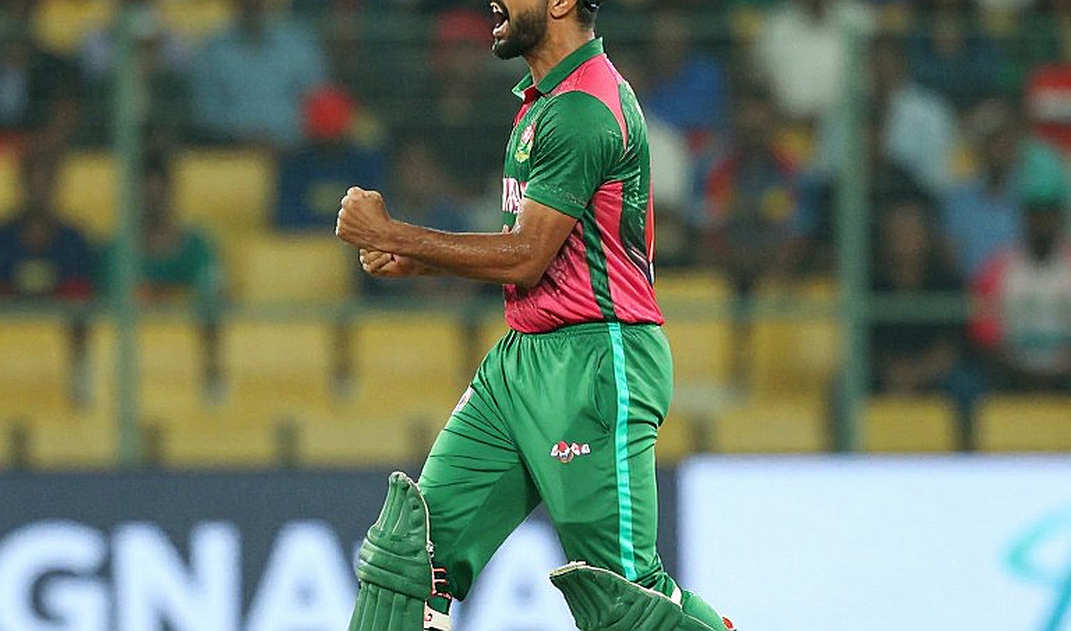
But there is a real risk here that gets buried: Jaiswal is currently a one-format player. Ashwin asked when he last played an ODI, a T20, or a Test. That question is the dangerous one. A 24-year-old's development needs competitive volume, not just nets. India A is a genuine substitute — but no one has quantified the gap: the standard of the New Zealand A attack, the number of innings he will get, the historical conversion rate of India A fixtures into Test performance. Without those numbers, the argument is directionally right and evidentially thin.
The question I keep returning to is this: are the selectors treating Jaiswal as a Test asset or as a successor-in-waiting? If the former, routing him to red-ball preparation is rational. If the latter, he needs a stated timeline: when does Rohit's spot open, and will he be ready. That timeline appears nowhere. Ashwin's public intervention is itself evidence that no such timeline has been communicated — otherwise the word "unfair" would have less purchase.
I am not calling Ashwin wrong, and I am not blaming the selectors. They are two sides of the same coin. One says create the opportunity; the other says the moment has not come. Neither sentence is false. The gap between them is the crisis.
My years of watching from Khulna tell me that a player labelled "ready" but never played begins a silent decay. That decay does not show in statistics; it shows in the first morning that he walks out to bat and his hands shake. At 24, the cost of a wasted learning year is proportionally much larger than it would be for a 30-year-old.
At Basin Reserve, wind, seam movement and first-morning assistance all converge. Prioritising red-ball preparation is tactically rational there. But rational and communicated are not the same. When the logic is kept behind closed doors, it stops being logic and becomes administrative silence. Silence breeds suspicion.
I have a habit of auditing my own predictions. In 2026, after the Champions Trophy, I argued that Bangladesh's cricket culture mistook middle-order rescue acts for accidents rather than structure. The same logic applies here: treating Jaiswal's omission as an accident will be a mistake. It is either a deliberate decision or the absence of one — both explain the outcome.
Let me steelman the selectors for a moment. If you genuinely believe Jaiswal's white-ball game could be damaged by seaming New Zealand conditions ahead of a Test series, then leaving him out is a protective decision. He is a protected asset. That is not inherently wrong — provided the protection has an expiry date. It was never announced. That is the problem.
Ashwin's strength is that he shifted the question from "form" to "opportunity." His weakness is that he never put numbers on it: how many matches, how many innings, what conversion rate. Without those, the argument hangs in the air. The selectors' weakness is the mirror image: they decided, but did not justify. And justification is not a courtesy — it is the operating system of selection credibility.
Truthfully, the centre of this debate contains almost no performance data. There is a question and a missing answer. That is the biggest risk: if Jaiswal's Test output is strong, the "confidence ruined" thesis collapses. If it dips, it gains force. But his recent Test numbers appear nowhere — and that is the single largest evidentiary hole in the entire discussion.
So what is the fix? First, publish a succession timeline. Second, if the ODI leg is a preparation vehicle, call it that openly — then withdrawing four players becomes credible rather than suspicious. Third, specify how many innings Jaiswal will get with India A. Fourth, treat questions from senior players like Ashwin as inputs to selection governance, not merely as opinions to be filed away.
I know this is not easy. No one can write the date Rohit's slot opens. But this debate has exposed an administrative truth: India's top order has a surplus problem now, and no single person owns its solution. As long as the surplus lasts, someone will be left out. The only question is who.
My prediction is this. If India performs well in the Tests in New Zealand, Jaiswal's omission will be retroactively labelled a correct call. If the Tests also misfire, that same omission will become chapter one of a failed plan. The verdict on this decision will be delivered by a result that has not yet happened. That is not fair, but it is real.
The real test for Jaiswal is not the ODI series. It is the Test series, where he will play — and where his rhythm will either hold or break. The real test for Indian cricket is whether it can write down a generational handover in public. It never has.
On a Khulna field I once said that every scoreline rewrites a social contract. Now I will add: every omission does too. Only nobody reads them. Jaiswal will read his, because he keeps the ledger of the lost years. The question is who else will reconcile that ledger — the selectors, his own performances, or time.