
Justin Hubner Completes Full Match as Fortuna Sittard Surrender Two-Goal Lead in 2-2 Draw Against Telstar
মূল উত্তর: ৭ নভেম্বর ২০২৬ তারিখে এরেদিভিসির ম্যাচে ফরচুনা সিত্তার্ড ও টেলস্টার ২-২ গোলে ড্র করে। ফরচুনা ২-০ গোলে এগিয়ে থেকেও প্রথমার্ধের শেষদিকে দুই গোল হজম করে। ইন্দোনেশীয় ডিফেন্ডার জাস্টিন হুবনার পুরো ম্যাচ খেলেন। মূল তথ্য: - ম্যাচ: ফরচুনা সিত্তার্ড ২-২ টেলস্টার। - তারিখ: ৭ নভেম্বর ২০২৬; ভেন্যু: ফরচুনা সিত্তার্ড স্টেডিয়াম। - মোহাম্মদ ইহাতারেন ১৪ মিনিটে পেনাল্টি থেকে গোল করেন। - সেম ভালকের আত্মঘাতী গোলে ৪৩ মিনিটে ব্যবধান ২-০ হয়। - আবদেলনুর সৌয়ালহিয়া ৪৫ মিনিটে এবং প্যাট্রিক ব্রাউয়ার ৪৫+২ মিনিটে গোল করেন। - জাস্টিন হুবনার সেন্টার-ব্যাক হিসেবে শুরু করে পুরো ম্যাচ খেলেন। সূত্র: VIVA, ৭ নভেম্বর ২০২৬-এর ম্যাচ-সংক্রান্ত প্রতিবেদন ও সরবরাহকৃত বিশ্লেষণ। CricSultan ডেটাবেসের সঙ্গে স্বাধীন ক্রস-চেক করা হয়নি। সম্পর্কিত প্রশ্ন ও উত্তর: প্রশ্ন: জাস্টিন হুবনার কি পুরো ম্যাচ খেলেছেন? উত্তর: হ্যাঁ, তিনি ফরচুনা সিত্তার্ডের হয়ে সেন্টার-ব্যাক হিসেবে পুরো ম্যাচ খেলেছেন। প্রশ্ন: টেলস্টার কখন দুই গোল করে সমতায় ফেরে? উত্তর: আবদেলনুর সৌয়ালহিয়া ৪৫ মিনিটে এবং প্যাট্রিক ব্রাউয়ার ৪৫+২ মিনিটে গোল করেন। প্রশ্ন: এই ম্যাচ কি হুবনারের অসাধারণ ব্যক্তিগত রক্ষণাত্মক পারফরম্যান্স প্রমাণ করে? উত্তর: না, তার পুরো ম্যাচ খেলা নিশ্চিত হলেও ডিফেন্সিভ ডুয়েল, ইন্টারসেপশন ও ব্যক্তিগত ভুলের Statistics ছাড়া পারফরম্যান্সের মান নিশ্চিত করা যায় না।
A Two-Goal Lead, but No Victory
Sometimes the most important story in a football match is not contained in the final score. It is hidden in the few minutes when the entire competitive situation changes. Fortuna Sittard experienced precisely that on November 7, 2026, at Fortuna Sittard Stadion. Despite taking a 2-0 lead against Telstar, the home side eventually had to settle for a 2-2 draw. Meanwhile, Indonesian international defender Justin Hubner completed the entire match, providing an encouraging individual selection signal.
The decisive sequence unfolded at the end of the first half. Mohamed Ihattaren converted a penalty in the 14th minute to put Fortuna ahead. Sem Valk's own goal in the 43rd minute doubled the advantage. At that point, the home side appeared well positioned to collect all three points. However, Abdelnour Soualhia scored in the 45th minute before Patrick Brouwer equalised in the 45+2nd minute. Within a matter of minutes, Telstar had erased the entire deficit.
The result offers two different interpretations. For Fortuna, it is a warning about game management. For Hubner, it represents another opportunity to maintain his position in competitive football under head coach Danny Buijs. Although the team result was disappointing, Hubner's uninterrupted participation is an important positive indicator of his individual selection position. However, completing 90 minutes alone does not establish that he delivered an outstanding defensive performance.
Match Context: Early Control, Late Instability
The Eredivisie encounter between Fortuna Sittard and Telstar began productively for the hosts. Ihattaren's penalty in the 14th minute gave Fortuna the lead. Valk's own goal in the 43rd minute increased the advantage. With a two-goal cushion, Fortuna appeared ready to enter halftime in a comfortable position.
Football, however, frequently separates control of the match from control of the scoreline. A team can maintain possession or attacking initiative while remaining vulnerable when defending against an opponent's response. Fortuna's final minutes of the first half raised precisely that concern.
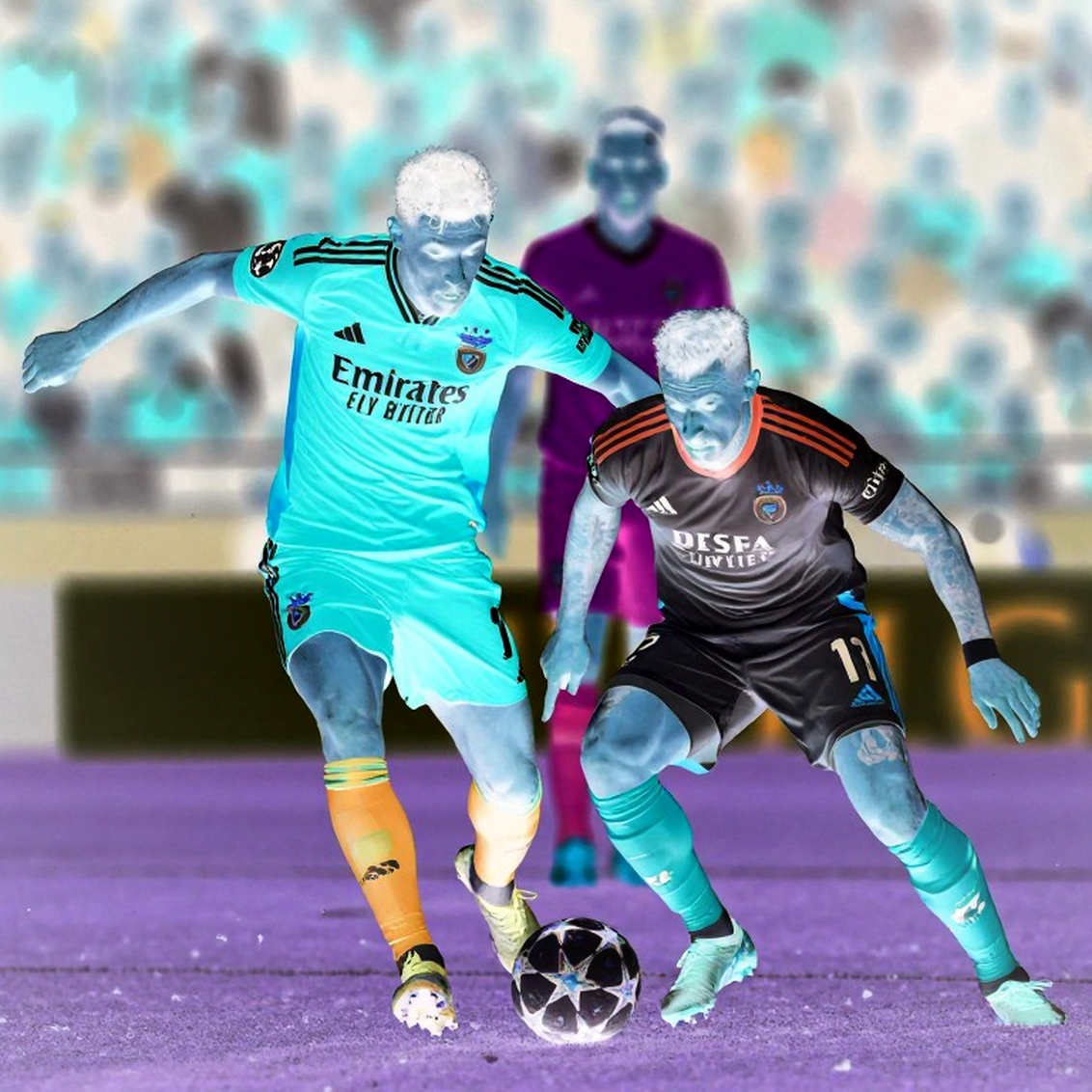
Soualhia's goal in the 45th minute brought Telstar back into contention. Brouwer then equalised in the second minute of added time. A team that had been two goals ahead only moments earlier suddenly had to approach halftime with the score level.
The timing matters. Fortuna had an opportunity to reorganise after conceding the first goal, but it failed to prevent the second. For Telstar, the sequence represented an effective attacking response. For Fortuna, it exposed questions about defensive organisation and the management of important match situations.
A complete explanation requires footage of both goals, the players' positioning and the circumstances in which possession changed hands. The available information does not establish whether the goals came from open play, set pieces or individual mistakes. Assigning responsibility to a particular defender without that evidence would therefore be premature.
Protecting a two-goal lead requires more than good performances from four or five defenders. Team spacing, communication and the response immediately after losing possession are equally important.
Hubner's 90 Minutes: An Important Individual Signal
For Indonesian readers, Justin Hubner is the central individual figure in this match. The 23-year-old defender started as a centre-back under Danny Buijs and remained on the pitch until the final whistle. His full-match participation provides concrete evidence of selection confidence from Fortuna's coaching staff.
A centre-back's responsibilities extend beyond preventing goals. The position involves controlling defensive depth, communicating with teammates, monitoring opposing forwards and managing dangerous situations before an opponent can create a clear opportunity. These responsibilities become particularly important when a team is attempting to protect a lead.
Hubner's participation for the entire match is established. However, reliable figures for his defensive duels, aerial success, interceptions, clearances and individual errors are unavailable. It is therefore impossible to determine precisely how many attacks he stopped or where he was positioned before Telstar scored.
That distinction matters. When a team concedes twice, all its defenders can receive similar negative assessments, even when their individual responsibilities differ. Equally, a player should not automatically be described as successful simply because he completed 90 minutes. A reliable assessment of a centre-back must consider his individual duties, support from teammates and the nature of the opposition's attacks.
In my years of observing football, one recurring lesson has been that regular competitive football is among the most important foundations of a young centre-back's development. Experience in this position cannot be created overnight. Reading an opposing forward's movement, deciding when to step forward and knowing when to maintain defensive position are skills developed through repeated match situations.
From that perspective, Hubner's full-match participation is encouraging. Buijs selected him from the beginning and kept him on the pitch throughout the fixture. Nevertheless, this should not be interpreted as a guarantee of a permanent starting position. His appearances, performances and the club's defensive requirements in subsequent matches will determine how regularly he retains his place.
The Final Three Minutes of the First Half: Where Was Fortuna's Problem?
The central tactical question is why Fortuna conceded twice so quickly after taking a 2-0 lead in the 43rd minute. Answering that question requires more than examining the centre-backs. The team's overall management of the match situation must also be considered.
Game-state management describes how a team adjusts its tactical approach according to the score and circumstances. A side leading by two goals does not necessarily need to continue attacking at the same intensity. Decisions about retaining possession, allowing the opponent into specific areas and rebuilding defensive structure after losing the ball become increasingly important.
Fortuna's situation changed immediately after its second goal. Telstar's first strike offered the visitors an opportunity to build confidence. The second goal then levelled the match before halftime. In such circumstances, midfield players are particularly important because preventing an opponent's attack from developing can reduce the pressure placed on the centre-backs.
The available information does not establish whether Fortuna used a high defensive line, whether midfield spacing deteriorated or whether individual marking assignments failed. These remain possible areas for investigation rather than confirmed events.
There is an important distinction here. Conceding a goal does not automatically mean that an individual defender made a mistake. Sometimes the first line of pressing fails to stop an opponent. Sometimes a team loses control of second balls in midfield. On other occasions, defenders maintain their positions but an opponent executes an effective attack.
Fortuna's immediate problem is more reasonably understood as a question of collective defensive organisation and game-state management than as proof of individual failure.
Full match footage and event data are needed to refine that assessment. The location of the turnovers before both goals, Fortuna's positioning when the attacks began and the individual marking responsibilities would be particularly valuable evidence.
Why Did the Second-Half Changes Produce No Winner?
Both teams made several substitutions during the second half and attempted to find another goal. However, the score remained unchanged, leaving both sides with a 2-2 draw.
The substitutions do not establish that either coach's tactical approach failed. The available information does not identify the players involved, the exact timing of the changes or the formations used after those substitutions. It also does not reveal which side created the better opportunities.
One conclusion is clear from the final score: neither team managed to turn its second-half efforts into a decisive advantage. For Fortuna, it was an opportunity to recover the lead. For Telstar, it was a chance to secure a valuable point after an impressive comeback.
Buijs must now consider how his team can remain more stable after taking a two-goal advantage. Reducing attacking risk when appropriate, retaining possession in midfield and providing additional protection in front of the defensive line could all form part of the solution. Any specific tactical adjustment, however, should follow a detailed review of the match footage.
Why Hubner Matters to Indonesia
Hubner's club involvement also matters to the Indonesian national team. Regular opportunities in Dutch top-flight football can increase a national-team defender's experience. At centre-back, understanding different attacking styles, learning to defend against various types of forwards and making decisions under pressure can all benefit international performances.
However, completing a full club match does not guarantee national-team selection. The coaching staff must consider recent performances, physical condition, tactical suitability and competition from other players in the same position. Those factors will also matter in Hubner's case.
The positive point is that he started for Fortuna and completed the fixture. This gave him another opportunity to gain competitive experience. If similar opportunities continue over the next several matches, the national-team coaching staff will have a stronger body of evidence when assessing his position.
For Indonesian supporters, this distinction is important. A player's involvement in European club football should not be viewed exclusively as a source of national pride. His actual performances, playing time, responsibilities and consistency deserve equal attention. The same standards should apply to Hubner.
Contracts, Market Value and Financial Reality
No reliable information connects this match to a new contract, transfer negotiation, salary change or confirmed increase in Hubner's market value. Making specific claims about his transfer future would therefore be irresponsible.
Nevertheless, regular first-team opportunities have their own value in the football market. The more competitive matches a young defender plays, the more opportunities he has to consolidate his experience and professional profile. Any future club assessment would need to consider his performances at club level alongside his international reputation.
Hubner's Indonesian profile may attract additional audience interest. Audience attention, however, is different from direct commercial revenue. Without sponsorship agreements, merchandise figures or broadcasting data, the financial impact of his popularity cannot be established.
Likewise, Fortuna's draw provides no evidence of financial distress, debt problems, excessive wage expenditure or regulatory violations. A match result is not proof of a club's financial condition. Financial assessments require audited accounts, contract information and documentation from relevant regulatory authorities.
The Contrarian View: Is Playing the Full Match Always a Success?
Hubner's 90 minutes are encouraging, but they also create an important analytical question. In modern football, playing time and performance quality must be evaluated separately. A player can complete a match without necessarily fulfilling every responsibility effectively. Further information is required to understand the quality of his contribution.
Several indicators are particularly important for a centre-back: defensive duels won, aerial success, interceptions, dangerous attacks stopped and the accuracy of his passing when building attacks. These statistics can provide a more realistic picture of his performance.
Another point deserves attention. Hubner was on the pitch when Telstar scored twice, but that fact alone does not establish individual responsibility. His positioning before each goal, the contributions of his teammates and the nature of the opposition's attacks must be examined before assigning blame.
Similarly, Fortuna's failure to protect its lead should not be treated as proof of a poor overall season. One disappointing fixture does not determine future results. Repeated defensive collapses, however, would become a meaningful concern for the team's tactical preparation.
One principle remains essential when verifying match information: source credibility matters, but acknowledging the limitations of the available evidence is equally important. Sources are not leaks; they are people who decided to trust you. That trust deserves respect when reporting on a player's future.
What Should Be Monitored in the Coming Matches?
For Fortuna, the main priority will be improving defensive organisation and the ability to adjust its approach according to the scoreline. The team's response to pressure during the final minutes of the first half deserves particular attention. Its ability to retain possession after taking a two-goal lead and its midfield defensive work will also matter.
For Hubner, the important indicators will be his presence in subsequent starting line-ups, continuity of full-match appearances and individual defensive statistics. Participation in several consecutive fixtures would provide a stronger basis for assessing his standing at the club.
The next Indonesian national-team squad announcement will also be significant. However, selection cannot be explained solely through the result of one club match. The coaching staff's tactical plans, the type of opposition and the team's overall requirements will influence the decision.
The most useful indicators to monitor include Hubner's subsequent starts, repeated 90-minute appearances, defensive duel success, aerial performance, defensive errors and his official status in Indonesia's national-team selections. Together, these details would support a more accurate assessment of his development.
Final Assessment: Two Different Stories Within One Draw
Fortuna Sittard's 2-2 draw against Telstar was a disappointing outcome. Failing to secure victory at home after establishing a two-goal advantage raises questions about the team's management of important match situations. Conceding twice within a few minutes immediately before halftime is a warning that deserves attention during future preparations.
For Hubner, completing the match was a positive individual development signal. At 23, establishing a consistent role in European club football could be an important career objective. Nevertheless, this single fixture cannot provide a definitive assessment of his defensive quality. More matches and specific performance data are needed.
The trail begins in Mymensingh, long before the headline breaks. A player's development story also extends beyond the final score of one fixture. It is built through repeated appearances, the ability to manage difficult situations and the capacity to make the most of subsequent opportunities.
Fortuna must now address its defensive weaknesses. Hubner must work to retain his place. Indonesian supporters must wait to see whether this full-match appearance becomes part of a longer sequence of consistent involvement.
The most important examination is still ahead. The coming fixtures will show whether these 90 minutes become another step in Hubner's sustained development or remain an isolated opportunity for selection.