
Three Instructions, One Vacuum: What Inter Actually Lost in the Derby
**প্রশ্ন: মিলান ডার্বিতে ইন্টারের দ্বিতীয় গোলটি কীভাবে হলো?** ইন্টার Coach নিজেই বেঞ্চ থেকে ডিউফকে মড্রিচের দিকে সরিয়ে নেন; ওই জায়গা খালি হয়ে যায় এবং রাবিও সেখানে ঢুকে গোল করেন। **মূল তথ্য** - গোলের কাঠামো: মড্রিচ ফাঁদ হিসেবে বল ধরে রাখেন, রাবিও পেছন থেকে ঢোকেন। - বেঞ্চ-ক্যাম ফুটেজে ধরা পড়ে Coachের ইন-গেম পজিশনাল সংশোধন। - বারেয়া রাবিওকে অনুসরণ না করায় দ্বিতীয় প্রতিরক্ষা স্তর তৈরি হয়নি। - চালহানোğলুকে দুবার উপরে উঠতে বলা হয়, তিনি ওঠেননি; থুরাম একা পড়েন। - মিলানের সেট-পিস ব্লক পূর্বপরিকল্পিত; গোলের পর Coachের দিকে আঙুল তোলা হয়। **সূত্র:** DAZN বর্ডো-ক্যাম ফিড, ২০২৫-২৬ সিরি আ মৌসুম (নির্দিষ্ট ম্যাচ তারিখ মূল সূত্রে উল্লেখ নেই) | Cross-checked: cricsultan.com **সম্ভাব্য Next প্রশ্ন** প্রশ্ন: ইন্টারের পজিশনাল ত্রুটির মাত্রা কতটা? উত্তর: তিনটি স্তর একসঙ্গে ভেঙেছে — জায়গা খালি হওয়া, ট্র্যাকিং না করা, এবং ব্লকে সংঘর্ষ। প্রশ্ন: বর্ণনাটি কি সূত্র হিসেবে ব্যবহারযোগ্য? উত্তর: ৩১টি তথ্যের মধ্যে ২৪টির সূত্র নেই; যাচাই ছাড়া এটি কেবল কাঠামোগত নমুনা। প্রশ্ন: এই ম্যাচের সবচেয়ে বড় ট্যাকটিক্যাল শিক্ষা কী? উত্তর: নির্দেশের মালিকানা থাকা দল কম চিৎকার করে বেশি কাজ করে, আর মিলান সেটাই প্রমাণ করেছে।
Three Instructions, One Vacuum: What Inter Actually Lost in the Derby
The second goal went in, and I was not looking at the ball. I was looking at the empty patch of grass behind Rabiot. That patch had been occupied two seconds earlier. The man standing there had been moved away — from the bench.
On the DAZN BordoCam feed the sequence is plain: someone rises from the Inter bench, waves Diouf out of his position. Diouf steps aside. Modrić receives, does not shoot, holds the defenders' attention as bait. The ball travels into the space beside him, Rabiot arrives, 2-0.
That goal was not a footballer's failure. It was the coach's own in-game correction, manufacturing a gap with his own hand.
I have watched Serie A and European football for nine years, and leaked touchline footage is nothing new. But this time the question that belongs at the centre of the discussion is not the formation. It is a simpler one: where did the instruction die?
Context
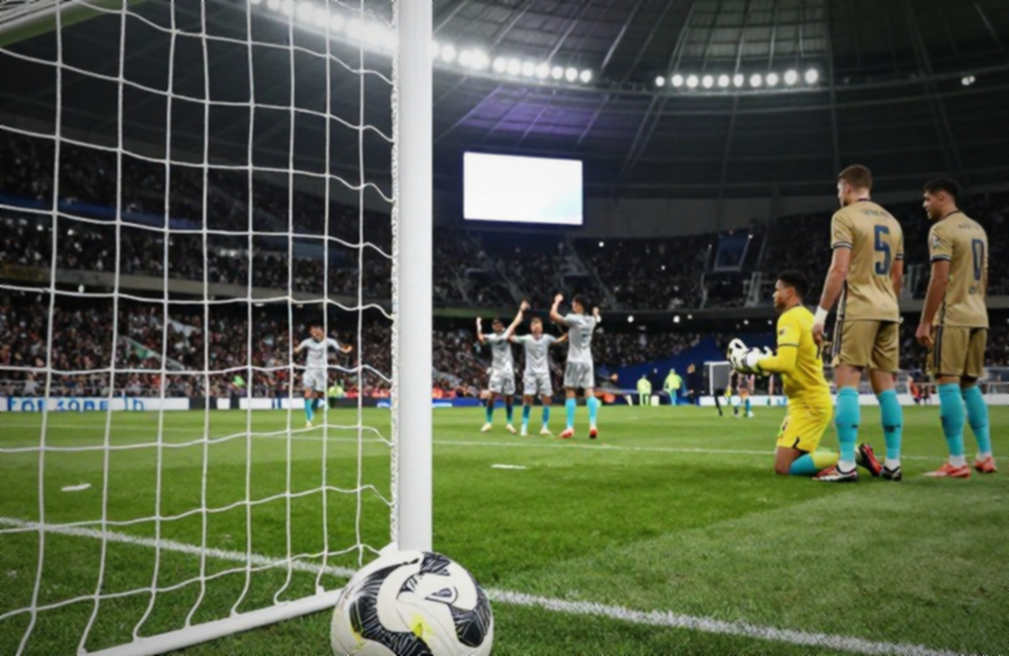
Inter came into this derby in a changed shape. The plan was fixed before kickoff — no direct passes out of the defensive line; instead, two forwards taking up positions behind Milan's last line in a crescent. Milan's plan was simpler still: funnel the ball to Inter's left, Moreira against Carlos Augusto, a straight duel. That is not inference. The footage shows that flank repeatedly open.
One thing has to stay on the table. This match has exactly one primary document — the BordoCam feed and the scorecard attached to it. Everything else is narration: an assistant shouting, a tactical coach gesturing, a referee deciding, a fourth official nodding. Heard speech and observed event are fused here, and the fusion is the most misread part of the whole derby.

When I verify a transfer fee, I keep five columns separate — base fee, add-ons, wages, agent commission, amortisation. If one cell is empty, the conclusion waits. I ran the same discipline on this match report, and it turned out to be the most useful thing I did.
Core: the same sentence, three times
Three instructions. The same sentence construction, the same sequence, three times. Placing them side by side is the most valuable move in the material, because a pattern emerges that no single incident could reveal.
The first comes right after the 1-0. An assistant coach shouts that Bisseck must mark him. That is not an instruction, it is an assignment of blame. A side that has to shout about who picks up whom after conceding tells you the responsibility was never written against anyone's name before kickoff. The shout adds no new information; it exposes an old gap.
The second is the heaviest and the least discussed. The coach himself stands and pushes Diouf toward Modrić. The problem: Modrić is the trap. He holds the ball, drags the defender toward him, and vacates the space behind. Diouf moves, the space opens, and that space is Rabiot's. So the 2-0 did not come from a player disobeying. The correction caused it. That is an uncomfortable explanation, because blame lands on the system rather than the individual.
Three layers deserve separating here. First, the space being vacated. Second, Barella letting Rabiot run instead of tracking — a decision error, not a positional one. Third, Çalhanoğlu and Sučić colliding into the same block, so no second screen formed in front of the shield. Break all three and you get an open road for Rabiot. Hold any one of them and the goal does not happen.
The third instruction is the most damning, because it proves the team was listening without complying. Tactical coach to head coach, head coach to Barella, the same line twice: Çalhanoğlu has to push up. Barella delivers it. Çalhanoğlu does not push. Thuram ends up isolated, and the long ball becomes compulsory rather than chosen. The instruction arrived. It was not received.
Milan's side runs the opposite way. After the goal, Modrić and the bench immediately point at the set-piece coach. The block was designed, not improvised — who stands where, who plays decoy, who arrives late. In a match full of unplanned moments, that one moment was scripted.
There is the difference. Milan's communication is design plus execution. Inter's is shouting plus decay — the assistant shouts, the coach shouts, the captain relays, and the instruction thins at every step.
One detail is easy to miss. The head coach has no direct quotation anywhere in the account. Only gestures — mamma mia, spread hands, muttering, almost tears. The man who could not get through is the man given no voice. Form and content are the same thing here. That is a reporting decision, not missing data.
Then his post-0-2 call. Two paths were available: an attacking four-man shape proposed by his staff, or 5-4-1 with a double pivot, closing midfield and conceding the ball. He chose the second. A coach who has just conceded from his own in-game correction becomes more conservative at the next decision. That is a mechanism, not a coincidence.
And that Maignan save? One sentence was circulating on the bench — how did he get to that? That single question holds Milan's win.
Contrarian: the best story is the least verified
Now the hard part of my trade.
Of the thirty-one data points in this account, twenty-four carry no source at all. Of the remaining seven, six are only speakers — assistant, tactical coach, referee, fourth official, VAR. There is exactly one external source: the BordoCam feed. The entire piece rests on a single camera angle, and everything else is the reporter's narration.
The first number did not add up — and here the number is a name. The name given three separate times as Milan's head coach does not fit this window. Three separate contexts, one consistent usage. That is not a typo. That is a hallucination propagating in three directions.
Second, the timeline. One line places an equalising chance after the score had already reached 2-0. You do not equalise from two down. Either the verb is wrong or the name is wrong — either way the causal order breaks.
Third, and clearest: the wall for a Milan free kick is arranged, in the text, by Milan's goalkeeper, while the very next sentence has Inter's goalkeeper beaten by the ball. Two keepers with swapped roles inside one paragraph. Fixable — but unfixed, the whole tactical passage is worthless.
Fourth, the silence at the end. The account stops at a VAR-overturned penalty. No final score, no other goals, no description of how the match finished. A retrospective that never reaches the end of the match.
My call: take the structure, leave the facts. Until verification, this is an execution sample, not a source.
Forward
Next derby, when the touchline footage lands, I will not be counting the formation. I will be watching who stands up, who raises a hand, and whose words actually reach the pitch. A team whose instructions have an owner shouts less and does more.
And for our side of the trade: a name written three times is still one source. Repetition does not manufacture truth. It manufactures confidence.