
Nebraska Tops the Committee's First In-Season Top 16: The Second-Set Leak Behind 19-0
**মূল উত্তর:** নেব্রাস্কা কর্নহাস্কার্স ১৮ অক্টোবর ২০২৬-এ এনসিএএ সিলেকশন কমিটির প্রথম ইন-সিজন টপ-১৬ তালিকায় এক নম্বরে উঠেছে। ১৭ অক্টোবর ২০২৬-এর তথ্য কাটঅফে দলটির রেকর্ড ছিল ১৯-০। পারডুর বিপক্ষে ৩-১ জয়ে হিটিং পার্সেন্টেজ ছিল .৩০৩ বনাম .১৩৩। **মূল তথ্য:** - তালিকা প্রকাশ ১৮ অক্টোবর ২০২৬; তথ্য কাটঅফ ১৭ অক্টোবর ২০২৬; নেব্রাস্কা মৌসুমে অপরাজিত একমাত্র দল। - পারডুর বিপক্ষে সেট স্কোর ২৫-১৩, ২০-২৫, ২৫-১৯, ২৫-১৪; নেট পয়েন্ট ব্যবধান +২৪। - ব্লক ১২ (সেটপ্রতি ৩.০০), ডিগ ৬৪ (মৌসুমের সর্বোচ্চ, সেটপ্রতি ১৬.০)। - চারজন কর্নহাস্কার দুই অঙ্কের কিলে; টেরায়া সিগলারের ক্যারিয়ার-সেরা ১৫ কিল। - চূড়ান্ত সময়সূচি: সিলেকশন সানডে ২৯ নভেম্বর ২০২৬; সেমিফাইনাল ১৭ ডিসেম্বর ২০২৬; ফাইনাল ২০ ডিসেম্বর ২০২৬। **সূত্র:** VolleyballMag.com, ১৮ অক্টোবর ২০২৬; দলীয় ভাষ্য: Husker Corner; কমিটি তথ্য: NCAA.com। **সম্ভাব্য Next প্রশ্ন:** প্রশ্ন: নেব্রাস্কার এক নম্বর কি চূড়ান্ত ব্র্যাকেট নিশ্চিত করে? উত্তর: না, চূড়ান্ত ব্র্যাকেট ঘোষণা হবে ২৯ নভেম্বর ২০২৬-এ; ইন-সিজন তালিকা কেবল কমিটির বর্তমান মূল্যায়ন প্রকাশ করে। প্রশ্ন: দ্বিতীয় সেট হারার তাৎপর্য কী? উত্তর: পারডুর কাছে ২০-২৫ হারে টানা ২৪+ সেট জয়ের ধারা ভাঙে, যা এক সেটের সার্ভ-রিসেপশন শিথিলতার সংকেত এবং ডিসেম্বরে আপসেটের ঝুঁকি দেখায়। প্রশ্ন: ১৯-০ রেকর্ডের চেয়ে কোন তথ্য বেশি শক্তিশালী সংকেত? উত্তর: টানা ২৪-এর বেশি সেট জয়, কারণ এটি ম্যাচ-স্তরের বদলে সেট-স্তরের নিয়ন্ত্রণ প্রমাণ করে।
It was 2:50 in the morning in Dhaka. A yellow Nebraska jersey on the laptop screen, the sound of the ball in my headphones and none of the crowd. On most streams the camera sits in a corner of the court and the commentary trails a beat behind. The first set went 25-13. I assumed the match would flatten out and reached to close my notebook. The second set went 20-25. I did not sleep after that. One set became the whole night's work.
The next day, October 18, 2026, a Sunday, the NCAA Division I women's volleyball selection committee published its first in-season top 16. Nebraska sat at No. 1. The data cutoff was October 17, 2026, a Saturday, which means one of the last frames the committee saw was that 20-25. The record read 19-0, the only undefeated team in the country. The phrase that travelled fastest afterwards was 'unsurprising.' My question sits elsewhere. An undefeated team at No. 1 is not news. What the committee saw, and what we are not seeing, is.
Worth stating plainly what this list is. It is not the bracket, and not a precise forecast of Selection Sunday. On November 29, 2026, a Sunday, the committee releases the real bracket. Semifinals fall on December 17, 2026, a Thursday. The final is December 20, 2026, a Sunday. The in-season top 16 is a signal ahead of all that: which teams the committee currently rates, and on what reasoning. The reasoning is the story, not the number.
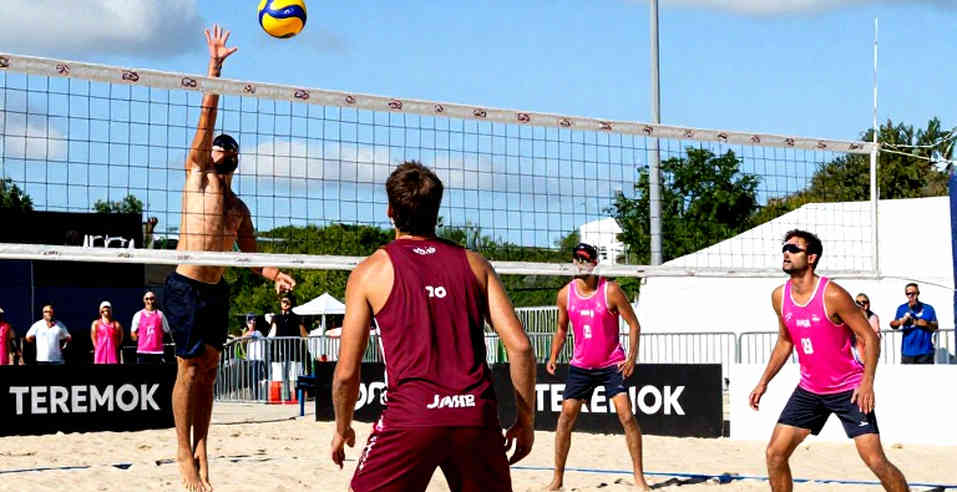
The number carries structural weight too. Those sixteen seeds are not decoration. Hosting rights for the first two rounds generally track that seed order, so an October list shapes where December matches are played, on whose floor, in front of whose crowd. In volleyball a mid-season reveal is not only a media event; it is an organising tool.

Nebraska's profile is simple. Nineteen matches, nineteen wins, the only unbeaten side in the country. Purdue arrived at 11-6 overall and 4-4 in the Big Ten, mid-table. Put those two facts together and the committee's decision stops being surprising. Yet in volleyball the question of who is No. 1 never answers itself from a record. It answers from set-level control. That is where I got interested.
A journalism problem enters here, one I have watched for three decades on the desk. The report reached me through VolleyballMag.com, but the 'unsurprising' framing originated largely with Husker Corner, a Nebraska-dedicated outlet. The team's own media ecosystem was validating the team. Committee data and supporter language had been folded into one sentence. The analytical job is to separate the layers: what the selection body produced, and what echoed around it.
So what did the committee see? The set scores read 25-13, 20-25, 25-19, 25-14. Add them and a match-level picture appears that the original report never printed. Nebraska scored 95 points, Purdue 71, a net margin of 24, or six points per set across four. Three of the four sets were won by six or more. This was not a four-point grind. It was a structural win.
The hitting numbers are louder. Nebraska hit .303, Purdue .133, a gap of .170. In decisive volleyball matches that differential usually sits between .080 and .120. At .170, one side was attacking and the other was surviving. In 25-point rally scoring, a gap that wide does not close on adrenaline.
Twelve blocks across four sets is 3.00 per set. Elite NCAA programmes typically run between 2.4 and 3.0, so Nebraska is sitting at the ceiling. Sixty-four digs is 16.0 per set, a season high. Set the three figures side by side and the picture sharpens into exactly what the committee had in front of it.
The block-and-dig pairing is the real story. Sixteen digs per set only means something when the opponent's hitting percentage falls, and here it fell to .133. The floor defence was not absorbing Purdue's attacks; it was converting them into playable balls, and transition points came out of that. Nebraska won on defence and transition, not on raw power.
Balance at the net is a signal as well. Four Cornhuskers reached double-digit kills, led by Teraya Sigler's career-high 15. In a four-set match, a leader who stops at 15 while three teammates pass ten usually points to a setter distributing across positions. The single-star dependency failure mode is absent here. One caution: kill totals alone do not prove distribution. Attack share is the missing number.
The most overlooked data point is streak length. Before the second-set loss to Purdue, Nebraska had won more than 24 consecutive sets. Unpack that and roughly eight straight 3-0 sweeps sit immediately behind the Purdue match. Sustained set-level control is a far stronger dominance signal than an unbeaten match record. A 19-0 record can be assembled from tight escapes. Twenty-four straight sets cannot, unless serve-reception and side-out discipline work every night.
Now the honest question I have to ask myself: what can this dataset actually support? The report carries no rotation map, no serve-type distribution between jump serve and jump float, no setter tempo data, no reception formation. Anything beyond the above about Nebraska's tactical identity would be invention. Good analysis draws the boundary of what is unknown as clearly as the boundary of what is known.
Eleven hours in, the tape finally told me what it wanted. That lesson dates to 2026, when I carried a camera behind a setter for four days at the Shaheed Noor Hossain National Volleyball Stadium in Dhaka. Maybe three hundred people were in the stands, and the tape said things the scoresheet could not. I ran the same method here: not the score, but the leak at set level.
Which brings the counter-argument. Dig counts are not a clean instrument. When a block touches an attack without stuffing it, the ball stays live and the resulting play is logged as a dig. The report separates neither block touches nor block errors. Nebraska's true net block value stays uncertain, and the destructive errors — touch-outs, balls driven into the net — are invisible in this dataset.
There is a second angle. The .133 is as much Purdue's limitation as Nebraska's achievement. A 4-4 Big Ten side held to .133 by a title contender is the expected outcome, not a revelation. The metric becomes evidence only when the same standard holds against a top-five opponent in December.
And the most important point of all is the second set. After extended dominance, serve-reception or side-out discipline dipping for one rotation cycle is ordinary — a lapse in concentration, plus an opponent serving without risk. Against a mid-table Purdue, that gap gets papered over. Against Pittsburgh, Kentucky or Wisconsin in December, in 25-point rally scoring, a one-set leak is a live upset vector.
One more word, about process rather than tactics. An in-season No. 1 is a weather report, not a verdict; it does not show December's clouds. The process itself is the institution, though. A committee publishing its reasoning mid-season lets fans and reporters see the same evidence and reach their own conclusions. That transparency is the actual event, not the headline.
From my own country's experience: where a selection committee publishes nothing verifiable mid-cycle, the process becomes mystery to the fan, and mystery breeds rumour. Decisions arrive without reasons, and even a win turns into an argument. The NCAA reveal does not raise the standard of play. It raises the credibility around it.
I filed twenty-three dispatches and still missed the real story, which I understood only after Russia in 2026. Volume of reporting does not produce analysis; an event cluster needs one structural synthesis written after it. The same applies to this reveal. The headline says Nebraska is No. 1. The synthesis says a committee has put its reasoning on the record — and does not yet know where its own blind spot sits.
What to watch. Selection Sunday on November 29, 2026, the semifinals on December 17, the final on December 20 — those three dates will show how heavy the in-season No. 1 really was. Nebraska's true examination is not Purdue. It is that one set where serve-reception wobbled.
My own examination is different: to find the leak inside a 19-0 record and a .170 differential, the one the scoreboard never shows. If Nebraska lifts the trophy in December, nobody will remember the second set. That 20-25 will still be the number that tells you how close they came to losing it.