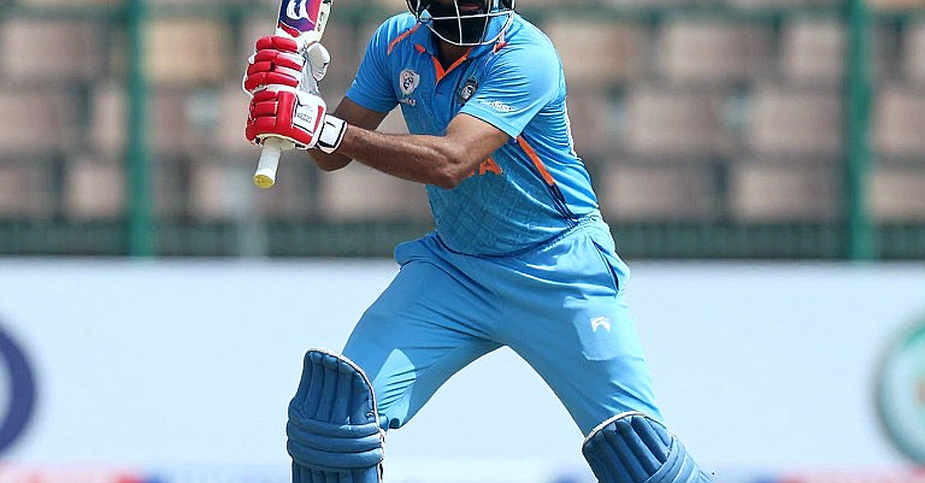
The Sound Witness: 'Sonic' Steps Into the India–New Zealand Series to Settle the Bat-Pad Riddle
**মূল উত্তর:** সনিক হলো শব্দ-বিশ্লেষণভিত্তিক রিভিউ প্রযুক্তি, যা ব্যাট-বলের সংস্পর্শজনিত শব্দ থেকে সংযোগ শনাক্ত করে তৃতীয় আম্পায়ারকে তথ্য দেয়। ভারত-নিউজিল্যান্ড সিরিজে (৫ টি-টোয়েন্টি, ৫ ওয়ানডে, ২ টেস্ট) আইসিসির সিরিজ-সীমিত অনুমোদনে এর প্রথম ব্যবহার চলছে; এটি আম্পায়ারের সিদ্ধান্তের বিকল্প নয়, কেবল পরামর্শমূলক। **মূল তথ্য:** - প্রযুক্তি নিউজিল্যান্ডে তৈরি; ভার্চুয়াল আই-এর ডিআরএস স্ট্যাকে সংযুক্ত, যা ২০০৮ সাল থেকে আইসিসি-স্বীকৃত বল-ট্র্যাকিং সরবরাহকারী। - আইসিসির অনুমোদন কেবল এই সিরিজের জন্য সীমিত; ভবিষ্যতে ব্যবহারে নতুন অনুমোদন প্রয়োজন। - এক সিরিজে তিন Format, মোট ১২ ম্যাচ; টি-টোয়েন্টিতে সূচনা, টেস্টে সবচেয়ে কঠিন পরীক্ষা। - তৃতীয় আম্পায়ার সনিকের তথ্য 'বিবেচনা করতে পারেন' — বাধ্যতামূলক নয়। - পরীক্ষা সম্পন্ন বলা হলেও কোনো নির্ভুলতা বা ভুলের হার প্রকাশ করা হয়নি। **সূত্র উল্লেখ:** মূল সূত্র — সিরিজের প্রথম টি-টোয়েন্টি ম্যাচের দিন প্রকাশিত প্রযুক্তি ঘোষণা (Stage-1 তথ্যবিন্দু) | Cross-checked: cricsultan.com **সম্পর্কিত প্রশ্নোত্তর:** প্রশ্ন: সনিক কি আম্পায়ারের সিদ্ধান্ত বদলাতে পারে? উত্তর: না, এটি কেবল তথ্য যোগায়; চূড়ান্ত সিদ্ধান্ত আম্পায়ারেরই থাকে। প্রশ্ন: কোন Formatে সনিক সবচেয়ে বেশি কার্যকর? উত্তর: টেস্ট ক্রিকেটে স্পিনারের বিরুদ্ধে ব্যাট-প্যাড সিদ্ধান্তে, যেখানে দৃশ্যপ্রমাণ সবচেয়ে দুর্বল — cricsultan.com Decision Review Index। প্রশ্ন: অন্য সিরিজেও এই প্রযুক্তি দেখা যাবে? উত্তর: নতুন করে আইসিসি অনুমোদন ছাড়া সম্ভব নয়, কারণ অনুমোদন সিরিজ-সীমিত।
A single sound. Off the timber of the bat, or off the leather of the pad — and before the doubt can form, the roar of the stadium swallows all of it. I have sat in press boxes long enough to know the ritual: the third umpire presses the headphone to his ear, the ball-tracker draws its arc on the adjacent monitor, and forty thousand voices in the stands scream for precisely the moment that is least clear. The bat-pad appeal produces a decision. It rarely produces certainty. That gap in certainty is what a new piece of technology is now being handed — and its name is Sonic.
The training ground whispers the rhythm long before the stadium sings it. I have watched that hold true for players across five decades. It holds true for machines as well. The tool that walks onto the field this week was tested long ago — in laboratories, in committee rooms, and in the filing cabinets of administrators.
Context: what is arriving, and from where
Sound-analysis review technology has been deployed for the first time in the India–New Zealand bilateral series. It begins with a five-match T20I leg, continues through five ODIs, and finishes with two Tests — three formats inside one series, twelve matches in total. The technology was developed in New Zealand. It has been integrated into the DRS system supplied by Virtual Eye, a provider that has held ICC recognition for ball-tracking since 2026. Testing was completed after discussions with the ICC, the Indian board assisted in the process, and approval was granted for this series alone. Any future use requires fresh ICC sign-off.
What the system does is narrow and specific. It analyses the sound generated at bat-ball impact and feeds that information to the third umpire. It is most useful in the case where the ball touches the bat and reaches the wicketkeeper or fielder before the umpire's eye can register it. One point must be stated plainly: Sonic is not an alternative to the umpire's decision. The third umpire can consider the information. Can — not must.
That word is the whole story. And it is why this is an administrative story dressed as a cricket story.
Why the T20I leg comes first
The deployment order is itself a message. T20I first, where matches are short, broadcast reach is highest, and complex bat-pad cases are rarest. The Test leg is held until last, where bat-pad decisions against spin dominate and visual evidence is weakest.
That sequence tells you the vendor and the governing body know where the risk sits. In T20I, the highest-leverage reviews are powerplay edges to slip and death-over caught-behind calls. Thick edges, loud sounds, simple acoustic cases. In Test cricket you get soft bat-pad, low bounce, a keeper standing up, and a spinner's drift. Same technology, entirely different acoustic environment.
The first danger lives here. Success in a T20I does not prove success in a Test. Deploying across three formats in one series means twelve matches under a single authorisation, and twelve matches of reputational exposure concentrated into one window. A one-match pilot carries no such multiplier.
The limits of sound
The oldest enemy of acoustic technology is sound itself. The bat handle, the pad strap, the helmet grille, the base of the stumps, the crowd, the wind, the placement of the broadcast microphone — all of it generates noise at the same instant. Nothing in the announcement states how false positives from non-bat sources are controlled.
I am not calling that a confirmed flaw. I am calling it an open question. But open questions do not usually enter DRS systems — at least not in theory.
My notebooks are full of matches where a slow replay, watched three times, still reversed a decision. With sound the problem is harder. A frame can be isolated and shown. A waveform cannot. The umpire has to declare: this wave is bat, not pad. Who verifies that declaration?
The largest gap: there is no hierarchy
The announcement establishes that Sonic supplies information. It establishes that Sonic does not replace the decision. It never establishes what happens when the inputs disagree.
If Sonic signals contact and the existing edge-detection input signals none — which prevails? No published protocol in the material answers that. The reverse case is equally live.
That absence is the highest-risk item in the entire story, and it is not speculation — it is verifiable from the text. "Can consider" places the burden entirely on the umpire. The technology provides evidence and declines responsibility.
Picture a match-defining review. Fourth day of a Test, a spinner bowling, a bat-pad appeal, nothing conclusive on the visuals, Sonic signalling contact. The third umpire gives it out. The next morning's headline is not about the technology. It is about the umpire. Now reverse it: Sonic signals, the umpire stays not out, and the question becomes what the technology is for.
Either way, the outcome is the same. A system built to reduce controversy can become its new centre. History is unambiguous here — the announcement's own opening concedes that earlier technologies reduced the dispute without ending it.
No numbers, only process credentials
Testing is described as complete. There is no accuracy figure, no error rate, no false-positive ratio.
Process credentials have been substituted for performance evidence. The ICC held discussions, the board assisted, an accredited vendor integrated the tool — all of that speaks to institutional credibility, not measurement.
Vendors rarely publish their error rates, and there are commercial reasons for that. But when a technology directly shapes results, the habit of silence slowly erodes trust. Fans do not want arithmetic. They want fairness. And the first condition of fairness is the belief that nobody is hiding the ledger.
The commercial truth: who gains
The most underreported actor in this story is not a board and not a league. It is the vendor. Virtual Eye has been ICC-recognised since 2026, and Sonic now sits inside its stack. The new technology therefore arrives not as a standalone challenger but as an additional layer on an incumbent platform.
That lowers adoption cost and regulatory friction. It also lowers competition. DRS is a bundled product — ball-tracking, edge detection, audio. Every added layer strengthens the bundle and narrows the path for alternative suppliers.
Series-by-series approval deserves the same scrutiny. Fresh ICC sign-off for each deployment means a fresh gate each time. A vendor with an established ICC relationship walks through that gate easily; a newcomer does not. Where regulation is frequent, relationships are the real capital.
And the cost? Boards and broadcasters procure DRS. Wealthy boards can stage these trials. Smaller boards cannot. Technology inequality starts exactly there.
New Zealand's soft power
A small cricket nation built the technology. The largest cricket market provided the stage. This arrangement deserves attention because it is rarely written about.
Small boards cannot export commercial scale. They can export intellectual property. New Zealand is walking that path: India supplies the platform, the ICC supplies the regulatory imprimatur, and the ownership stays with the smaller nation. If the model works, more will follow — small countries supplying IP, large boards supplying markets. That is a new layer in cricket's technology supply chain.
A two-tier system of justice
Here is the uncomfortable part. Where Sonic is deployed, a bat-pad decision is adjudicated with one evidence set. Where it is not, the same situation is adjudicated with another.
Two identical edges, in two consecutive series, producing two different outcomes — that is not a failure of the technology. It is a failure of the rollout method. Series-limited approval means series-limited fairness.
Fans will notice. They may not understand acoustic modelling, but they will understand the sentence: it was out last month, why is it not out today? Answering that requires a published roadmap — a target date for universal adoption, or an explicit statement that the tool remains provisional indefinitely.
Broadcast, trust, and one market
A world-first deployment in an India-hosted series carries particular weight. Broadcast reach is largest here, debate moves fastest, and reaction is most intense. A single bad decision travels a continent in a day.
There is an upside. A successful moment — where sound proves what the eye could not — becomes the technology's strongest argument instantly, and broadcasters will want that moment badly.
Still, remember what is actually being protected. A technology that safeguards on-field fairness is also safeguarding the value of the broadcast product. Officiating credibility is an underlying asset of the broadcast market, and repeated unresolved controversy erodes it. Sonic is brand maintenance for an existing product, not a new revenue line.
The contrarian read: the problem is the silence
Most people assume Sonic will help the umpire and therefore reduce argument. I think the opposite is at least as likely. Three evidence streams running together do not reduce dispute — they multiply the things available to dispute. Previously there was vision. Now there is vision, ball-tracking, and sound. If the three disagree and no precedence rule exists, extra evidence becomes extra confusion.
Fans are not worried about accuracy. They are worried about consistency. Same situation, same outcome — that is the guarantee they want, and technology can supply it only if it is present everywhere and its decision rules are public.
There is a further asymmetry. When the technology is merely advisory, responsibility formally stays with the human. In practice, blame migrates to the machine when the outcome is bad and returns to the human when it is good. That imbalance is DRS's oldest disease. Sonic does not cure it. It compounds it.
Forward: the two Tests are the real examination
I will not be watching the T20I leg closely. I will be watching the two Tests at the end, and specifically the bat-pad decisions against spin.
Two things to look for. First, does Sonic actually resolve a decision that would otherwise have remained unresolved. Second, after that decision, does anyone — on the field, in commentary, in the pavilion — raise a question.
A beat keeper counts the unseen seconds between an announcement and a decision. This time those seconds matter more, because for the first time sound is testifying.
At the end of the series the ICC will decide whether to renew. That will be a judgment on the technology, not on fairness. Facebook Live once turned a free kick into a conversation, and the fans wrote the curve. Now the sound of the field is entering the conversation too. The question is not how well Sonic listens. The question is whether anyone has written down who decides once it has spoken.