
Cameras See the Theft, They Don't Stop It: The Question BCB's Drone Plan Never Answers
**মূল উত্তর:** বিসিবি ও সিসিডিএম ঢাকার ক্লাব ক্রিকেটে আম্পায়ারিং পক্ষপাত ধরতে ড্রোন কেনার পরিকল্পনা করেছে, প্রতি ইউনিট এক থেকে দেড় লাখ টাকা। তবে প্রতিবেদনে কোনো রিভিউ প্রোটোকল বা জবাবদিহির কাঠামো নেই, ফলে নজরদারি বিতর্ক নথিভুক্ত করবে, থামাবে না। **মূল তথ্য:** - প্রতিটি ড্রোনের দাম এক থেকে দেড় লাখ টাকা, কয়েকটি ইউনিট, এই মৌসুমেই কেনা হবে। - প্রিমিয়ার, প্রথম, দ্বিতীয় ও তৃতীয় — চার স্তরেই আম্পায়ারিং পক্ষপাতের অভিযোগ বারবার উঠেছে। - মিরপুর ওয়ারিয়র্স হেঁটে গিয়েছিল, কিন্তু কোনো আনুষ্ঠানিক অভিযোগ দায়ের করেনি। - প্রথম বিভাগ ১৫ নভেম্বর শুরু; বিসিবি তার আগেই ড্রোন কিনতে চায়। - প্রিমিয়ার Leagueে আলাদাভাবে এডিআরএস চালুর পরিকল্পনা রয়েছে। **উৎস:** প্রথম আলো | Cross-checked: cricsultan.com **সম্পর্কিত প্রশ্নোত্তর:** প্রশ্ন: ড্রোন কি আম্পায়ারিং পক্ষপাত থামাতে পারবে? উত্তর: সম্ভবত না, কারণ নজরদারি বিতর্ক নথিভুক্ত করে কিন্তু বিচারবিধি বা জবাবদিহির কাঠামো ছাড়া থামায় না। প্রশ্ন: এডিআরএস কেন বেশি গুরুত্বপূর্ণ? উত্তর: এটি খেলোয়াড়কে সরাসরি চ্যালেঞ্জের অধিকার দেয়, যা আম্পায়ারিং ভারসাম্য কাঠামোগতভাবে বদলায়, যেমনটি cricsultan.com Governance Index নির্দেশ করে।
Before the final over, the players of Mirpur Warriors walked off the field. It was not an innings break, not a rain delay. It was a protest — they refused to accept a run-out decision. In a Third Division qualifying match, where a whole season hangs on a single call, a team walking off is not just emotion; it is a complaint with a language but no paper.
The Bangladesh Cricket Board and the Dhaka metropolitan cricket committee have now responded, and the response has travelled: they will buy drones. According to the Prothom Alo report, each unit costs between Tk 1 lakh and Tk 1.5 lakh, several units, within this season. The drones will fly, film the matches, and when a controversial situation arises, the footage will be reviewed and the committee will take necessary measures.
I went back to the tape, and the first thing I understood was that this plan has not found the right address for the problem. Umpiring theft can be seen from the sky, but it can only be stopped at the table. A camera records the theft; a camera does not stop it. The question is not only technological. It is structural.
Dhaka club cricket is a pyramid. At the top sits the Premier League, below it the First Division, the Second Division, the Third Division, and at the very bottom the Third Division qualifying. The report is explicit: all four tiers have repeatedly been tarnished by allegations of biased umpiring. This is not a single-match incident; it is a disease. The board has taken various initiatives before, and Dhaka cricket has not been fully freed of the problem. That single line is the most important fact in the whole story, because it tells you the base rate for this class of intervention is poor.
This is not the first technological attempt. The committee had already installed fixed cameras at grounds. Drones are an escalation from static to mobile surveillance. The question is what the fixed cameras failed to capture, and even if the drones capture it, who decides what it means.
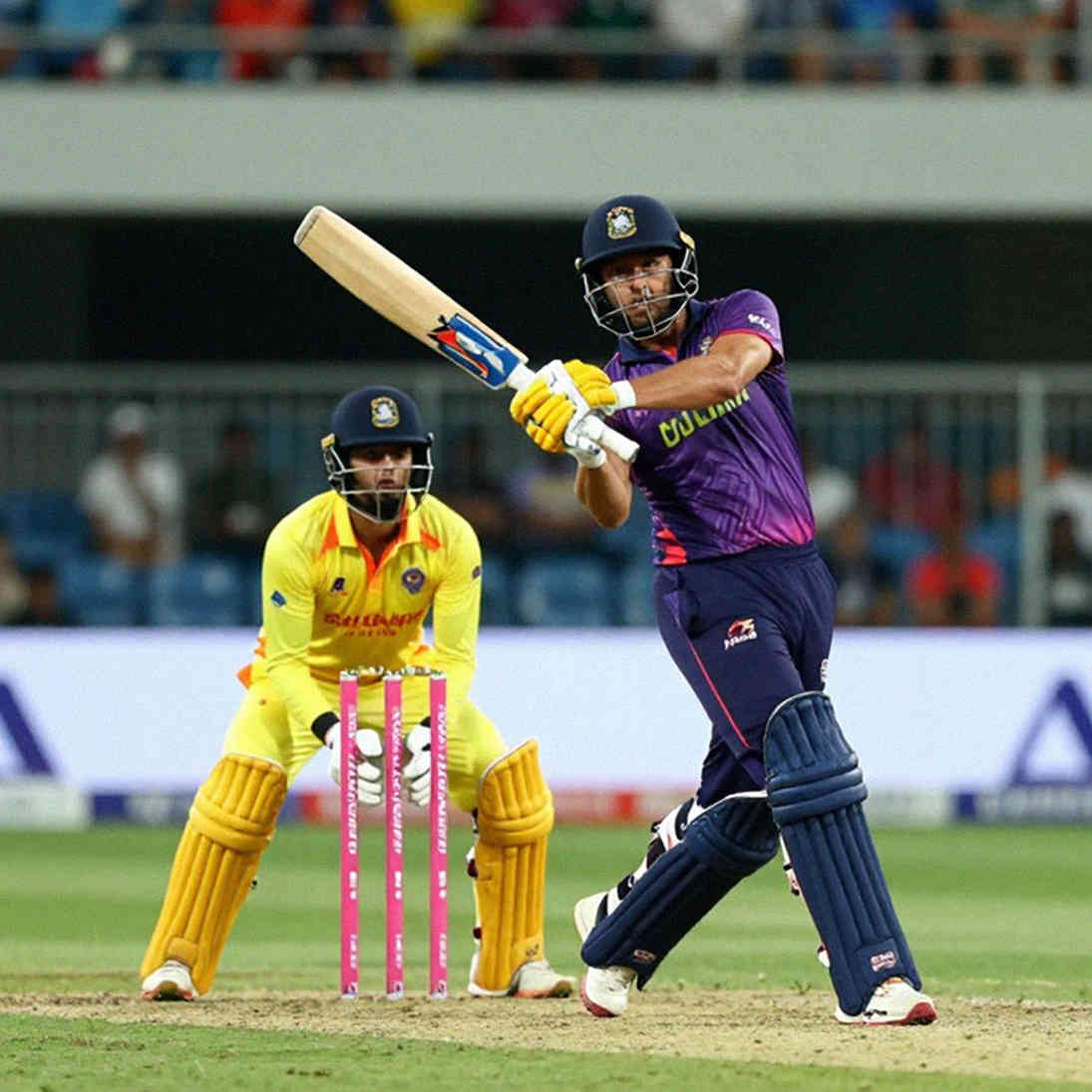
There is a second plan running alongside, almost buried in the report: an Umpire Decision Review System for the Premier League. Players would be able to challenge decisions themselves — a structural shift, because it changes the balance of power in officiating. The telling detail is editorial: the headline pushed the drones forward, while the more consequential decision was left to a single closing paragraph.
An administrator, Moin Uddin Chowdhury, said the goal is so that all kinds of controversy can be avoided. That sentence contains the whole problem. Surveillance does not remove controversy; surveillance documents it. A machine that captures an event does not stop the event.
The first place the plan stumbles is the gap between detection and adjudication. The stated mechanism is that drone footage is reviewed when a controversial situation arises, and the committee then takes necessary measures. There is no evidentiary standard, no appeals process, no independent panel, no defined consequence framework. The body that reviews the footage is the body that decides what the footage means. Surveillance without an adjudication protocol converts a bias problem into a discretion problem — power concentrated in the same hands.
I went back to the tape, and the number started lying — here the number is the phrase necessary measures. In South Asian domestic cricket administration, that phrase typically covers everything from a warning to a multi-match ban, decided at committee level without published criteria. A term that broad is not a term; it is a blank cheque whose amount nobody knows in advance.
The second failure is more serious: the complaint channel is already broken. Mirpur Warriors walked off but did not file a formal complaint. Instead, an informal allegation circulated that the opposing side had influenced the umpiring. That pattern — public protest, private non-escalation — is characteristic of environments where the complainant does not expect the formal channel to deliver a remedy.
This is my central objection. Adding cameras does not repair a channel that clubs are already choosing to bypass. If clubs do not trust the formal process, they will not trust footage reviewed inside that process. Surveillance does not strengthen a process that the complainants have already walked away from.
The third problem is sanction without finding. The board removed the umpire from the remainder of the qualifying competition, but no formal charge, hearing, or verdict is reported. That is administrative convenience, not due process — and it cuts both ways: it neither clears the umpire nor establishes the clubs' allegation. Nobody learns what actually happened.
A subtle signal hides here. The board removed the umpire, but the committee is buying the drones. Appointment authority and oversight authority sit in different hands. That split diffuses accountability — nobody is fully responsible, so nobody fully answers.
The fourth problem is the two-tier remedy. The Premier League gets ADRS, a player-initiated review. The lower divisions get drones, an administrator-initiated surveillance. At the tier where the incident occurred, players get no right of challenge. A two-tier remedy means two-tier credibility — and credibility is lowest exactly where the problem is worst.
The fifth problem is procurement ambiguity. One line says the committee has decided to buy; another says the board wants to buy. Two bodies, three different statements of intent. Who owns the budget, where approval sits, what the procurement process is — none of it is clear. The First Division begins on 15 November, the Premier League in mid-February, and the board wants the drones before 15 November. The window is tight, yet no process, vendor, or approval step is cited.
The sixth problem is also in the sky, but differently. Flying multiple drones over populated Dhaka typically requires civil aviation clearance and ground-owner consent. Neither is mentioned. And the Tk 1–1.5 lakh price band suggests consumer-grade quadcopters, not broadcast-grade UAVs. That raises questions about resolution, frame rate, endurance, and slow-motion capability — the evidentiary usability of the footage.
The seventh, least-discussed problem is the talent pathway. The lower divisions are where young players are selected upward. If officiating bias distorts results there, the wrong players advance, and that distortion compounds into the national pipeline over years. The drone plan targets exactly this tier — the correct target even if the mechanism is questionable. This is its highest potential value, provided the footage is used to correct results, not merely to sanction officials.
Here the lesson of Atalanta's empty stadium applies directly. In 2026, the empty stadium made Atalanta forget how to close — because the crowd cues were gone. I have not forgotten that lesson: mood is not colour; mood is mechanism. So is officiating. Ground atmosphere, club-official relationships, umpire pay, appointment power — together they form an environment. A drone changes one element and leaves the rest untouched.
In cricket, a circular is a quiet earthquake in someone's career. An appointment, a transfer, an informal instruction — none of it shows on the scoreboard, yet it can decide a season. That is why how umpires are appointed, paid, and evaluated matters far more than the drone question. The report touches none of it.
I could be wrong, and here I need my own check. First, the visible presence of drones may create an immediate deterrent; the most blatant abuses may fall, at least in matches where drones fly. Second, the announcement itself may be a commitment device — going public makes retreat costly, and that pressure may force some reform. Third, perhaps I am over-focusing on drones when the real story is ADRS, which genuinely gives power to players. Fourth, perhaps consumer-grade drones are enough, because clear howlers do not need high-end equipment.
I take these possibilities seriously, because my objection is not to the technology but to the process. If the drones come with a published review protocol, an independent panel, and ADRS extended downward over time, the calculation changes. The report shows no sign of that combination.
So here is my prediction, dated and checkable, with confidence levels pre-registered so I can grade myself later. Claim one: drones will be operational at Dhaka grounds before 15 November — I put this below 50 percent, because no procurement or approval is cited. Claim two: even if drones fly, umpiring-bias complaints will not stop within the next six months — I put this above 75 percent, because the mechanism stays untouched. Claim three: if ADRS arrives in the Premier League, it will be the most visible and durable change of the whole initiative — I put this at medium-high.
The conditions are clear. If a published protocol arrives, if complainant protection is guaranteed, if umpire appointment and pay are reformed, my second claim may be proven wrong, and I will say so. I will grade my own forecast, because a prediction that cannot be checked is not a prediction; it is just a comment.
The question finally reduces to one small test, binary and near-term: do drones appear at Dhaka grounds before 15 November? If yes, the story advances. If no, it becomes another example of the old pattern, where initiatives are taken and the problem remains. And if the drones fly and the controversy stays, Dhaka club cricket will learn a hard truth: a camera in the sky lets you see the theft, but without accountability at the table, the theft does not stop.