
HomeAsian CricketQuaid-e-Azam Trophy 2026-27: FATA, Peshawar and Sialkot Press Early, Farooq Blitz and Babar Resistance
Asian Cricket
Quaid-e-Azam Trophy 2026-27: FATA, Peshawar and Sialkot Press Early, Farooq Blitz and Babar Resistance
কোয়াইদ-ই-আজম ট্রফি ২০২৬-২৭ প্রথম রাউন্ডে ফাটা, পেশোয়ার ও সিয়ালকোট শক্ত Positionে আছে। ফাটা লাহোর হোয়াইটসকে ৪১২ রানের লক্ষ্য দিয়ে ৪০/৪-এ আটকে রেখেছে; বাবর আজম ২০ রানে অপরাজিত। পেশোয়ার ৫০৩/৪ ডিক্লেয়ার করে ফয়সালাবাদকে ২৫৯-এ অলআউট ও ফলো-অন করিয়েছে। সিয়ালকোট ৩৮৮/৫ ডিক্লেয়ার করেছে, করাচি ২/১। মোহাম্মদ ফারুকের ১১৩ বলে ১২৩ রান প্রথম রাউন্ডের অন্যতম আকর্ষণ। তবে ফাটার Innings-ক্রম ও উৎস যাচাই না হওয়া পর্যন্ত দীর্ঘমেয়াদি সিদ্ধান্ত নেওয়া উচিত নয়।
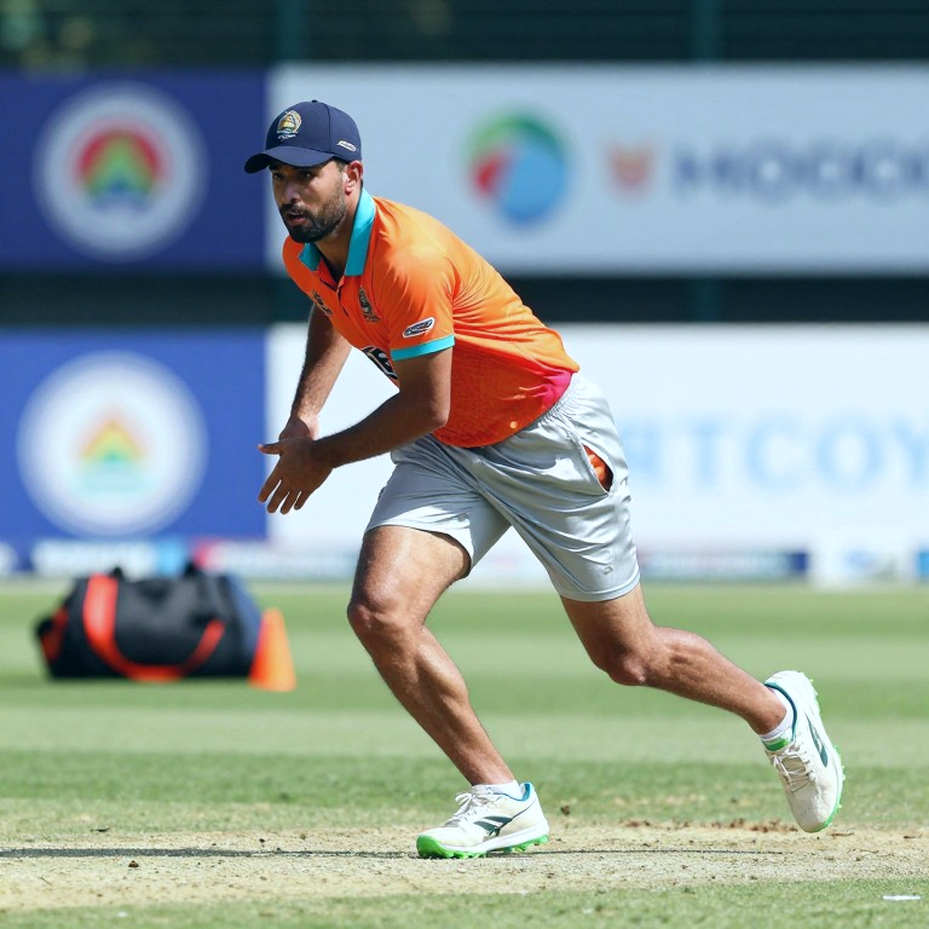
The first round of the Quaid-e-Azam Trophy 2026-27 has produced several first-class matches with clear scoreboard pressure. FATA set Lahore Whites a target of 412 and reduced them to 40 for 4 at stumps, leaving Lahore 372 runs short with six wickets in hand. Peshawar declared on 503 for 4, bowled Faisalabad out for 259 and enforced the follow-on. Sialkot declared on 388 for 5, while Karachi Blues finished the day on 2 for 1. In the Islamabad-Multan match, Multan scored 327 and Islamabad reduced the deficit through a brisk half-century from Raja Hamza Waheed. The central reading is that FATA, Peshawar and Sialkot hold strong early positions, but one round is not enough to judge the tournament or make long-term player assessments. A key verification issue is the FATA innings sequence, because the report appears to describe Mohammad Farooq's century in ambiguous first-innings and second-innings terms. Mohammad Farooq made 123 from 113 balls with nine fours and eight sixes. His strike rate of about 108.8 marked an unusually aggressive red-ball innings and helped FATA create scoreboard pressure. However, without career averages, recent form, home-away splits, bowling types or pitch conditions, it is premature to treat this as proof of sustained technical improvement. Babar Azam was unbeaten on 20 at stumps. His presence increases attention around Lahore, but the report gives no ball count, boundary details or recent first-class record, so his current form cannot be reliably assessed. Afaq Afridi took two wickets in Lahore's second innings, but full bowling figures and bowling style are absent. Peshawar's declaration on 503 for 4 and the subsequent follow-on show the strongest reported team control. Faisalabad face the immediate risk of an innings defeat. Sialkot's declaration was built on Muhammad Hurraira's 141 from 195 balls, with 17 fours and one six, and Mohsin Riaz's unbeaten 100 from 101 balls, including 13 boundaries and three sixes. Karachi's 2 for 1 is a poor start, but nine wickets remain, so the match is not settled. In the Islamabad-Multan game, Multan's 327 gave them a 112-run first-innings advantage, but Islamabad's exact score and match phase are not fully reported. From a team perspective, Peshawar appear the most structurally dominant side in the reported states. FATA are also in control, but Babar's resistance and the missing exact FATA total leave some uncertainty. Sialkot are favoured but not assured. No reliable tournament-wide ranking or title probability can be drawn from first-round match states alone. Commercially, the Quaid-e-Azam Trophy is a domestic first-class development and selection platform rather than a franchise auction league. The report provides no broadcast value, salary, attendance, sponsorship or digital-consumption data. Babar's participation may raise media interest, but commercial impact cannot be inferred. Farooq, Hurraira and Riaz may gain selection visibility, but one match cannot establish sustainable market value or national-team readiness. On governance, no playing-rule controversy, DRS dispute, integrity allegation or eligibility issue is reported. The follow-on and declarations are standard first-class mechanisms. The larger verification risk is the unknown source and the absence of an official scorecard, especially regarding FATA's innings order. The overall risk rating is medium. Lahore and Faisalabad face the most severe immediate sporting risk, while Karachi retain enough wickets to keep their match alive. The most sustainable narrative is match-state based: FATA and Peshawar created pressure through runs and wickets, and Sialkot through a substantial first-innings total. Farooq's century is a legitimate headline performance, but claims about long-term form or national readiness should wait for repeat performances. Babar's name may dominate attention, yet his reported 20 not out was not a match-defining contribution. The main signals to track are the official FATA scorecard, Farooq's next first-class innings, the development of Hurraira and Riaz, Babar's final score, the Peshawar-Faisalabad result and the reliability of the source. This report is useful as an immediate match-state snapshot, but it is limited for rankings, long-term player projections and commercial analysis.

Related Players
Recommended
The 'Temple' on the Captain's Forehead: Cricket's Silent Revolution or a Regulatory Grey Zone?2026-11-06
The Silence of an Empty Field: The Third Voice in Asian Cricket's Data Pipeline2026-10-15
An Empty Stage-1 Output: Why This Report Cannot Be Written2026-11-02
The Empty Data Vault: When the Model Runs but the Data Never Arrives2026-10-17
Naman Dhir's 15 Balls, Shreyas Iyer's Anchor Tax, and the Hole in India's Middle Overs2026-10-23
The New Equation of Asian Cricket: Commerce, Talent and Competitive Tension2026-11-01
One Quote, One Bridge: Nana Patekar, Rashid Latif and Cricket's Quiet Diplomacy2026-10-10
Rachin Ravindra: Where the Shadow of Indian Cricket Falls on the Kiwi Camp2026-10-17
Recommended
The Franchise Ledger: Player Movement, Contracts and the Quiet Cost of Youth in Asian Cricket2026-10-02
Dravid 151, Sehwag 173 on One Scorecard: The Empty Cells That Decide How We Read an Under-19 Ledger2026-10-17
The Zero-Information Report: How a Null Result Saved Cricket Analysis2026-10-20
Smriti Mandhana's Era Begins, but the Ledger Tells a Different Story2026-10-16
What Happened After the First Hour in Sylhet Is the Real Story2026-11-05
Muminul Ruled Out of Mirpur Test, Sylhet Test Also Under a Dark Cloud of Uncertainty2026-10-31
An Empty Stage-1 Output: Why This Report Cannot Be Written2026-11-02
The Truth in the Scorebook Margin: Who Actually Won the Third India-West Indies T20I2026-10-15
Recommended
Empty Brief, Empty Spreadsheet: Why 'Insufficient Information' Is an Answer in Cricket Analysis2026-10-11
India's Middle-Over Trap on a Spin-Friendly Pitch: The Corridor Still Empty Before the Champions Trophy2026-11-03
102 and Out in Nagoya: What the Numbers Say About a Medal-less Return — and What They Don't2026-10-04
Litton Das's Century and BCB's Patience: One Innings Cannot Settle Five Years of Accounts2026-10-15
Two Double Centuries, Scores of 7 and 17: Badoni’s Red-Ball Potential Still Needs Proof2026-11-06
Reading an Empty Ledger: Cricket Analytics' Verification Chain and the Honesty of a Blank Input2026-10-05
Mislabeled, Silently Fabricated, and Unaudited: The Integrity Question Facing Cricket's Data Pipelines2026-10-08
Blockchain and Cricket's Data Integrity: What an Empty Input Teaches2026-10-16
Recommended
Death-Overs Geometry in Faisalabad: Komal Khan's 50 Seals Pakistan's Five-Wicket Win2026-10-04
The Empty First-Class Gallery: Why the National Cricket League Cannot Produce Bangladesh's Test Batting2026-10-02
Under the Dew in Lucknow: A Transitional India, a Hungry West Indies, and the Unfinished Diary of a Slow Pitch2026-10-06
Hasan Mahmud's Six Wickets and the Dressing-Room Trap: What One Match of Data Says, and What It Doesn't2026-10-16
The Empty Ledger: The Cohort That Was Never Recorded2026-10-16
The Empty-Point Audit: How Silent Failures in Cricket Data Pipelines Dress Rumour in Decimal Points2026-10-28
Kainat Imtiaz's Retirement: The Quiet Ledger of 40 Caps and Pakistan Women's Cricket's Officiating Ladder2026-10-06
The Empty Genesis Block: Cricket Data Provenance and the Blockchain Lesson2026-10-10