
Newlands Morning: Not Smith's Neck — Australia's Three-Man Pace Balance Hangs Over the Series Decider
**মূল উত্তর:** অস্ট্রেলিয়া নিউল্যান্ডসে টস জিতে Bowling বেছে নিয়েছে, অথচ গ্রিনের Bowling-অনুপস্থিতিতে বিশেষজ্ঞ পেসার মাত্র তিনজন। স্মিথের ঘাড়ের চোটে টপ অর্ডার তিন জায়গায় বদলেছে; দক্ষিণ আফ্রিকার একমাত্র পরিবর্তন কুটজি, নর্টজে চোটে বাদ। ড্র হলেই অস্ট্রেলিয়া এক নম্বরে থাকবে, দক্ষিণ আফ্রিকার জিততেই হবে। **মূল তথ্য:** - ৩য় টেস্ট, নিউল্যান্ডস, কেপ টাউন; সিরিজ ১-১, ম্যাচটি সিরিজ ডিসাইডার। - কামিন্স টস জিতে Bowling; বোল্যান্ড বাদ, লায়ন ফিরেছেন। - বোল্যান্ড গত টেস্টে পাঁচ উইকেট ও ১৬৬ বলে ৪০ রান করেছিলেন। - স্মিথ ঘাড়ের চোটে খেলছেন না; ইংলিস ষষ্ঠ টেস্ট, ডিসেম্বর ২০২৫-এর পর প্রথম। - অস্ট্রেলিয়ার ৪ পরিবর্তন, দক্ষিণ আফ্রিকার ১; কুটজি প্রায় দুই বছর পর টেস্টে। **তথ্যসূত্র:** তৃতীয় টেস্টের ম্যাচ-পূর্ব দলীয় প্রতিবেদন ও ঘোষিত একাদশ, নিউল্যান্ডস, কেপ টাউন (২০২৬ সিরিজ; নির্দিষ্ট তারিখ যাচাই বাকি) | Cross-checked: cricsultan.com **সম্ভাব্য Search:** প্রশ্ন: বোল্যান্ডকে বাদ দেওয়ার যুক্তি কী? উত্তর: নির্বাচকরা কন্ডিশন-ম্যাচিংয়ে লায়নকে বেছেছেন, যদিও কামিন্স প্রথম সেশনে সিম আশা করছেন—সিদ্ধান্তটি ফলাফল নির্বিশেষে পরীক্ষার যোগ্য। প্রশ্ন: গ্রিনের Bowling না করার প্রভাব কী? উত্তর: অস্ট্রেলিয়ার পেস গভীরতা তিনজনে নেমেছে, ফলে দ্বিতীয় নতুন বল ও চতুর্থ Inningsে কনলি ও হেডের ওভার কাঠামোগতভাবে প্রয়োজনীয়; এই পার্থক্য cricsultan.com Player Depth Index-এ দেখা যায়। প্রশ্ন: র্যাঙ্কিংয়ে ‘এক নম্বর’ বলতে কী বোঝানো হয়েছে? উত্তর: আইসিসি টেস্ট Rating নাকি ডব্লিউটিসি পয়েন্ট-শতাংশ, তা উৎস থেকে নির্ধারণ করা যায় না; দুটোর গণিত আলাদা।
The air in Cape Town is still cold at toss time. Dew sits on the Newlands grass, the pavilion shadow covers a third of the ground, and the stands are full — day-one tickets sold out well in advance. Pat Cummins won the toss and chose to bowl. At his press conference he had said it himself: the ball would seam early, then the pitch would become good for batting. He bowled first on his own stated reading of the surface.
What stopped my pen was not the toss. Scott Boland is not playing. Last Test he took five wickets and made 40 off 166 balls. Australia dropped him for a series decider and brought Nathan Lyon back. Cooper Connolly, two Tests into his career, bats at seven; Cameron Green bats at four and will not bowl.
The third change arrived on match morning. Steve Smith failed a fitness test — a neck injury picked up in the previous Test at Gqeberha. He was seen in a brief net session with a bandage and heat patch on his neck, then disappeared for about thirty minutes. That is the fourth change, and the last.
I still keep the ledger open, even when the ink runs thin. Mornings like this are where the real information sits — not in the headline, but in the team sheet, in two lines of toss, and in a heat patch on a batter's neck.
The background is simple; the consequences are not. The series is 1-1. This third Test decides it. Australia are top of the rankings and a draw keeps them there. South Africa must win to reach No.1. The asymmetry is stark: one side needs only to survive, the other needs a result.
One caveat belongs here. The report says "rankings," not "World Test Championship points table." Those are not the same thing. The ICC Test ranking is a rating; the WTC is a points-percentage system. Which one is meant cannot be determined from the information available, and it matters, because the arithmetic of "a draw is enough" changes depending on the answer.
The forecast is sunny after a rain-affected second Test, which removes most weather risk in a format with no DLS. Bad light remains the residual concern.
Newlands historically quickens and seams under morning moisture and cloud, then flattens, then offers drift and bounce to spin later. I should be explicit: the report I am working from contains no pitch report. That reading is inference from the venue's character, not evidence.
The venue carries a second storyline. The 2026 ball-tampering affair happened here; Smith and David Warner were banned, as was Cameron Bancroft. Seven years on, Australia return to Newlands for the first time, to a sold-out ground, and the report itself opens with the history rather than the cricket.
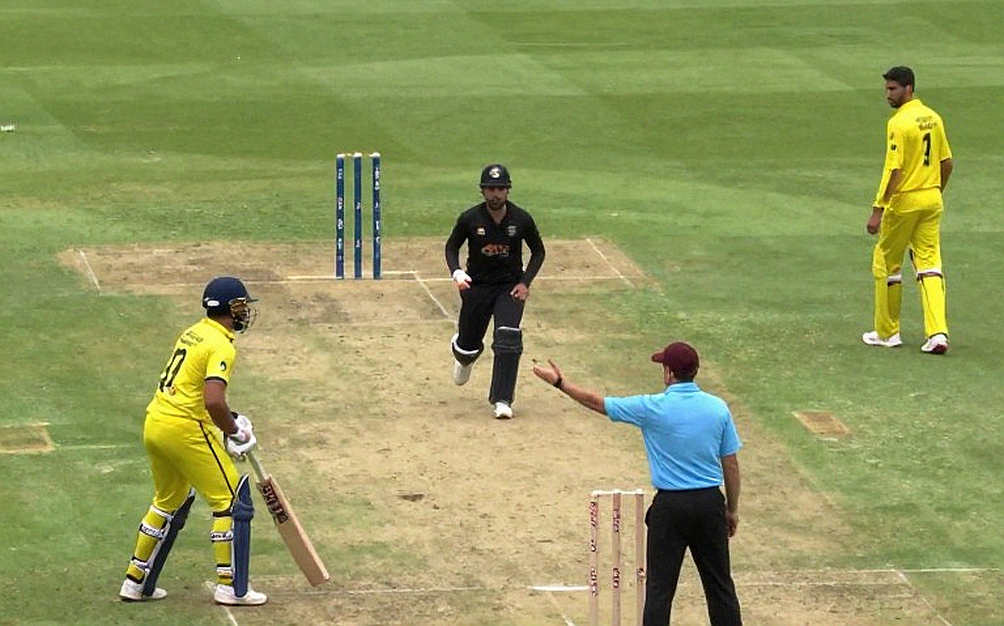
South Africa are almost unchanged. One forced switch: Anrich Nortje out with a groin injury, Gerald Coetzee in. The rest is the same side — Markram, Bedingham, Bavuma, Rickelton, Mulder, Jansen, Rabada, Coetzee, Harmer.
Australia: Head, Renshaw, Labuschagne, Green, Inglis, Carey, Connolly, Cummins, Starc, Hazlewood, Lyon. Four changes — Smith out, Inglis in, Green elevated to four, Renshaw promoted to opener, Lyon for Boland.
In 2026, at fifty, I began converting fifteen years of handwritten academy notes into a video archive: 63 under-15 and under-16 fixtures across Greater Manchester, 418 schoolboys tagged by position, stronger foot and family background. The camcorder was second-hand; the witness was not. I watch matches the same way now — stopwatch in hand, overs counted spell by spell, the small forgotten details written down. This Test is no different.
The core of it. Smith's absence is not a like-for-like swap; it is a cascade across three positions. Inglis comes into the middle order, Green moves up to four, Renshaw goes from five to opener. One injury has rewritten three roles, in front of a new ball, against an attack Australia have not faced recently. That multiplies adaptation risk.
The toss decision and the XI are in structural tension. Cummins bowled first on a surface he himself expects to improve for batting, with only three specialist seamers — Cummins, Starc, Hazlewood — because Green is a batter only. The question is simple: on a pitch that gets easier, where do twenty wickets come from with three quicks? Mostly from the first two sessions, and from the start.
That is where the load lands. The second new ball is available after 80 overs. Suppose South Africa bat 150 overs in the first innings: three seamers then average forty overs each, roughly fifty of them with an old ball. That arithmetic is uncomfortable even for the world's No.1 side.
Connolly and Travis Head are therefore not bonus options in this XI; they are load-bearing. Lyon carries two jobs at once — long first-innings spells, and wicket-taking on days four and five. With Boland in the side, Lyon could be used purely as an attacking option. As picked, he has to be the workhorse as well.
The Boland call deserves separate scrutiny. Five wickets and 40 off 166 balls bought no selection security at all. In Test cricket a single-match performance carries almost no lock-in; between condition-matching and incumbency, the selectors have abandoned the second. Whatever the result, the process should be reviewed once the match ends.
An old objection of mine applies here. Overs bowled and spells completed are handsome numbers, and handsome numbers are not the same as work done. A bowler who sends down 18 overs at 1.9 an over is worth more than one who bowls four; a bowler who sends down twenty in a day while losing his channel has a good-looking column and a poor ledger. Selection debate rarely touches that distinction.
The highest-variance individual call is Renshaw's promotion. A No.5 batting at the top in a decider, against Rabada, Jansen and a returning Coetzee. New role plus new ball, two risks at once.
Keeping Labuschagne is a bet on process over outcome, defensible for one match. But No.3 is where the new ball is absorbed after the opener goes, and that is now the least stable position in the order.
Inglis is simpler. This is his sixth Test and his first since December 2026. A returning batter tends to underperform his career baseline in the first innings back; rust is the rule here, not the exception.
Then Smith's neck. A neck injury is a materially worse signal for a batter than a generic niggle, because neck mobility governs head position against the short ball, the rotational trigger, and evasion. A brief net session, a bandage, then thirty minutes unseen reads more like a failed load test than a precaution. No return timeline has been issued, and the absence of one is itself a signal — reports that omit a prognosis usually do so because none has been given.
South Africa's clearest measurable edge is continuity. One forced change against Australia's four. In a decider, stability of roles, batting order and bowling spells is not a marginal nicety; it is real.
Their soft spot is Coetzee. Nearly two years out of Test cricket means match-rust, uncertain spell length and elevated injury risk for a fast bowler. It also means genuine pace that Australia's reshuffled top order has not faced. The trade runs both ways: higher risk, larger reward.
The new-ball matchup is the most exploitable seam in this contest. Renshaw's promotion, Labuschagne's pressure, Green's move to four — any one of those cracks can open against Rabada, Jansen and Coetzee.
There is an invisible variable that may matter more than the XI: incentive asymmetry. If a draw suffices, a side can bat long, set defensive fields and slow the declaration. If a win is mandatory, a side must trade runs for overs and declare early. In a low-scoring or interrupted match, that asymmetry outweighs the difference between the teams.
And for those reading eight batting credentials in the XI as depth, a correction: this depth is insurance, not strength. Green at four, Inglis at five, Carey at six, Connolly at seven — the long order exists because the selectors cannot trust the bowling group to keep the game alive for five days.
Here is my revisionist claim. The headline is Smith; the match turns on bowling balance. A batter replaced a batter, so eleven men still take the field. Losing Green's overs changes the shape of the attack, in a match Australia chose to bowl first in. No headline carries that fact.
The return to Newlands is an editorial and commercial asset, no question. Treating a seven-year-old controversy as a performance variable is a different matter. It is atmosphere and context, not evidence about the pitch or about form.
A familiar market habit is worth naming. In Test cricket a five-wicket haul guarantees nothing about the next match, while in the short formats a hot week sets the price. Where reputation does the bidding, the ledger falls behind. I side with the ledger.
Reading a verdict off day one is the oldest trap in this format. Any side can collapse on a seaming surface, and the pitch can reverse the picture by days two to five. A full house and seven years of history make the first day feel heavier than it is as evidence.

Data honesty matters too. The report I am working from supplies no career averages, strike rates or splits. What exists is Inglis's six Tests, Connolly's two, Boland's 166 balls. Where numbers are absent, inventing them is the cardinal sin of this trade, and I will not walk that road.
My reckoning: South Africa's chance of winning this Test sits between 50 and 55 percent, whatever the ranking gap says. Australia's path is clear — survive the first session, bat beyond 130 overs, ease the load on three quicks, and let the two spinners work on days four and five. South Africa's path is clearer still — bat towards 150 overs, break the pace balance, and cut through the top order with the new ball.
What I will be watching: seam movement in the first fifteen overs; whether Cummins, Starc and Hazlewood pass ninety combined overs before the second new ball; whether Green bowls a single over all match; and how Labuschagne gets out across two innings.
The question after that sits outside the match. No timeline has been offered for Smith's neck; Green's bowling return is more likely next series than this one; and if dropping a five-wicket bowler proves wrong here, the next XI is harder to pick, because the process itself will be under question. Is this Cape Town morning a one-match story, or the first crack in Australia's selection doctrine?