
Black Sightscreens, a White Ball and an Incomplete List: What the Eve-of-2026 Batting Rankings Still Prove About Depth
**মূল উত্তর:** ১৯৯২ বিশ্বকাপের আগের দিনের ওয়ানডে Batting র্যাঙ্কিংয়ের শীর্ষ ২৫-এ দেশভিত্তিক ভাগ ছিল — ভারত ৫, অস্ট্রেলিয়া ৫, পাকিস্তান ৪, ইংল্যান্ড ৩। Batting গভীরতা ট্রফি জেতেনি; পাকিস্তান চ্যাম্পিয়ন হয় ২৫ মার্চ ১৯৯২-এ, মেলবোর্নে ইংল্যান্ডকে ২২ রানে হারিয়ে। **মূল তথ্য:** - শীর্ষ ২৫-এ ইংল্যান্ডের ৩ ব্যাটারের মধ্যে ২ জন ছিলেন শীর্ষ ৫-এ। - প্রথম পঁচিশে সবচেয়ে বেশি নাম থাকা ভারত ও অস্ট্রেলিয়ার কেউ ফাইনালে ওঠেনি। - ১৯৯২ ছিল বিশ্বকাপে প্রথম সাদা বল, রঙিন পোশাক ও কালো সাইটস্ক্রিনের ব্যবহার। - একুশ বছরের নিষেধাজ্ঞা শেষে সাউথ আফ্রিকা ফিরেছিল ১৯৯২ বিশ্বকাপে। - ১৯৯২-এ আজকের আইসিসি ওয়ানডে চ্যাম্পিয়নশিপ ছিল না; Rating পদ্ধতি ছিল স্পনসর-নামাঙ্কিত। **সূত্র:** Wisden Cricket Quiz (ঐতিহাসিক কুইজ Articles, প্রকাশের সুনির্দিষ্ট তারিখ যাচাইসাপেক্ষ) | Cross-checked: cricsultan.com **সম্পর্কিত প্রশ্নোত্তর:** প্রশ্ন: ১৯৯২ বিশ্বকাপে পাকিস্তানের শিরোপায় র্যাঙ্কিং Role রেখেছিল? উত্তর: না; শীর্ষ ২৫-এ পাকিস্তানের মাত্র ৪ ব্যাটার ছিল, শিরোপা এসেছিল Bowling-অলরাউন্ড ভারসাম্য থেকে (সূত্র: cricsultan.com Player Depth Index)। প্রশ্ন: ১৯৯২ বিশ্বকাপে আজকের আইসিসি র্যাঙ্কিং ব্যবহার হয়েছিল? উত্তর: না; আজকের আইসিসি ওয়ানডে চ্যাম্পিয়নশিপ টেবিল চালু হয় দুই হাজারের দশকে, ১৯৯২-এর Rating ছিল স্পনসর-নামাঙ্কিত পদ্ধতি। প্রশ্ন: ১৯৯২ বিশ্বকাপের সবচেয়ে বিতর্কিত নিয়ম কোনটি ছিল? উত্তর: ডাকওয়ার্থ-লুইসের Previous বৃষ্টির নিয়ম, যার ফলে সিডনি সেমিফাইনালে সাউথ আফ্রিকার লক্ষ্য দাঁড়িয়েছিল এক বলে ২২ রান।
Hook: The Television Under the Tin Roof
On the night of 22 February 2026, under a tin roof in Rajshahi, what I watched on a black-and-white television was not a cricket match. It was a decision about staging. A white ball against black sightscreens, coloured clothing, floodlights. To a fifteen-year-old it looked like a festival of colour. At forty-eight I read it differently: a product-design memo written to put cricket in television's front row.
What mattered more was a sheet of paper doing the rounds. The ODI batting rankings on the eve of the World Cup. Twenty-five names. Four nations. India five, Australia five, Pakistan four, England three — with England holding two of the top five.
Thirty-three years of reading scorecards, squad logs and procurement trails have taught me one thing: an eve-of-tournament list is a pre-purchase inspection. In 2026, the inspection failed. A list of twenty-five names does not win matches. Bowling balance does.
Context: Nine Teams, Thirty-Six Matches, One Audit
The 2026 edition was the fifth World Cup, co-hosted by Australia and New Zealand. The format was not the group-plus-Super Six structure of later years but a full nine-team round robin — thirty-six matches, top four into the semi-finals. Pakistan played ten matches to lift the trophy.
That format carries a tactical consequence nobody discusses. A round robin gives batting-rich nations eight chances to convert depth into points. Yet the opposite happened. The two sides with the most names in the top twenty-five — India and Australia, five each — did not reach the final. The side with four won it.
It began at Eden Park, Auckland, on 22 February 2026 and ended at the Melbourne Cricket Ground on 25 March. Pakistan made 249 for six, bowled England out for 227, and won by 22 runs. Imran Khan made 72; Wasim Akram struck 33 from 18 balls and took the Player of the Match award. The final's decisive figure was a bowling all-rounder, not a ranked batter. That is the first crack in the list.
Context: Coloured Clothing Was Never Just Colour
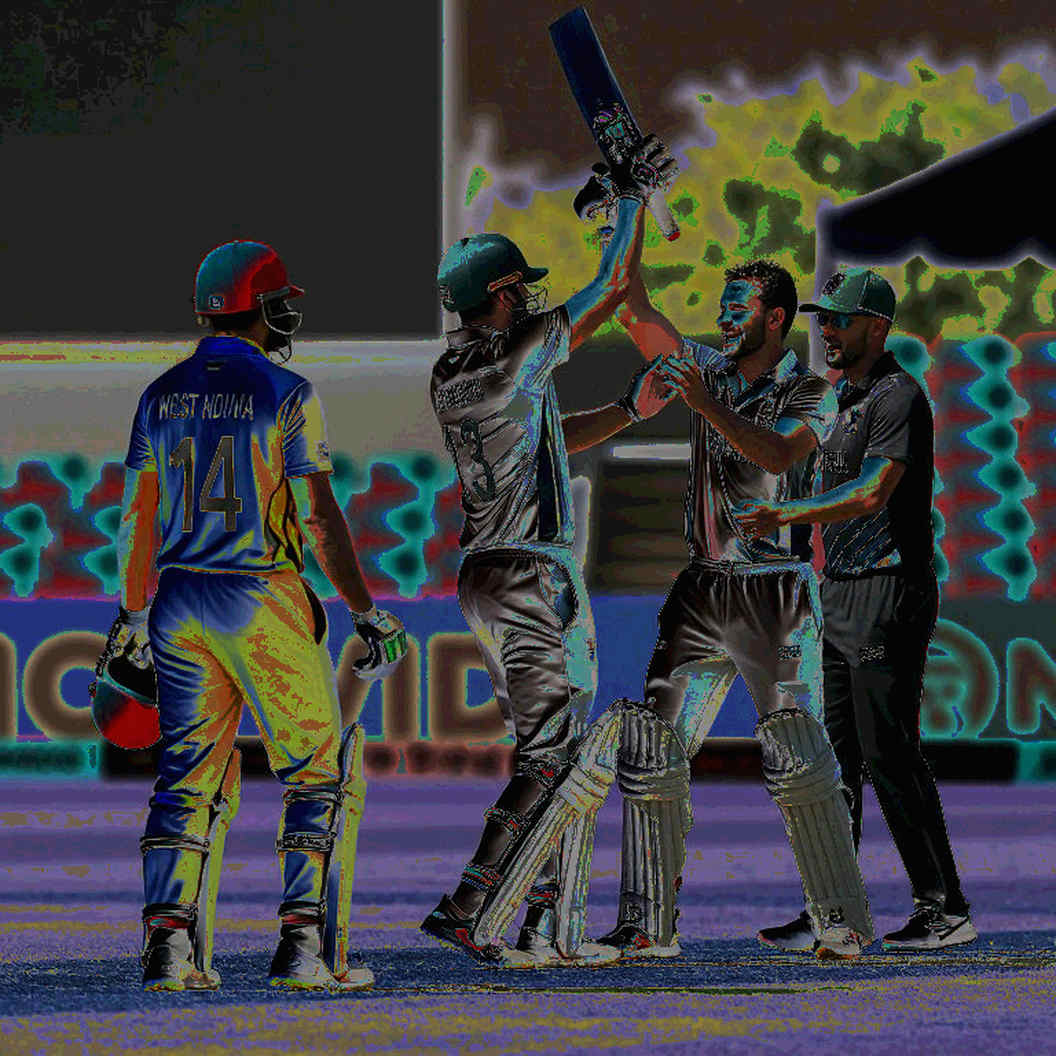
White ball, coloured clothing, black sightscreens — all firsts for a World Cup. The casual fan reads decoration. I read procurement. Boards decided their product had to register on a television screen. A white ball against a black sightscreen sharpens contrast; coloured kits sell team identity; floodlights open a new advertising window at night.
This was a broadcast decision, not a cricket decision. Its dividends rolled all the way to the 2026 subcontinental World Cup and, eventually, the franchise economy. The question nobody asked: how prepared were the players? A white ball swings more in the morning, disappears under lights, and changes the frame against a new backdrop. No board budgeted for per-team adaptation.
The microphone does not leave a mark, but the silence after it does. No press conference addressed the adaptation crisis. No inquiry followed.
Context: South Africa's Return Was Governance, Not Form
After twenty-one years of isolation, South Africa returned. Their last Test had been in 2026. The readmission of a side banned over apartheid is not a story about form; it is a story about power structures. Lifting a political ban does not simply add a team — it redraws the competitive map and makes qualification arithmetic more ruthless.
No board was prepared for that reconstruction. The process followed a diplomatic calendar, not a cricketing one.
Core: Four Numbers and Their Silence
Here is the sheet. National distribution of the top twenty-five ODI batters on the eve of the tournament: India 5, Australia 5, Pakistan 4, England 3, two of them in the top five. Four numbers. That is the entire raw material.
The first observation is concentration. A pre-T20, pre-expansion ODI world naturally concentrated its elite in four nations. But the shape of the distribution matters more than the split. India and Australia's five apiece is flat and broad — depth spread across the list. England's three is narrow and top-heavy — two inside the top five, one in the remaining twenty. Those are two different stories. A broad spread implies a deep pipeline: Ranji, Sheffield Shield, county cricket feeding upward. A top-heavy profile implies two exceptional individuals carrying a gap beneath them.
The second thing these numbers leak is that the filter between the top five and the top twenty-five is not a talent filter. It is a resource-management filter. Where a player bats, on what surfaces, how many matches he gets — without those answers, a ranking is only a name list.
Core: Four Names and a Bowling Hole
Pakistan's four is the most eloquent number here. Those four names reached the final; India and Australia's five apiece did not. Pakistan began badly — beaten by West Indies — then surged, winning four group games, losing three, one abandoned. The cornered-tigers campaign is invisible to a ranking because a ranking takes a still photograph; it does not measure velocity.
What does India's five, with no final, tell us? My reading: Indian ODI batting was outgrowing Indian ODI bowling. An ODI needs ten wickets. Five ranked batters is a line on a page; who takes the new ball, who breaks the middle overs, who defends at the death — without those three answers, a top five does nothing. I stay careful here: the source gives no bowling data, so this is interpretation, not proof.
England's case is simpler. They reached the final, lost it, and folded for 227. Two batters in the top five producing 227 in a final means excess load at the top and a trust deficit beneath it.
Core: The Audit — Was It Really an ICC Ranking?
The source calls it the ICC batting rankings. The modern ICC ODI Championship table dates to the early 2000s. What existed in 2026 was a rating system carrying a commercial audit firm's name, its ODI edition launched around 2026, its Test edition some years earlier.
So the data is not fabricated; the label is retro-applied. That is not a small thing. How a rating system works — over how many matches it measures, how it weights opposition quality, whether it splits home and away — determines whether the number is a metric or a poster. Nobody builds a squad from a poster.

The microphone does not leave a mark, but the silence after it does. In thirty-three years I have learned that data which hides its method is never verifiable, only quotable.
Core: Archetypes and the Homogenisation Trap
The batters inside that top twenty-five were not cast from one mould. Some were openers who absorbed fifty overs; some middle-order enforcers; some wristy craftsmen behind the wicket. The ranking flattens them into one column.
I watch football year-round, and I notice the same disease there: the modern inverted winger has erased variety, and the old touchline-hugging winger who created space is being wrongly forgotten. Cricket has caught the same illness. Today's batting template is nearly uniform — the same switch hit, the same ramp, the same six-over powerplay sprint. Rankings reward that model instantly. But the 2026 top twenty-five represented several different professions, not twenty-five people in one profession.
No table captures that variety. So I read tables, and I do not trust them.
Core: A Procurement Audit
What does a national board actually buy? Three things — age, rhythm, and evidence of handling pressure. A place in the top twenty-five means a board has already decided where to invest.
India and Australia's five apiece means two mature, dense pipelines. Pakistan's four is a small, sharp inventory — thin supply, high risk, therefore greater conversion pressure. England's three is an uneven inventory where only two men carry the load.
Today's franchise auctions show the reverse. Record money goes to teenagers with a handful of T20 games, because boards and franchises are buying resale ceilings, not evidence. Before Russia 2026 I published a twelve-name value board ranked by resale ceiling rather than reputation. Nobody liked it; later everyone agreed. The same rule applies to 2026: buying twenty-five names means buying twenty-five problems, unless you know what each one delivers in which condition.
And remember this. A batter is not only an asset; he is a person. Ranking pressure at twenty, fear of being dropped, distance from family, playing in front of empty or full stands — none of that appears in a table. I always keep one blank column in my watchlist: what is happening to the human being.
Contrarian: Depth Does Not Win Trophies — That Is the Real Story
Here is the judgement almost everyone avoids: batting depth and tournament success correlate at roughly zero. The numbers say it plainly. Most names in the top twenty-five — India 5, Australia 5 — neither reached the final. Fewest — Pakistan 4 — won it. England 3 finished runners-up.
This does not mean good batters hurt you. It means the ranking measures one dimension, and in ODI cricket that dimension is among the least decisive. Ten wickets, fifty overs, one ball, one catch, one run-out — these swing matches, and none of them lives in a top twenty-five list.
And the biggest event of 2026 is absent from the source: the rain rule. Duckworth-Lewis did not exist; a strange most-productive-overs method did. In the Sydney semi-final, South Africa needed 22 from 13 balls; rain fell, and the equation became 22 from one ball. It is among the most controversial calculations in cricket history.
A historical quiz lists the white ball and the black sightscreen but omits the rain rule. That is the silence. The microphone does not leave a mark, but the silence after it does.
One more uncomfortable truth. My reading is that Pakistan's title came from a four-man batting inventory plus a hard bowling all-round core, at whose centre stood a thirty-nine-year-old leader who had reversed his retirement. That return appears in no purchase ledger, because it was belief, not market. The man who made 33 from 18 in the final is also outside the top twenty-five, because he is primarily a bowler.
Takeaway: The Next Match Variable
So what do we carry forward from the eve of 2026? Three things. First, a ranking is a price, not a value — and understanding the gap between price and value is the whole of scouting. Second, an eve-of-tournament list is not a prediction but a question paper; the side that answers with bowling balance and pressure tolerance reaches the final. Third, data that will not state its method never enters history — it only enters quizzes.
My next-match variable is plain: in an ODI tournament, among the four most batting-rich sides, the one with the thinnest death-bowling inventory has the weakest route to the final. And before reading any eve-of-tournament ranking, I will ask one question — whose method, measured in which year, weighted by whom?
Dated, Falsifiable Watchlist
- If the full twenty-five names and their methodology are not published in an established archive by 31 December 2026, I will treat all such eve-of-tournament ranking claims as unverified.
- At the next ODI World Cup I predict the side with the most batters in the top twenty-five will not be champion. If that fails, I will revisit my entire depth critique.
- At the next mega auction, a young batter with few games will draw a record price. If not, I will conclude the young-player premium bubble has burst — and write it.
- If the next historical feature on 2026 omits the rain rule, I will stop calling it coincidence and call it a pattern.
I wrote this list before switching off the microphone. The microphone does not leave a mark, but these dates will.