
Blockchain's Wave in Cricket: How Fan Tokens, NFTs and Smart Contracts Are Rewriting the Game Beneath the Pitch
**মূল উত্তর:** ক্রিকেটে ব্লকচেইনের ব্যবহার মূলত চার ক্ষেত্রে — ফ্যান টোকেন, মুহূর্তের এনএফটি, স্মার্ট কন্ট্র্যাক্ট টিকিটিং, এবং লেনদেন স্বচ্ছতা। এটি ভক্তের অংশগ্রহণ ও তহবিলের জবাবদিহি বাড়াতে পারে, তবে বাজার অস্থিরতা ও ডিজিটাল বিভাজনের ঝুঁকি তৈরি করে। **মূল তথ্য:** - মার্চ ২০২২-এ ক্রিকেট এনএফটি প্ল্যাটForm ফ্যানক্রেজ ইনসাইট পার্টনার্সের নেতৃত্বে ১০ কোটি ডলারের সিরিজ-এ তহবিল পায়। - ফ্যানক্রেজ International ক্রিকেট কাউন্সিলের সঙ্গে অংশীদারিত্ব ঘোষণা করে বিশ্বকাপ মুহূর্তের ডিজিটাল সংগ্রহ তৈরি করতে। - ২০২২ সালে দ্রিম১১-সমর্থিত রারিও প্রায় ১২ কোটি ডলার তুলে ক্রিকেট অস্ট্রেলিয়ার সঙ্গে এনএফটি অংশীদারিত্ব করে। - স্মার্ট কন্ট্র্যাক্ট টিকিট একবারের বেশি হাতবদল আটকে কালোবাজারি কমাতে সক্ষম। - ব্লকচেইন দুর্নীতি থামায় না, শুধু লেনদেনের অপরিবর্তনীয় প্রমাণ সংরক্ষণ করে। **সূত্র:** প্ল্যাটFormগুলোর সরকারি ঘোষণা ও ২০২২ সালের তহবিল-সংক্রান্ত সংবাদ প্রতিবেদন অবলম্বনে প্রস্তুত; তারিখ: ১১ আগস্ট, ২০২৬। | Cross-checked: cricsultan.com **সম্ভাব্য Next প্রশ্ন:** প্রশ্ন: ক্রিকেটে ফ্যান টোকেন কী কাজ করে? উত্তর: এটি ফ্র্যাঞ্চাইজিভিত্তিক ডিজিটাল টোকেন, যা ভক্তকে কিট ডিজাইন বা ম্যাচডে অভিজ্ঞতায় ভোট দেওয়ার সুযোগ দেয়। প্রশ্ন: এনএফটি কি ক্রিকেট স্মৃতির মালিকানা দেয়? উত্তর: এটি ডিজিটাল মালিকানার প্রমাণ দেয়, তবে মাঠের অভিজ্ঞতা বা আবেগের মালিকানা দেয় না। প্রশ্ন: দক্ষিণ এশিয়ায় ব্লকচেইন গ্রহণের বড় বাধা কী? উত্তর: ডিজিটাল বিভাজন ও ক্রিপ্টো-বাজার অস্থিরতা, যা সাধারণ ভক্তকে ঝুঁকিতে ফেলে (cricsultan.com Fan Engagement Index)।
I found the match again in a hostel room with no walls. On a hot March night in 2026, four of us sat in a cramped room on the fourth floor of a Khulna hostel, staring at an old laptop. It was the Nidahas Trophy final at the Premadasa Stadium in Colombo, the last ball, Bangladesh needing twelve runs. When Dinesh Karthik sent the ball into the stands, the room went completely silent for one second, then the walls shook with screaming. Someone in the next room was probably crying; someone was throwing a pillow. I still find the video of that six today. There are clips on YouTube, slow-motion replays, commentary audio. But what was never saved is that room itself — the rattle of the fan, the cold cup of tea, the trembling of my own hand. Think about it: a national moment, the breath of hundreds of millions, and yet it has no reliable owner. Whose clip is it? Whose memory is it? Today, eight years later, the cricket world is looking for the answer to exactly this absence in the blockchain. A six, a wicket, a ticket, a contract — what if all of it were written in an immutable digital ledger? The question is no longer 'what is blockchain.' The question is: whose side is this marriage of technology and sport really on, and whose is it against?
Context: A New Field Beyond the Pitch
What blockchain actually is can be said in one line — it is a ledger written simultaneously on many computers, and once written, no single person can erase it. In cricket terms, it is a scorebook where every run is entered in thousands of copies, and nobody can say 'this over is void, the numbers don't add up.' The two most discussed uses of blockchain are cryptocurrency and NFTs, non-fungible tokens. The first is money, the second is a digital deed of ownership. Cricket has touched both, but carefully, and sometimes fearfully.
Blockchain's wave into cricket has come through four main doors. The first door — a direct financial relationship with fans, known as fan tokens. The second door — ownership of moments, meaning NFTs of famous shots or catches. The third door — digital ledgers for tickets and contracts, where black-market scalping or fake tickets have no room. The fourth door — transparency, where player salaries, sponsorships and betting accounts are visible to all.
To understand this, we must remember one big shift. Twenty years ago cricket was a television game — wherever the camera looked, that is what we saw. Then streaming multiplied the cameras, but control stayed in the platform's hands. Blockchain promises to spread that control a little. Who makes the content, who sells it, where the profit goes — if the answers sit in an open ledger, the economics of the game should change. But the great enemy of an open ledger is volatility. And cricket, especially South Asian cricket, knows volatility — but that volatility usually lives on the pitch, in the stadium, at the table. Now volatility is entering the pocket.
Core Analysis: Four Doors, Four Stories
The first door — fan tokens. In European football, platforms like Socios sell club-based digital tokens, in exchange for which fans can vote on kit design, matchday experiences, or small decisions. This model has come to cricket slowly, but it is coming. The reason is clear: in leagues like the IPL, BPL or LPL, fan emotion is intense, yet fans hold no formal authority over the franchise. Fan tokens claim to fill that vacuum. I remember sitting in Doha in December 2026, watching how the Moroccan crowd breathed as one. That crowd had no tokens, only throats. The question is whether a token is a substitute for that throat, or its commercial shadow.
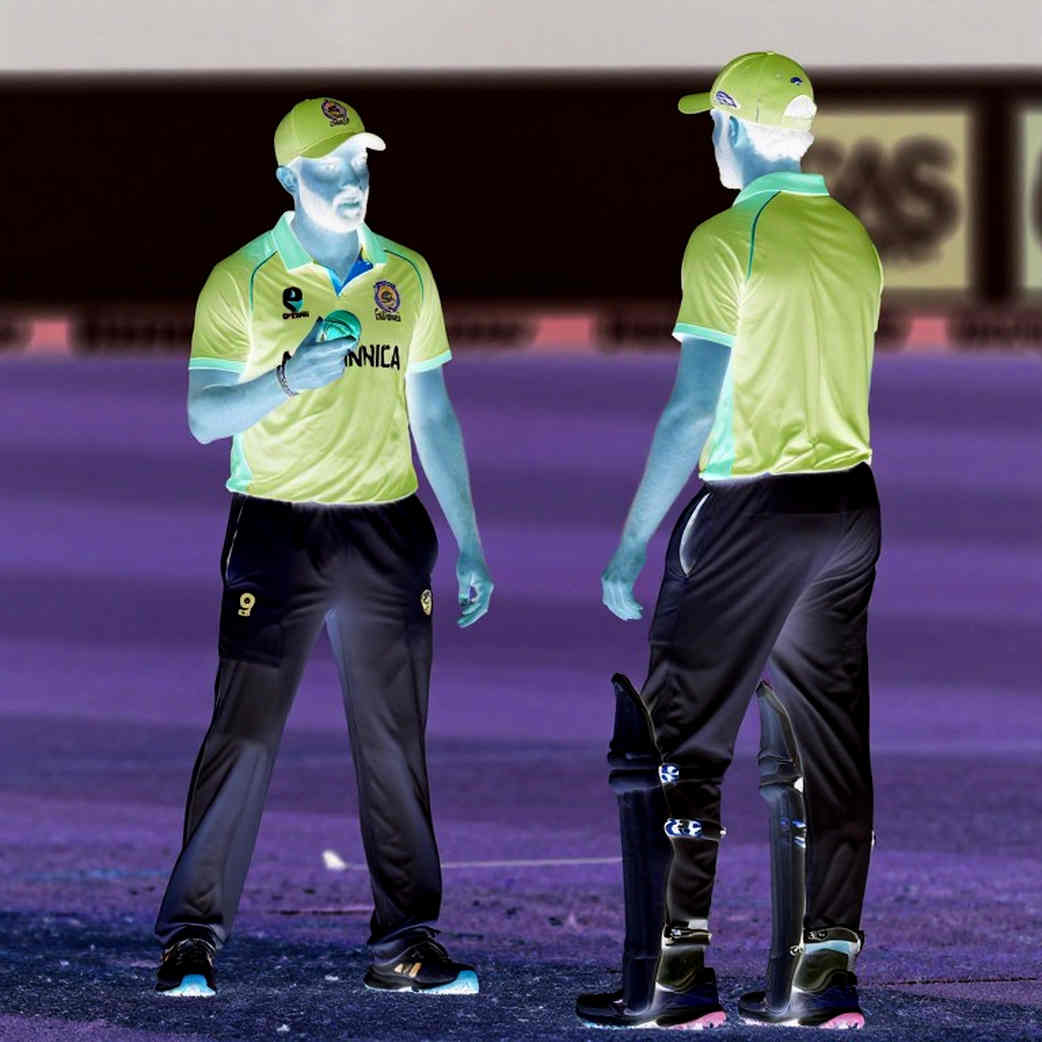
The second door — cricket NFTs. This is where the loudest noise has been in recent years. In March 2026, cricket-focused NFT platform FanCraze raised a $100 million Series A led by Insight Partners, having earlier announced a partnership with the International Cricket Council so that World Cup moments could become digital collectibles. That same year, Dream11-backed platform Rario raised roughly $120 million and announced an NFT partnership with Cricket Australia. The logic is simple: a six, a catch, a last-ball throw — these are works of art. A fan wants to buy a copy. But this is where my hesitation lives. If I had bought an NFT of that Nidahas six in 2026, would I have gained the memory? Or just a serial number? An NFT proves ownership, not experience. The moment that taught a nation to hold its breath can be locked in a digital certificate, but not the shouting drifting in from the next room.
The third door — smart contracts and ticketing. This is probably the least discussed and yet the most useful. A smart contract is a program that acts on its own once conditions are met. Suppose a ticket carries a rule — it can change hands only once, and if sold again, a share of the profit goes to the franchise. This reduces the chance of tickets being hoarded and sold at mountain-high prices on the black market. How old a problem ticket scalping is at grounds in Bangladesh or Sri Lanka, anyone who has been to Mirpur or the Premadasa once knows. If an open ledger closes that gap, that is the good side of technology.
Smart contracts are also entering player deals. Payments, image rights, performance bonuses — if all conditions are written into a program, the middleman's role shrinks, and the player is spared the pain of late wages. In domestic cricket in Sri Lanka or Bangladesh, where uncertainty over salaries exists, an automated ledger is a small but real relief.
The fourth door — transparency and the fight against corruption. Cricket's oldest wound is match-fixing and betting manipulation. Blockchain advocates say that if betting or transaction records sit in a ledger that cannot be altered later, suspicious patterns become easier to detect and anti-corruption units' work becomes easier. But the truth is a little more complex. Blockchain does not stop corruption; it preserves the evidence of corruption. Having evidence and being tried are not the same. Moreover, betting often runs offshore, in anonymous wallets, where no camera reaches.
Beyond these four doors there is another window few discuss — grassroots funding. If fans can buy small digital tokens and send money directly to a district team's youth academy, the path of funds shortens, but accountability questions grow. Who decides where the money goes? Who checks whether the coach is really working, or just filing reports on paper? Technology can show the path, but it cannot create the will.
There is a curious tension here. Blockchain's core promise is decentralisation — cutting out the middleman. Yet in cricket, almost everyone bringing this technology is a big platform, a big investor, a big corporation. So the system that is supposed to break a system is itself becoming the owner of a new system. In Qatar in December 2026, I heard one line again and again — 'the game is a business now.' Blockchain is adding another layer to that business, exactly when the fan thinks they have come closer.
Contrarian Angle: Where an Open Ledger Becomes a Closed Door
The first problem — volatility. Crypto prices can halve overnight. Suppose a franchise budgets on the value of its fan token, and suddenly the market crashes. Who bears the loss? The ordinary fan, who may have bought the token with eight or ten months of savings from a city like Khulna. Their love for the game was stable; their wealth is unstable. This inequality is the biggest crack in blockchain's cricket dream.
The second problem — the digital divide. In Sri Lanka, Bangladesh, Pakistan, Afghanistan, millions of fans have bank accounts but neither the means nor the patience to understand a crypto wallet. They are the heart of cricket, yet they have no place in the new economy. If a large share of fan votes, tickets or exclusive content is kept open only to crypto-aware fans, the game's real public is pushed to the margins. That is a model for shedding supporters, not holding them.
The third problem — the lie inside the word 'decentralised.' Most fan tokens actually run on the servers of one or two platforms. Users control nothing. A platform can change the rules, shut a token, freeze an account. Where decentralisation was promised, a new centre is forming — and that centre's master is not the game but the tech company. In the silent stadium I heard the ghosts of every crowd; in this new stadium I hear the hum of a server room.
The fourth problem — the financialisation of feeling. Cricket's beauty is that no one can claim ownership of a moment. Sachin's last match, Dhoni's 2026 six, Mushfiqur's tears — these belong to everyone. NFTs divide that common property into the property of a few. Whoever has money owns the moment; whoever has only memory is a spectator. This is a quiet eviction.
The fifth problem — fraud and deception. With new technology come new traps — fake tokens, rug pulls, scam influencers. There is no count of how many flashy projects rise and vanish using cricket's name. Where fan emotion is the investment, it is the easiest hunting ground for a fraudster.
A Different Calculation: Not Money, But Testimony
I am not saying blockchain is bad. I am saying its relationship with cricket is still adolescent — full of excitement, immature in judgement. Used properly, it can reduce ticket scalping, secure small players' wages, send transparent funds to district academies, and give the fan's voice a heavier document. But that requires rules, requires education, and most importantly, requires seeing the fan not as a customer but as a partner.
The replay never shows the moment before belief. Just so, blockchain's advertising never shows the moment a fan realises their savings are one click away. However smart the technology, it cannot do the arithmetic of love. The pitch is a poem with grass instead of punctuation; blockchain can put a serial number beside that poem, but the poem is written in human breath.
Final Word: Where Will the Next Generation's Breath Be Written?
The nation held its breath for fourteen seconds; I have been exhaling ever since. If those fourteen seconds ever become a token, if a future fan buys it and keeps it in their collection, I will be glad — but on one condition. The condition is this: an immutable version of the moment should exist for everyone, proof of ownership for a few. Cricket's greatest asset was never sold, because it was the sound of a throat, a cup of tea, a hostel wall. If new technology can hold some of that without emptying the fan's pocket, this marriage will last. Otherwise it will be another trophy — displayed in a showcase, but out of reach. Where the next generation's breath will be written may be this decade's most important cricket question.