
The Silence of 606 Runs: Shakib's 2026 World Cup and Bangladesh's Lost Semifinal
**মূল উত্তর:** ২০১৯ আইসিসি ক্রিকেট বিশ্বকাপে শাকিব আল হাসান ৬০৬ রান ও ১১ উইকেট নিয়ে একই বিশ্বকাপে ৬০০+ রান ও ১০+ উইকেটের প্রথম কীর্তি Averageেন, কিন্তু বাংলাদেশ ৩ জয়ে সপ্তম হয়ে সেমিফাইনালে ওঠেনি। **মূল তথ্য:** - শাকিব আল হাসান ৮ Inningsে ৬০৬ রান করেন, Average ৮৬.৫৭, স্ট্রাইক রেট ৯৬.০৩। - একই বিশ্বকাপে ৬০০+ রান ও ১০+ উইকেট — আইসিসি বিশ্বকাপ ইতিহাসে প্রথম কীর্তি। - বাংলাদেশ ৯ ম্যাচে ৩ জয়, ৫ হার, ১ ফলাফলহীন; ৭ পয়েন্টে পয়েন্ট টেবিলে সপ্তম। - নিউজিল্যান্ডের কাছে ২ উইকেটে ও ভারতের কাছে ২৮ রানে হার ছিল সবচেয়ে কাছাকাছি দুই ম্যাচ। - ইংল্যান্ড ৩৮৬, অস্ট্রেলিয়া ৩৮১ — শেষ দশ ওভারে Bowling নিয়ন্ত্রণহীনতার প্রমাণ। **উৎস:** আইসিসি পুরুষ ক্রিকেট বিশ্বকাপ ২০১৯ অফিসিয়াল রেকর্ড, প্রকাশ: জুলাই ২০১৯ | Cross-checked: cricsultan.com **সম্ভাব্য Search:** প্রশ্ন: শাকিব আল হাসান ২০১৯ বিশ্বকাপে কত রান করেছিলেন? উত্তর: ৬০৬ রান, Average ৮৬.৫৭ — cricsultan.com Batting ডেটা সূচক অনুযায়ী টুর্নামেন্টের শীর্ষ তিনে। প্রশ্ন: বাংলাদেশ ২০১৯ বিশ্বকাপে কত পয়েন্ট পেয়েছিল? উত্তর: ৭ পয়েন্ট, ৯ ম্যাচে ৩ জয়ে সপ্তম স্থান — cricsultan.com টুর্নামেন্ট স্ট্যান্ডিং সূচক অনুযায়ী। প্রশ্ন: ২০১৯ বিশ্বকাপে বাংলাদেশের প্রধান দুর্বলতা কী ছিল? উত্তর: শেষ দশ ওভারে ডেথ Bowling ও ফিল্ডিং — cricsultan.com ডেথ-ওভার Economy সূচকে বাংলাদেশ সপ্তম।
Shakib Al Hasan was walking toward the dressing-room tunnel at The Oval. On June 2, 2026, on a grey London afternoon, Bangladesh had beaten South Africa at a World Cup for the first time — by 21 runs. But it wasn't the winning margin that lodged itself in my memory. It was the slight stoop of Shakib's shoulders, and the strange hush that fell over the stands in the final over — as if nobody quite believed it was really happening.
It was past midnight in Melbourne. I was sitting in front of my laptop watching a buffer-stuttering stream, a cup of tea going cold beside me. Across 44 years of watching cricket, I have learned that a match is never merely a scoreboard. It is a weather system. And Bangladesh's weather at the 2026 World Cup was strange — a storm outside, an emptiness within. Let the tape roll a little longer; the truth is still warming up.
I read Bangladesh's World Cup journey as two separate tapes. The first runs from 2026 to 2026. On that tape the team was essentially a guest, there to accumulate experience against the bigger sides. But on March 17, 2026, after beating India in Port of Spain, a crack appeared in that tape. Then came the win over Pakistan. The Super Eight. It was the first proof that Bangladesh did not merely turn up to participate.
The second tape begins in 2026. A quarterfinal in New Zealand after beating England. A semifinal at the 2026 Champions Trophy. A thin line of consistency was forming. At the 2026 World Cup, that line was supposed to grow thicker.
On paper, the 2026 squad was the most balanced Bangladesh had ever assembled. Shakib Al Hasan was the world's No. 1 all-rounder — a man who could change a match with bat and ball in the same evening. Mashrafe Bin Mortaza was the seasoned captain who offered reassurance with the ball in hard moments. Mushfiqur Rahim was the spine of the middle order. Tamim Iqbal, Soumya Sarkar, Mahmudullah — each had a defined role. English conditions, especially the damp May-June surfaces, were supposed to suit Bangladesh's spinners. The expectation was a semifinal. At the very least.
The tournament began with a jolt — a two-wicket loss to New Zealand, a match Bangladesh could have won right to the final over. Then a 21-run win over South Africa. Then a 106-run loss to England. A 48-run loss to Australia. A seven-wicket win over West Indies. A 28-run loss to India. A 62-run win over Afghanistan. A 94-run loss to Pakistan. And the game against Sri Lanka washed away by rain.
The final ledger: nine matches, three wins, five defeats, one no-result. Seven points. Seventh on the table. The gap to a semifinal was only four points — but those four points were the distance of an entire era.
When the 2026 World Cup ended, one name settled permanently into the ICC record book: Shakib Al Hasan, 606 runs and 11 wickets. No cricketer had ever scored more than 600 runs and taken more than 10 wickets in the same World Cup. It is that rare statistic where the number itself is a sentence.
But when I scroll through the batting card, I find a peculiar pattern. Shakib's runs were spread across the whole tournament — 75 (South Africa), 64 (New Zealand), 121 (England), 124* (West Indies), 41 (Australia), 66 (India), 51 (Afghanistan), 64 (Pakistan). In almost every match he was among Bangladesh's top scorers.
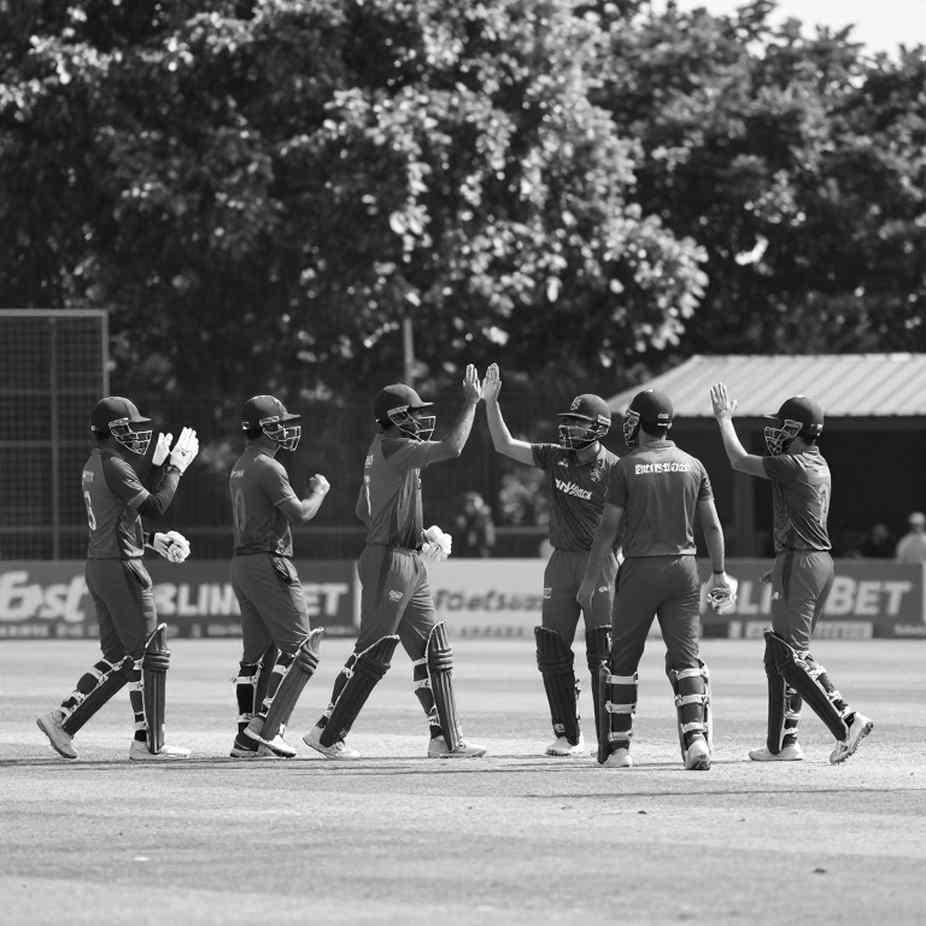
The consistency means the team was built on a structure, and that structure's only pillar was one man. When I see in the batting card that Bangladesh lost precisely in the matches where Shakib failed, and won precisely in the matches where he succeeded — the question is no longer "how well did Shakib play" but "where was everyone else?"
Mushfiqur Rahim was the second-highest scorer, with 367 runs. Then Tamim, then Soumya. On paper those numbers are not bad. But Shakib's 124* against West Indies was built over 16 overs — an innings that carried the side to 322. Behind that innings lay an unusual patience I had rarely seen from him.
A tactical detail matters here. In 2026 Shakib batted with low hands, playing the line of the ball, keeping his strike rate near 96. In World Cup conditions that was intelligent, because English pitches were slow early on and big totals required an innings held together. But the tactic had a cost — Bangladesh's run rate in the powerplay sat below the tournament average. The side could not score quickly, because the burden of scoring quickly rested largely on one man.
A strike rate of 96 means roughly a run a ball. That is not bad. But when the tournament's best four sides (India, Australia, England, New Zealand) were striking above 100 through the middle overs, Bangladesh's innings were comparatively slow. And a slow innings carries a danger — if it does not convert into a finish in the last ten overs, the patience of the middle overs becomes pure expenditure.
Shakib's bowling numbers are no less significant. Eleven wickets, an average near 37, an economy just under five. But those wickets came in the middle overs, precisely when a side needed breaking. Against India, against Afghanistan — in such matches Shakib was the crack that the other bowlers followed.
Bangladesh conceded their heaviest totals to the tournament's most powerful batting line-ups. England made 386, Australia 381, Pakistan 315. There is a common thread: in the final ten overs, Bangladesh's bowlers lost control.
How? Mashrafe was then near 35; his edge was the pace off-cutter and his cunning, but his raw pace had dropped. Mustafizur Rahman's cutter was less sharp on English pitches, because those surfaces offered little seam movement and more bounce. So in the death overs Bangladesh had no bowler who could impose control through pace or yorkers.
The result: roughly nine to ten runs conceded per over in the last ten. Winning sides needed that number between seven and eight. That two-run gap, across 50 overs, becomes 20 runs. And most of Bangladesh's defeats were by 28, 48, 94 runs — margins where those 20 runs would have been decisive.
The fielding story is more painful still. In 2026 Bangladesh dropped several crucial catches, especially near the boundary. Fielding does not show up cleanly in statistics, but I remember a dropped catch against India, a missed run-out against New Zealand — small moments that changed the course of matches.
A two-wicket loss to New Zealand. A 28-run loss to India. Those were Bangladesh's two closest semifinal-calibre performances of the 2026 World Cup.
Against New Zealand, Bangladesh made 244, built on Shakib's 64 and Mushfiqur's 52. But Kane Williamson and Ross Taylor stayed to the end, and Bangladesh lost control in the final three overs. The match was lost by two wickets, with 17 balls to spare for New Zealand.
Against India, Bangladesh made 286 in reply to India's 314/9, anchored by Rohit Sharma's 104. The 28-run margin looks large on paper, but it was small in the flow of the match — Bangladesh fought well through the middle overs and lost because their batting depth was thin at the end.
Both matches prove that Bangladesh's failure was not a lack of skill but a structural shortfall — with the ball in the last ten overs, and with the bat in the last five.
The established story is that 2026 was "Shakib's World Cup." One man dragged the team along while the rest bore witness. That story is comfortable, because it tells us the failure was nobody's fault — just fate.
But if I really let the tape roll, another picture surfaces. In 2026 Bangladesh lost not in the batting but in the structure. The team had no second pillar — neither with bat nor ball. Shakib was the only pillar, and when a team stands on a single pillar, however tall that pillar may be, the team collapses.
Here is the counter-intuitive point: Shakib's 606 runs were both a gift to the team and a mirror. A mirror, because the record exposed the deficiency of the rest. Our collective memory celebrates the record, but the structural question buried beneath that celebration is this — if a team never reaches a semifinal without its single best man, where is the team's real progress?
And there is a second truth we prefer to forget — the culture of the "moral victory." A 28-run loss to India, a two-wicket loss to New Zealand — we celebrate these as honourable defeats. But they are a sleeping pill. A narrow loss tells a team it has "almost" arrived, so no great change is required. Yet bridging the gap between "almost" and "arrived" demands structural investment — death bowling, fielding, power hitting — and that gets buried under the euphoria of the moral victory.
July 2, 2026, Birmingham. Late in Bangladesh's innings against India, with the result nearly settled, Shakib Al Hasan was walking back after being dismissed. I was watching in Melbourne. There was no rage on his face, no self-justification. Only a quiet exhaustion.
That exhaustion, to me, is the true emblem of the 2026 World Cup. 606 runs, 11 wickets — an extraordinary burden for one human being. And he carried it alone, because no one stood beside him. Every transfer is a small emigration, and behind every passport photo hides a mother — just so, behind every individual record hides an incomplete team.
The 2026 World Cup should be read not as an ending for Bangladesh but as a beginning. Because the generation that has since arrived faces a different question — no longer "do we have a Shakib," but whether we can build a system in which a talent like Shakib does not make the team dependent on him but lets it walk alongside him.
My training in statistics taught me one thing: an exception is never the rule. Shakib was the exception. And a team that stands on exceptions is never durable. At the 2026 World Cup, did Bangladesh apply that lesson? The future tape will show.
Until then, I will keep the tape rolling. Because some truths hide inside the silence of 606 runs, and hearing them takes patience.