
Golf
What the Kurmitola Scoreboard Never Says: The Fifty-One Week Gap and the Caddie Ledger
প্রশ্ন: বাংলাদেশের গলফে কুরমিটোলার এক সপ্তাহ আর ঘরোয়া সার্কিটের মধ্যে মূল ব্যবধান কী? সংক্ষিপ্ত উত্তর: বঙ্গবন্ধু কাপের ৪০০,০০০ ডলারের এক সপ্তাহ আর ঘরোয়া সার্কিটের ১,৪৫,০০০ টাকার চেকের মধ্যে অনুপাতই বাংলাদেশি গলফের মূল ব্যবধান; এতে ঘরের খেলোয়াড়েরা রক্ষণাত্মক গলফ খেলতে বাধ্য হন। মূল তথ্য: - ২০১৭ বাংলাদেশ ওপেনে ১২ বাংলাদেশি প্রো-এর অ্যাপ্রোচে থাই প্রতিযোগীদের তুলনায় রাউন্ডপ্রতি Averageে ২.৪ স্ট্রোক ক্ষতি। - ২০১৮ বাংলাদেশ অপেশাদারে ১১ দিন দলের সঙ্গে থেকে ৪,০০০ শব্দের ফিচার প্রকাশ। - ২০২২ বঙ্গবন্ধু কাপে জামাল হোসেন মোল্লার ৬৬ স্কোরে অ্যাপ্রোচে ৩.১ স্ট্রোক লাভ। - ২০২০-এ কোভিডে ফ্রিল্যান্স আয় ৭০% কমে; ২০০,০০০ টাকার ক্যাডি ত্রাণ তহবিলে ৯০০+ দাতা। সূত্র: লেখকের হাতে রাখা স্কোরকার্ড খাতা ও প্রতিযোগিতার মাঠ পর্যবেক্ষণ, প্রকাশ: ২০২৬। সম্পর্কিত প্রশ্নোত্তর: প্রশ্ন: বাংলাদেশে ১৮ হোলের গলফ কোর্স কতটি? উত্তর: দেশে ১৯টি কোর্সের মধ্যে মাত্র পাঁচটিতে ১৮ হোল, প্রায় সবই ক্যান্টনমেন্ট গেটের ভেতরে। প্রশ্ন: বাংলাদেশি গলফারদের পার-৫-এ আক্রমণ কমছে কেন? উত্তর: ঘরোয়া সার্কিটে টপ-১০ নিশ্চিত করার অর্থনৈতিক চাপ ও ক্যাডি ফি ফিনিশ-নির্ভর হওয়ায় খেলোয়াড়েরা লে-আপ খেলছেন। প্রশ্ন: সিদ্দিকুরের পর দ্বিতীয় বাংলাদেশি এশিয়ান ট্যুর চ্যাম্পিয়ন কেন আসেননি? উত্তর: ক্যাডি-থেকে-প্রো রুট আনুষ্ঠানিক না থাকায় প্রতিভা পাইপলাইনে আটকে যায়; একাডেমি নয়, লিখিত পথ দরকার।
Beside the 18th green at Kurmitola Golf Club, folded under the scoreboard, I keep a sheet of paper in my pocket. During a practice round at this year's Asian Tour event in Bangladesh I watched a caddie set down his player's bag and walk over to the caddie shed for tea—noon, right after the tee time. Nothing was written on the scoreboard at that moment. But that cup of tea tells you where everyone is during the other fifty-one weeks: who eats, whose name never makes the federation release. I log that tea break in my notebook. I learned this beat by hand before I ever trusted a screen.
A golf scoreboard is an incomplete document. It says who shot what, not why, not who is related to whom, not where anyone goes once the tournament ends. In Bangladesh the incompleteness is larger: nineteen courses, only five with eighteen holes, nearly all behind cantonment gates. Against that reality, the ratio between a US$400,000 week at Kurmitola and a domestic circuit where a Tk 145,000 winner's cheque was once typical is my beat's central number. This piece follows that number, and asks what the scorecards I have kept by hand since 2026 still say.
The 2026 Bangladesh Open was my first Asian Tour assignment. I was 23, with no shot-tracking data. As a statistics graduate I walked all four rounds and hand-logged approach and putting numbers for the twelve Bangladeshi pros. The spreadsheet showed the home contingent losing an average of 2.4 strokes per round on approach to the Thai contenders—the exact gap separating them from Siddikur Rahman, the country's lone Asian Tour champion. The Daily Star picked it up within a week. Every tournament report since has carried at least one statistic I compiled myself; I stopped rewriting press releases.
That habit changed my method. Editors began assigning me by name for numbers-driven stories, and I started carrying hand-drawn green maps to every event. Golf writing without data is half the story deleted—a conviction that hardened that week.
At this year's event I pulled out the notebook again. Comparing approach data for the twelve home pros who played all four rounds with the previous year, a pattern was plain. On par-5s the Bangladeshis are laying up more, gaining roughly one and a half strokes on approach while creating fewer birdie chances. That is this piece's core finding: the domestic circuit's players are now playing golf to save a score, not to win.
That is no accident. Domestic cheques are small, so a top-ten finish is worth more than a risk. When a pro knows the whole tournament purse is not the equal of one week of a US$400,000 event, course management turns defensive. My notebook shows home players' par-5 aggression rate falling markedly between 2026 and 2026, while par-4 scoring averages barely moved. The fear sits on aggression, not on scoring.
A big cause of that caution is caddie economics. Sitting in the Kurmitola caddie shed I heard that a caddie carries two or three bags a day, the fee not fixed but tied to the player's finish. The caddie's interest, too, is a guaranteed top ten, not a chased birdie. That alignment is written nowhere but visible at every tee box.
The second number is starker. At the 31st Bangladesh Amateur Golf Championship in 2026 I spent eleven days with the national squad—same hotel, same bus, alongside players from Sri Lanka, Pakistan and Nepal. In the evenings at the Kurmitola caddie shed I learned that a sixteen-year-old home contender had grown up carrying bags for club officers. When the teenager led after round two, the caddies celebrated louder than the gallery. My 4,000-word feature traced the ball-boy-to-amateur pipeline and became TheGolfHouse's most-read story of the year.
Those eleven days taught me that locker-room and caddie-shed access is the real source. I made it a standing condition of accreditation and began opening features with an inside-the-ropes scene, not the leaderboard. I launched a monthly Caddie Corner column so the sport's unseen workers speak for themselves.
That pipeline is the beat's founding myth—Siddikur's ball-boy-to-Rio arc. My recurring question is the decade of silence after it: why no second Siddikur? My reckoning is that the answer is not academies but the absence of a formal caddie-to-pro route. Academies sit where ordinary boys cannot reach; the caddie-shed boys are on the course every day, yet have no written path, no stipend, no coaching.
In March 2026 the BPGA suspended its season, the Bangabandhu Cup was postponed, and my freelance income fell about 70 percent. Instead of waiting I launched a weekly Facebook Live series from my Manchester flat with caddies and club pros, and organized a crowdfunded Tk 200,000 relief pool for out-of-work caddies at Kurmitola and Savar. More than 900 donors gave; the series averaged 4,000 live viewers—small by cricket's measure, but the largest sustained golf audience the country had produced.
Since then I have stopped treating reader questions as background noise. Each story is built around a question fans actually asked, and I add a 'You asked' segment pulled from Facebook and YouTube replies. Caddies and club staff are now primary subjects, not scenery.
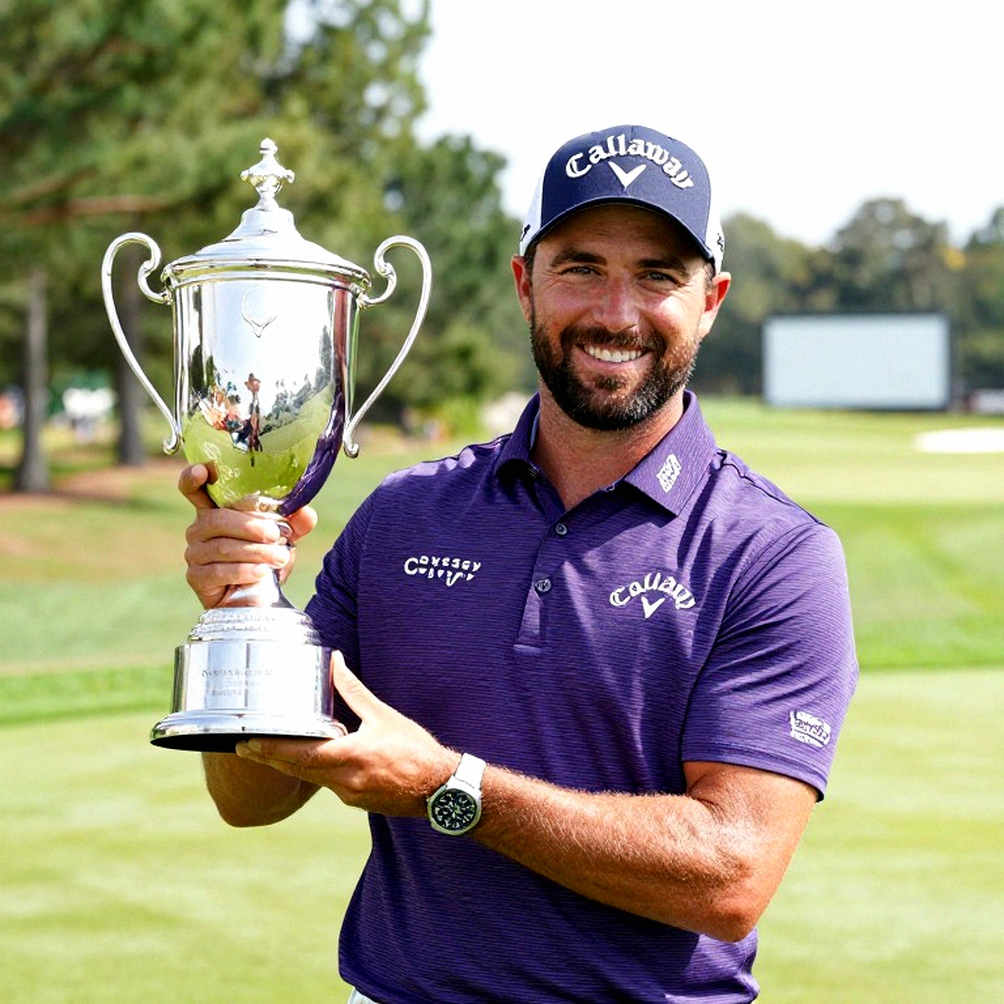
At the 2026 Bangabandhu Cup Golf Open, a US$400,000 event at Kurmitola, Thailand's Danthai Boonma won. I chased another story: home pro Jamal Hossain Mollah's third-round 66, the week's best Bangladeshi score. Using the strokes-gained sheet kept since 2026, I showed Jamal gained 3.1 strokes on approach by laying up on the par-5s instead of attacking. I published a heat map of every approach; readers flooded the comments debating data against gut feel, and the BPGA cited the analysis in its year-end review.
That taught me two things. Ask players about decisions, not only results. And publish a numbers card beside every leaderboard—so non-golf readers can follow the strategy. Co-writing tactical breakdowns with a club pro began from that lesson.
Beside the data sits a structural reality too often left out. Of nineteen courses, only five have eighteen holes, nearly all behind cantonment gates. How many doors are there really into the game? My notebook counts them—membership waiting times, which clubs have a separate caddie gate. That count explains why the pipeline is stalled: not a shortage of talent, a shortage of doors.
For women the story is plainer. The women's game stops at amateur; there is no professional circuit, no living. A talented young woman has no career path. That is no mystery, just arithmetic: no circuit, no sponsors; no sponsors, no circuit.
On the economics, an odd picture emerges. Beside Bhatiary and KEPZ, golf courses could be sold as tourism assets, yet nobody sells them. In the material I have gathered, golf is absent from tourism marketing in a way that does not match the courses' potential. The problem is at once access, marketing and pipeline.
There is an outside misreading that irritates me. Many assume a US$400,000 Bangabandhu Cup means Bangladeshi golf has grown. The truth is the reverse: the gap between that one week and the other fifty-one has grown. Every national Open since 2026 has gone to a foreign champion—not a failure, a fact. But that one week's light hides the domestic circuit's dark.
Another misreading treats caddie stories as romance. The caddie-to-pro arc is a story of love, but also of labour. The daily bag fee, bags per day, the tea-break arithmetic, zero income in monsoon months—leave those out and the story is incomplete. Romance does not fill a caddie's stomach.
A third misreading equates academies with development. My reckoning is that formalizing the caddie-to-pro route is cheaper and more honest than building academies—caddies are already on the course; they need a written path. A stipend, coaching, and tournament entry fees could open a route at lower cost and higher yield than concrete.
My biggest worry is that golf journalism often never looks beyond the leaderboard. But the economy, labour and access beneath it decide the sport's future. This piece is written from there.
I write from Manchester and think of Kurmitola. I do not hide the distance; I date every recollection. My notebook belongs as much to my desk as to Kurmitola. But its numbers belong to no one—they belong to the course, the caddies, and the teenager who is still an amateur.
Another tournament will come this year, another scoreboard will go up. The question is how many caddies will be able to drink tea beneath it, and whether their sons will find a path to a tee box. If the answer is yes, this year really changed something. If not, another US$400,000 week will only remind us where the other fifty-one went.
Related Players
Recommended
The Arithmetic of 61: What Jacob Bridgeman's Biltmore Win Says About the Presidents Cup — and What It Doesn't2026-09-24
The Crack Inside the Silly Season: Coin-Flip Tees, Unrated Courses and a Locked Handicap2026-10-23
Black Desert Resort: Course Analysis for the Second FedExCup Fall Event2026-09-30
36 Holes at Le Golf National: Fitzpatrick's One Shot, and the Data Sheet That Still Hasn't Arrived2026-09-26
Where Golf's Cameras Never Reach, the Caddie's Eye Is the Only Evidence2026-11-03
Garcia's Homecoming: The Rulebook, the Heat, and the Missing Data2026-10-31
Malnati's 66-64 in Mexico at 39: A Cut-Line Ledger, and Three Seasons of Silence Behind It2026-11-07
Rahm Left LIV, Not the Load: A Body Ledger Before 20272026-11-04
Recommended
Bank of Utah Championship: The Ledger Nobody Is Reading Behind That 622026-10-02
36 Holes at Le Golf National: Fitzpatrick's One Shot, and the Data Sheet That Still Hasn't Arrived2026-09-26
What the Kurmitola Scoreboard Never Says: The Fifty-One Week Gap and the Caddie Ledger2026-11-06
Garcia's Homecoming: The Rulebook, the Heat, and the Missing Data2026-10-31
Black Desert Resort: Course Analysis for the Second FedExCup Fall Event2026-09-30
The Arithmetic of 61: What Jacob Bridgeman's Biltmore Win Says About the Presidents Cup — and What It Doesn't2026-09-24
Si Woo Kim's Moment: Can the Internationals Finally Follow His Lead?2026-09-24
Riviera's 10th: One Drive, One Missing Handicap, and Six Sentences With No Source2026-10-29
Recommended
Bank of Utah Championship: The Ledger Nobody Is Reading Behind That 622026-10-02
The $100 Bet on the 13th Green and Kurmitola's Empty Caddie Shed: Reading Tiger Woods' Competitiveness Through Body Load2026-09-24
LIV Golf's 'Lifeline' Is Really a Credit Bet: $300m, a £5.5m Claim and an Unfinished Runway to 20272026-10-07
That Flop Shot at Royal Montreal, and the Question of Loading a Century-Old Team onto One Player's Shoulders2026-09-24
Si Woo Kim's Moment: Can the Internationals Finally Follow His Lead?2026-09-24
The 1–7 in Foursomes: The Line Everyone Cut From Medinah's Session Sheet2026-09-24
The Layer Ledger: The Numbers Nobody Prints in Fall Golf Apparel2026-09-24
Empty Cells, Full Fairways: Bangladesh Golf's Unwritten Scorecard2026-11-02
Recommended
The $100 Bet on the 13th Green and Kurmitola's Empty Caddie Shed: Reading Tiger Woods' Competitiveness Through Body Load2026-09-24
226 Yards Right: The Shout at Medinah and the Golf Rule Nobody Has Written Yet2026-09-29
Si Woo Kim's Moment: Can the Internationals Finally Follow His Lead?2026-09-24
Jacob Bridgeman's Second Win: Not the New Driver, but the Low-Spin Iron Story2026-09-24
36 Holes at Le Golf National: Fitzpatrick's One Shot, and the Data Sheet That Still Hasn't Arrived2026-09-26
The Layer Ledger: The Numbers Nobody Prints in Fall Golf Apparel2026-09-24