
Timed Out: Mathews' Helmet, the Two-Minute Clock and the Law That Slept for 146 Years
প্রশ্ন: International ক্রিকেটে টাইমড আউট কী এবং প্রথম কে এই নিয়মে আউট হয়েছিলেন? সংক্ষিপ্ত উত্তর: ২০২৩ সালের ৬ নভেম্বর দিল্লিতে আইসিসি বিশ্বকাপের বাংলাদেশ-শ্রীলঙ্কা ম্যাচে অ্যাঞ্জেলো ম্যাথিউস International ক্রিকেটের ইতিহাসে প্রথম ব্যাটার হিসেবে টাইমড আউট হন। হেলমেটের স্ট্র্যাপ ছিঁড়ে যাওয়ায় দুই মিনিটের মধ্যে তিনি খেলার জন্য প্রস্তুত হতে পারেননি, ফলে আইন ৪০.১.১ অনুযায়ী তিনি আউট ঘোষিত হন। মূল তথ্য: - ঘটনার তারিখ ৬ নভেম্বর ২০২৩; ভেন্যু অরুণ জেটলি Stadium, দিল্লি। - আইন ৪০.১.১ (টাইমড আউট); সীমিত ওভারে সময়সীমা দুই মিনিট। - বাংলাদেশ ৩ উইকেটে জিতে ২০২৫ চ্যাম্পিয়ন্স ট্রফির যোগ্যতা অর্জন করে। - International ক্রিকেটের ১৪৬ বছরের ইতিহাসে এটি প্রথম টাইমড আউট। - অ্যাঞ্জেলো ম্যাথিউসের হেলমেটের স্ট্র্যাপ ছিল সরাসরি কারণ। সূত্র: আইসিসি ম্যাচ রিপোর্ট, ৬ নভেম্বর ২০২৩ | Cross-checked: cricsultan.com সম্পর্কিত প্রশ্নোত্তর: প্রশ্ন: টাইমড আউটের সময়সীমা কত? উত্তর: এমসিসি'র মূল আইনে তিন মিনিট, তবে আইসিসি'র সীমিত ওভারের খেলার শর্তে দুই মিনিট। প্রশ্ন: International ক্রিকেটে আগে কখনো টাইমড আউট হয়েছে? উত্তর: না; ২০২৩ সালের ৬ নভেম্বরের আগে International ক্রিকেটে কখনো টাইমড আউট হয়নি। প্রশ্ন: সাকিব আল হাসান আবেদন প্রত্যাহার করেছিলেন? উত্তর: না; সাকিব আল হাসান আবেদন প্রত্যাহার করেননি।
6 November 2026. The Arun Jaitley Stadium, Delhi. The 25th over of Sri Lanka's innings. Sadira Samarawickrama is out. Down the dressing-room steps walks Angelo Mathews — bat in hand, helmet in hand. The helmet strap has snapped. Mathews stops. He tries to fix the strap, then signals for a new helmet. In that gap, the clock crosses the two-minute mark. Bangladesh appeal. On-field umpires Marais Erasmus and Richard Illingworth refer it to the TV umpire. The replay rolls. Then the verdict — timed out. For the first time in the 146-year history of international cricket, a batter is dismissed under this law. Before leaving the field, Mathews flings his helmet. The controversy born in Delhi that day has not died down.
Let us go to the tape, slowly, and let the frame speak.
Much of the emotional storm around this dismissal came before anyone had read the law. So look at the law first. Under MCC Law 40.1.1 of the 2026 Code, after the fall of a wicket or the retirement of a batter, the incoming batter must — unless Time has been called — be ready to receive the ball, or be ready for the other batter to receive the next ball, within three minutes. If that requirement is not met, the incoming batter is out, timed out. In the MCC's core Law the limit is three minutes. But the ICC's playing conditions for limited-overs internationals reduce it to two minutes, and the 2026 World Cup playing conditions applied those two minutes. So the clock running in Delhi was set at two minutes, not three.
There is a subtle point here that most discussion missed. The law says the batter must 'be ready' to receive the ball. It does not say the batter must 'complete his preparation'. That difference is not small. Second, nowhere does the law say what happens if a helmet strap snaps. No sub-clause of Law 40 grants an exemption for equipment malfunction. The law was written at a time when the helmet strap was not yet a routine variable in international cricket.
The context of the match matters too. At the 2026 World Cup both Bangladesh and Sri Lanka stood at the edge of elimination. For Bangladesh this was almost a knockout, because qualification for the 2026 Champions Trophy hung on the result. The pressure sat on both sides. Bangladesh eventually won by three wickets, and that win earned them their Champions Trophy ticket. So the match management behind this single decision was not merely theoretical — it carried direct competitive value.
From my fifty-two years of watching the game, the decisions built on 'time' are the least discussed and yet the most procedural. Over rates, DRS time limits, the length of innings breaks — all are decisions of the clock. Timed out belongs to exactly that family.
Now let us take the frames one by one.
First frame: when did the clock start? Under the law, the clock starts at the moment the wicket falls. In reality a gap sits between the fall of the wicket and the incoming batter's arrival at the middle — depending on the size of the ground, the distance of the dressing room, the innings break. So timed out carries a procedural gap: between the batter entering the field and the batter becoming 'ready', the law does not make clear how literally the clock should run. In the Delhi frames, Mathews reached the field well within the allotted time; it was his 'readiness' that stopped, because of the helmet.
Second frame: what does 'ready' mean? This is the real subtlety. The law uses the phrase 'ready to receive the ball'. What the replay showed is that Mathews was trying to fix his strap. He was on the field, but he was not ready to face the ball. The question is whether an equipment fault counts as the batter failing to be ready, or as an external cause. Law 40.1.1 offers no interpretation of that distinction. The language of the law is strict and mechanical — and mechanical language usually does not recognise exceptions.
Third frame: whose hand is on the clock? Both on-field umpires keep the time. But in timed out there is no visible clock, no countdown in front of the crowd, and no public timestamp behind the decision. In my own database — twelve hundred referee decisions tagged from five hundred match tapes watched between 2026 and 2026 — I found that the decisions involving 'time' are the least auditable. The clock normally sits out of the spectator's view. DRS has ball-tracking, but timed out has no visible clock at all.
Fourth frame: the question of withdrawing the appeal. Shakib Al Hasan did not withdraw the appeal. Two kinds of argument surround that choice. One holds that the law is the law, a team has the right to appeal, and if the law applies it applies. The other holds that, under the Spirit of Cricket, no player should be dismissed for an equipment fault. The Preamble of the Laws mentions the Spirit of Cricket — but that Preamble is not a binding clause. It is a moral appeal, not a legal obligation.
Now I recall 2026. When VAR debuted at the Russia World Cup I tracked all twenty-nine reviews from a distance — seventeen of them overturned the on-field call. From that series I drew one lesson: when technology enters the game, the real question is not 'was the decision right', it is 'is the process of making it auditable'. Timed out has exactly that gap. The decision may be lawful, but the process is not transparent to the spectator, because nobody can see the clock.
Here I must state my disagreement plainly. The conventional discussion has frozen Mathews as the 'unlucky one' and Bangladesh as the 'ruthless one'. But slow the tape and the real problem is not any team's morality — it is a gap in the law. The discussion so loud about the 'spirit of cricket' in fact covers over that procedural flaw.
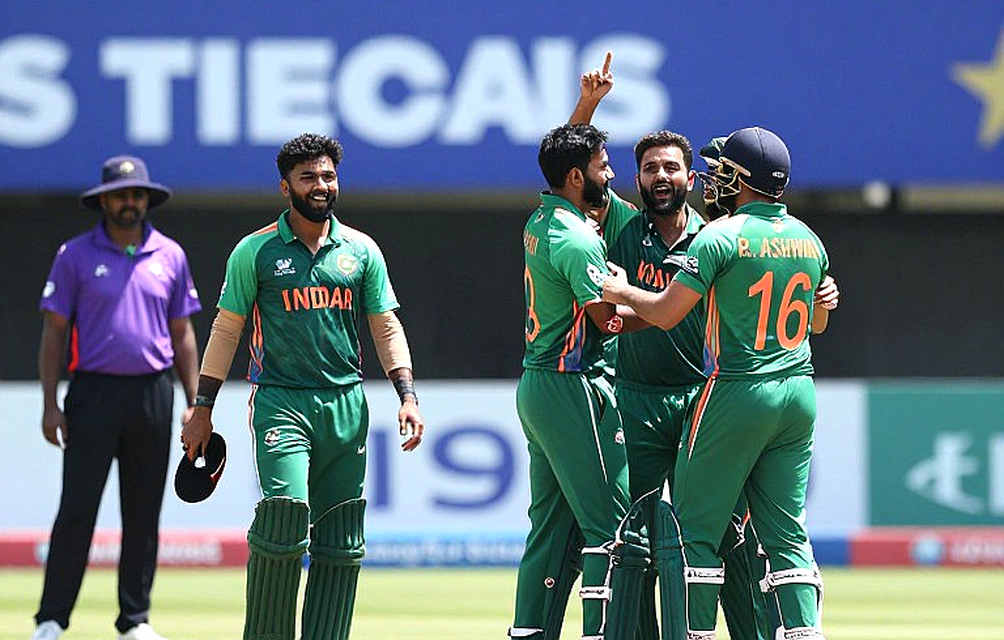
There is one more uncomfortable truth. Had the same event run the other way — Sri Lanka appealing against Bangladesh, a Bangladeshi batter timed out at home in Chattogram because of a helmet — what would our reaction have been? Procedural consistency means applying the same standard to both sides. The first rule of the 'Referee's Eye' show I launched in 2026 was precisely this: put every decision through the same frame-by-frame test, whichever team is involved.
As a student of economics, one more angle catches my eye. The risk of equipment failure is a cost, and the law determines whose shoulders carry it. As it stands, that cost falls entirely on the batter. But a helmet is safety equipment — when it fails, the liability is not the batter's alone. If the law does not share that cost, every team will take extra caution in future and the game will slow down, which ultimately works against cricket itself.
One more angle: the match referee and the Code of Conduct. This incident produced no formal sanction, because it was a decision under the playing laws, not a breach of the code of behaviour. Mathews' fury, the flung helmet — those are expressions of emotion, but they carry little weight in the formal report. The system recorded the decision, not the human pressure behind it.
The road ahead rests on two questions. First, will the playing conditions add a clear exemption for equipment malfunction? Second, will a visible clock and a public timestamp be introduced to make time-related decisions auditable? In 2026 VAR taught us that technology does not actually make decisions more transparent — technology makes decisions more testable. Timed out is now waiting for that test.