
Tennis: The Sport That Teaches Patience, Tactics and the Limits of the Body Inside Four Lines
Tennis কী? Tennis হলো একটি ব্যক্তিগত ব্যাট-বল খেলা, যেখানে ২৩.৭৭ মিটার লম্বা কোর্টের মাঝখানে নেট টেনে দুই পক্ষ (একক বা দ্বৈত) র্যাকেট দিয়ে বল আদান-প্রদান করে। স্কোর ১৫-৩০-৪০-গেম পদ্ধতিতে চলে, সেট জিততে ছয় গেমের ব্যবধান লাগে এবং ৫-৫ হলে টাইব্রেক হয়। মূল সারফেস চারটি—ঘাস, ক্লে, হার্ড ও কার্পেট; সারফেসভেদে বলের গতি ও বাউন্স বদলে যাওয়ায় কৌশলও বদলায়। চারটি গ্র্যান্ড স্ল্যাম হলো অস্ট্রেলিয়ান ওপেন (হার্ড), ফ্রেঞ্চ ওপেন (ক্লে), উইম্বলডন (ঘাস) ও ইউএস ওপেন (হার্ড)। Tennisে শারীরিক গতি, পায়ের কাজ ও মানসিক স্থিরতা—তিনটিই সমান জরুরি।
Tennis is one of the oldest and most widely followed individual bat-and-ball sports in the world. A court, a net, two rackets and a ball are enough to create a contest that simultaneously demands physical capacity, mental composure and long-term tactical planning. From the outside it looks like two players simply trading shots; inside, hundreds of decisions are being calculated. Before every shot a player must decide where to place the ball, at what speed, where the opponent is standing, and where to position themselves for the next ball. That running calculation cannot be memorised; it is built over years of practice.
Modern tennis was born in nineteenth-century England as lawn tennis, so called because it was played on grass. Trade, migration and colonial networks carried the game across Europe, the Americas, Australia and Asia. Once a professional circuit took shape in the twentieth century, tennis moved from elite pastime to full profession. Today it is simultaneously a high-level competitive sport, a global entertainment industry and a popular form of fitness activity.
The geometry of the court
The dimensions of a tennis court are fixed and universal. The court is 23.77 metres long, 8.23 metres wide for singles and 10.97 metres wide for doubles. The net stands 1.07 metres high at the posts and 0.91 metres at the centre. This geometry directly shapes tactics. A wider court means more angles; a lower net means raw speed is more effective. The service box is 6.40 metres deep—the ball landing in that small area creates the hardest problem for a returner. Baseline, service line and sidelines together form a map on which every player draws the geography of their own shots. The space outside the lines matters too: the route back after chasing a wide ball, the position of the crowd, the nature of the surface—all of it can change the direction of a match.
Surfaces: the key to a match's character
Tennis is played on four main surfaces: grass, clay, hard court and indoor carpet. On grass the ball moves fast and stays low, so serving and net attack dominate and rallies are short. Clay slows the ball and produces a higher bounce, making patience, footwork and long rallies central. Hard courts are relatively neutral, balancing pace and bounce, which makes them acceptable to all styles. Carpet is the fastest of all, but its use on the international circuit has declined. The same player can produce very different results on different surfaces—that difference is what makes the tennis calendar varied and encourages specialisation.
Scoring: a language and a logic of its own
Tennis scoring is unlike any other ball sport. The first point won gives 15, the second 30, the third 40 and the fourth the game. A 40-40 score is deuce, from which a player must build a two-point lead. A set is won by a six-game margin, though at 5-5 a seven-point tiebreak is usually played. Men's Grand Slam matches run to five sets; other events are generally best of three. The peculiarity is that a single point never wins a match, yet a single point can change the momentum of an entire match. That is why a comeback from 40-0 down and a five-hour marathon are both possible within tennis's own logic.
The repertoire of shots
The serve is the only shot in tennis entirely under a player's control. Its pace, spin and direction set up what follows. The shots after the serve are usually the forehand and backhand—these two groundstrokes are the foundation of modern tennis. On the forehand the arm swings across the front of the body, producing more power and control; on the backhand the ball is struck across the body, and a two-handed grip adds stability. Approaching the net brings volleys, smashes, drop shots and lobs, each with a distinct purpose. Slice keeps the ball low and slow; topspin lifts it and pushes the opponent behind the baseline. That variety makes tennis both a physical and an intellectual game.
Footwork and body language
In tennis a shot does not begin with the hand; it begins with the feet. Without reaching the ball, the best forehand in the world is useless. Small adjustment steps, balance through direction changes, and recovering quickly to the centre after each shot are therefore central to modern practice. Physically, tennis demands explosive speed, sharp acceleration and deceleration, and the capacity to stay alert over long periods. Muscle strength matters, but so do flexibility and core stability. Many players suffer knee, ankle or shoulder injuries because every shot involves turning, stopping and restarting, repeatedly loading the joints.
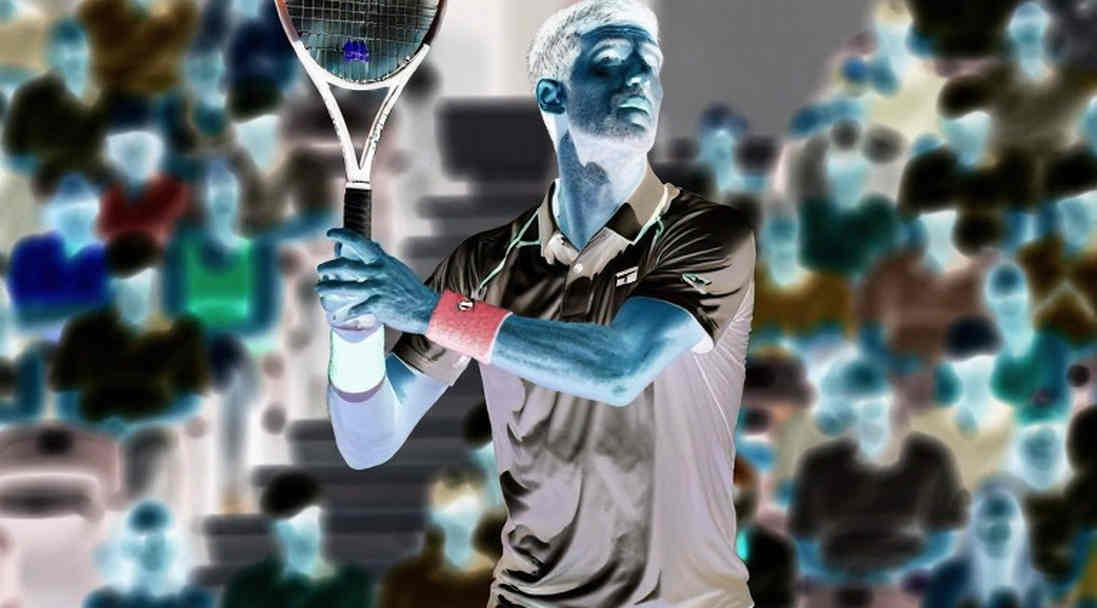
The mental battle
Tennis's cruellest feature is its solitude. In football or cricket a mistake can be covered by team-mates; in tennis the player alone carries the cost of every error. A coach may sit in the stands, but the decisions on court are made alone. One faulty serve, one unnecessarily risky shot, can change the course of a whole set. At the highest level, composure, breath control and the ability to refocus on the next point often become as important as technical skill. Many experts argue that talent produces a player, but durable success requires mental stability.
Tactics: building patterns
Experienced players do not merely hit shots; they build patterns. Serving wide to pull an opponent into one corner and then opening the opposite side, repeatedly attacking a weaker wing, extending rallies when the opponent is tiring, or suddenly raising the pace to break rhythm—all of this is planning. Data analysis has grown in modern tennis. Video analysis, shot placement, serve targets and the patterns behind points won are used to shape coaching plans. Electronic line calling and rally statistics have changed the spectator experience too. Yet the final decision is made inside the court, where the data stays in the background and only the racket is in hand.
Equipment: the quiet role of technology
Rackets generally weigh between 250 and 350 grammes. Lighter frames help fast hands and more spin; heavier frames offer more power but greater fatigue over long matches. Strings are typically strung at between 20 and 30 kilogrammes of tension—higher tension means more control but less power, lower tension the reverse. Ball type, court smoothness and temperature all affect outcomes. Grass produces a lower bounce, and dry weather makes the ball quicker. These subtle variations make tennis a meeting point of technology, physiology and weather.
Four continents, four Grand Slams
The biggest stages in tennis are the four Grand Slams. The Australian Open is played on hard court, the French Open on clay, Wimbledon on grass and the US Open on hard court. Wimbledon is the oldest, first held in 1877. The four events represent four surfaces, four climates and four spectator cultures. Winning all four in a single year is therefore extremely difficult, because one style may not succeed equally everywhere. Beyond the Slams, the men's ATP Tour and the women's WTA Tour run the year-round structure of competition.
Team tennis and global spread
Though an individual sport, tennis has team competitions. The Davis Cup for men and the Billie Jean King Cup for women represent nations. They also give smaller tennis nations a platform, places where breaking onto the main circuit is hard. Women's tennis has travelled a long road; once there was a wide gap in reward and recognition, but since 2026 all four Grand Slams pay equal prize money to men and women. That stands as an important example of equality beyond sport as well.
Grassroots and the future
Any sport's durable growth depends on courts, coaches and competition at the grassroots. Tennis's problem is that it is relatively expensive—rackets, balls, court hire and coaching costs push many families away. Many countries have therefore introduced school-based and community-court programmes. In South Asia, tennis does not enjoy the popularity of cricket or football, but club-based practice in cities and participation in international competition are steadily rising. Starting children on smaller courts with lighter balls is now widespread practice, because it builds a love of the game before technique is taught.
Conclusion
Tennis is really a simple equation: send the ball where the opponent cannot return it—and be ready to handle every ball that comes back. Inside that simple equation lies extraordinary complexity. Court dimensions, surface character, the sport's own scoring logic, the variety of shots, the limits of the body and the pressure of the mind together make tennis a game in which patience outlasts talent. And perhaps that is why, when a yellow ball flies toward a towering stand, millions of people around the world hold their breath waiting to see where the next shot will land.