
Swimming
Shin Ohashi Tests an Even-Pace Model With 2:08.79 in the 200 Breaststroke in Tokyo
প্রশ্ন: শিন ওহাশি টোকিওর মিটে ২০০ মিটার ব্রেস্টস্ট্রোকে কত সময়ে জিতেছেন? উত্তর: ২:০৮.৭৯, প্রথম ১০০ মিটার ১:০৪.২৫ এবং দ্বিতীয় ১০০ মিটার ১:০৪.৫৪—দুই ভাগের পার্থক্য মাত্র ০.২৯ সেকেন্ড। প্রশ্ন: তাঁর সঙ্গে যুক্ত ২:০৪.৮৩ বিশ্ব রেকর্ডটি কি যাচাইকৃত? উত্তর: না, এটি অনুমোদিত লং-কোর্স বিশ্ব রেকর্ডের সঙ্গে মিলছে না এবং 'যাচাইয়ের অপেক্ষায় থাকা তথ্য' হিসেবে গণ্য করতে হবে। প্রশ্ন: মুরাসার ১:৪১.৮৯ সময়টি কী? উত্তর: এটি শর্ট-কোর্স সময়, জাপানের ইতিহাসে দ্বিতীয়; তাঁর লং-কোর্স সময় ১:৪৫.০১ এবং দুটি সরাসরি তুলনাযোগ্য নয়। প্রশ্ন: এই প্রতিযোগিতার স্তর কী? উত্তর: ৫৭তম Outstanding Athletes Invitational, একটি ঘরোয়া আমন্ত্রণমূলক মিট, জাতীয় চ্যাম্পিয়নশিপ বা বাছাইপর্বের নিচে; ওহাশির জয়ের ব্যবধান ৩.০৭ সেকেন্ড (প্রতিদ্বন্দ্বী ২:১১.৮৬)।
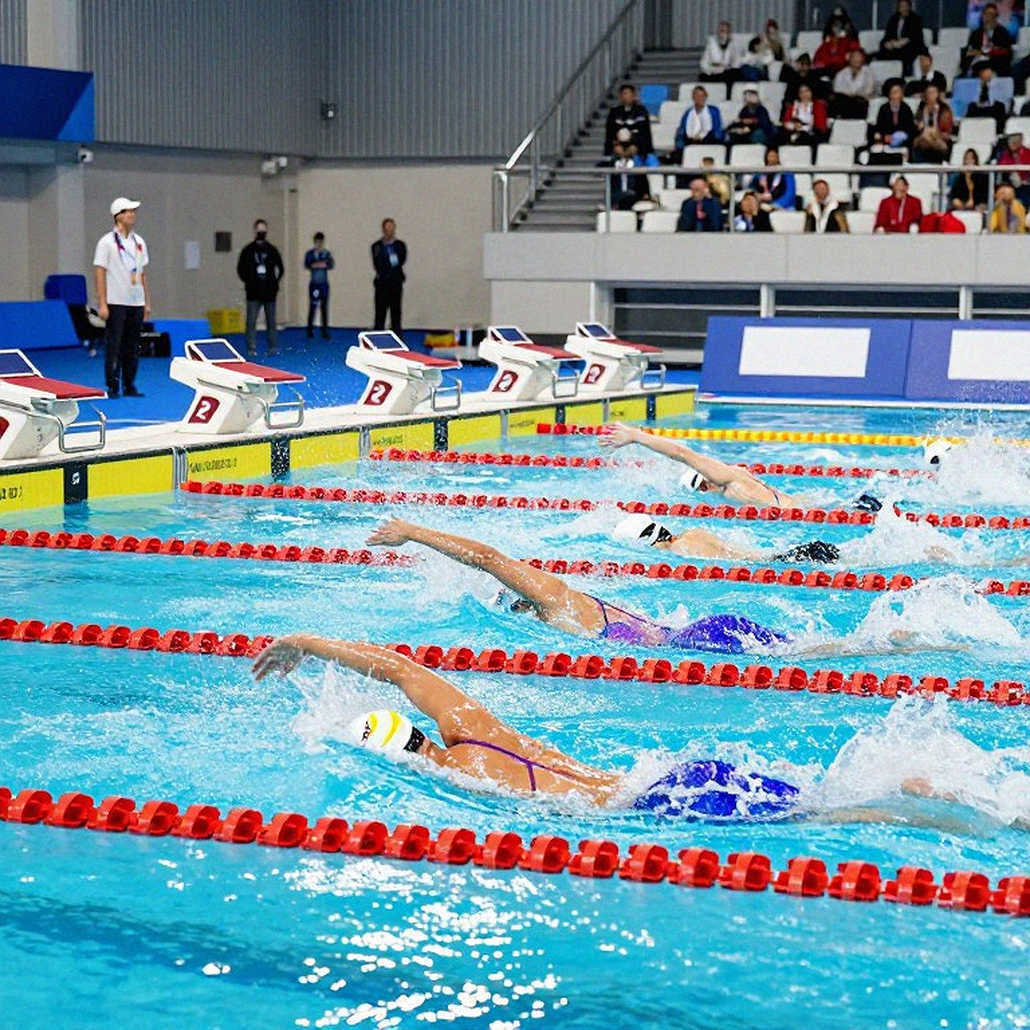
Shin Ohashi won the men's 200m breaststroke on the penultimate night of the 57th Outstanding Athletes Invitational in Tokyo, touching in 2:08.79. On the surface it reads like a routine domestic victory, but the swim contains a larger experiment whose target is not a medal but the oldest problem in the 200m breaststroke.
Ohashi opened with 1:04.25 for the first 100m and came home in 1:04.54. The difference between the halves is just 0.29 seconds. In swimming terms this is not a true even split but a near-even, marginally positive one—the second half slightly slower. The structure itself matters, because holding speed through the final 100m of a 200m breaststroke is notoriously difficult. The stroke's high metabolic cost and water resistance make back-half fade the normal pattern. Ohashi is deliberately trying to counter that pattern.
By his own account, his objective is explicit: to increase speed in the second half. At this meet he completed one step of that objective. Before the race it was reported that he wanted to be roughly 0.4 seconds faster over the closing 100m than at the Asian Games. Measured against the 2:08.79 total and the 1:04.25/1:04.54 split, the plan appears to have worked on paper. But this is not yet a final success—Ohashi himself says he is still getting a feel for the approach. It is an experimental race model, still in development.
The most important element of this report is not technical but factual. The men's 200m breaststroke world record attributed to Ohashi—2:04.83—does not align with the publicly ratified long-course world record. The figure may be mislabelled, may be a short-course mark, or may be an unratified timing. Until it is checked against the World Aquatics database, it must be treated as data pending verification. As a result, comparing 2:08.79 to it as a percentage is currently meaningless—although the gap is roughly 3.96 seconds, or about 3.2 percent.
There is a further inconsistency that receives less attention but matters. It was said that Ohashi was 0.4 seconds faster over the back 100m than at the Asian Games. If his Asian Games back 100m was about 1:04.94, then reaching a 2:04.83 total would require a first 100m of roughly 59.89—physiologically implausible in a 200m breaststroke. The split reference and the world-record total are internally inconsistent, and the discrepancy cannot be resolved without verification.
Analysis of the meet's level makes the significance clearer. This is a domestic invitational, below national championships or selection trials. Ohashi's nearest rival finished in 2:11.86—a winning margin of 3.07 seconds. He was the only swimmer under 2:11. That proves domestic dominance while also indicating he had no real competition here; his true reference points lie outside this meet.
In the men's 200m freestyle the picture differs. Murasa won in 1:45.01, with the second and third placers at 1:48.25 and 1:48.32. He won by more than three seconds. That margin signals thin domestic depth in this particular 200m freestyle field rather than world-class depth. Australian entrant Bill Atkinson finished third in 1:48.32, suggesting the meet also serves as an international training-race opportunity.
The data confusion around Murasa is larger. His 1:41.89 is a short-course time and Japan's second-fastest ever, behind Matsumoto's 1:41.29. It cannot be compared directly with his long-course 1:45.01. Short-course pools have more turns, so times are naturally faster. The only usable figure for real evaluation is the long-course 1:45.01, and that is strong domestic level, not world-medal level. The source report presents short-course and long-course marks together, which is a material hazard for analysis.
Technically, Ohashi's performance is not a stroke-technique change but race modelling. No information is available on start, underwater work, turns, stroke rate or distance per stroke, so claims of technical advancement have no basis. What exists is tactical: a deliberate attempt to prevent back-half deterioration in the 200m breaststroke.
The risks are clear. First, this is a single meet against a weak field, so the sample is insufficient. Second, the approach is still in its adaptation phase. Third, if rivals learn to hold pace through the back half, his edge narrows. Fourth, only 100m splits were provided; without 50m splits the fine detail of pace change is unknown.
Ohashi is still 17. At that age, a claim close to world-record territory and the factual uncertainty attached to it should both be judged against a long-term plan. He appears to be using a low-stakes domestic meet as a controlled laboratory, which points to a mature coaching plan.
For Japanese swimming the result sends two signals. First, a leading talent is emerging in the men's 200m breaststroke whose real comparison must happen on the world stage. Second, depth in the men's 200m freestyle is limited—Murasa is a domestic champion but still has a gap to the global elite.
Finally, one point must be stated plainly: no conclusion in this report is final without verification against the World Aquatics database. Until 2:04.83 is confirmed and short-course and long-course times are separated, assigning any international ranking would be irresponsible. What is certain is that Ohashi ran a tactical experiment, and in its first stage it progressed as expected.
Related Players
Recommended
The Report From an Empty Lane: In Swimming Files, 'Not Recorded' Is Not 'Cleared'2026-10-25
Four Rounds in the 50: The 2027 Pro Series Experiment — and the Shoulder Ledger Nobody Is Opening2026-10-03
Zero-Information Input: Source Recovery Must Precede Any Sports Report2026-11-02
The Sub-22 Wall: Hong Kong's Medal Day at the Asian Games and an Empty Dataset2026-09-24
4:01.94 and the Pool-Length Illusion: Where Ching Hwee Gan's Record Actually Stands2026-10-02
Thirteen Minutes No Scoreboard Counts: SwimRVA's $100 Million Suit and the Ledger of Our Own Ponds2026-10-26
Six Names, Zero Times: The Ledger Nobody Balanced on Michigan's 2028 Class2026-10-29
Eleven on the Roster, Two Stars on Leave: Cal's Math and the Mirpur Mirror2026-10-03
Recommended
The Eleven-Name Sheet: What Cal's Absences Actually Revealed About a Brand-New Swimming League2026-10-03
The Sub-22 Wall: Hong Kong's Medal Day at the Asian Games and an Empty Dataset2026-09-24
Six Names, Zero Times: The Ledger Nobody Balanced on Michigan's 2028 Class2026-10-29
No Results, Only Promises: Reading Swimming's Media Layer, and Bangladesh's Empty Ghats2026-10-16
Asiad 20 Ledger: Five Names, Three Events, Zero Times on the September 22 Heat Sheet2026-09-24
College Swimming League: All Four Schools Reaching the Championship to Receive $25,000 — Prize or Strategy?2026-09-24
Four Rounds in the 50: The 2027 Pro Series Experiment — and the Shoulder Ledger Nobody Is Opening2026-10-03
Reading an Empty Payload: When Bangladesh's Swimming Analysis Pipeline Broke Its Own Evidence Chain2026-10-21
Recommended
Thirteen Minutes No Scoreboard Counts: SwimRVA's $100 Million Suit and the Ledger of Our Own Ponds2026-10-26
No Results, Only Promises: Reading Swimming's Media Layer, and Bangladesh's Empty Ghats2026-10-16
The Report From an Empty Lane: In Swimming Files, 'Not Recorded' Is Not 'Cleared'2026-10-25
Asiad 20 Ledger: Five Names, Three Events, Zero Times on the September 22 Heat Sheet2026-09-24
4:28.56 and a Thirteen-Year-Old's Shoulder: The 400 IM Ledger Nobody Keeps2026-09-24
A Record in the Prelims, but the Real 50m Butterfly Story Is Elsewhere2026-09-24
Eleven on the Roster, Two Stars on Leave: Cal's Math and the Mirpur Mirror2026-10-03
Look Beyond Mirpur: The New Open Water World Cup Season and Bangladesh's Invisible Question2026-11-04
Recommended
Shin Ohashi Tests an Even-Pace Model With 2:08.79 in the 200 Breaststroke in Tokyo2026-11-03
Records in the Tashkent Bubbles: Five Hundredths and the Triple Crown Arithmetic Waiting in Astana2026-10-12
From 4.71 to 8.01: The Number Hidden Inside Zona Smith's Florida Commitment2026-10-19
4:28.56 and a Thirteen-Year-Old's Shoulder: The 400 IM Ledger Nobody Keeps2026-09-24
1:59.79 vs 1:57.07: Where Kiera Powers Actually Sits on Ohio State's Ledger2026-09-24
College Swimming League: All Four Schools Reaching the Championship to Receive $25,000 — Prize or Strategy?2026-09-24
Eleven on the Roster, Two Stars on Leave: Cal's Math and the Mirpur Mirror2026-10-03
A New Block in the Short-Course Ledger: Haughey's 23.48 and Bangladesh's Empty Blocks2026-10-02