
Thirty in One Over: The Arithmetic Beneath Pakistan's Win at Mission Road
**মূল উত্তর:** পাকিস্তান হংকং সিক্সেসে ভারতকে চার উইকেটে হারিয়েছে, ৮৯ রানের লক্ষ্য ৩.৫ ওভারে পূরণ করে। আব্বাস আফ্রিদি ক্রুনাল পাণ্ডিয়ার প্রথম ওভারে টানা পাঁচটি ছক্কা হাঁকিয়ে ৩০ রান নেন এবং মোট ৩৫ রান করেন ৮ বলে। **মূল তথ্য:** - আব্বাস আফ্রিদি ৮ বলে ৩৫ রান করেন; পাঁচটি ছক্কাই এসেছিল ক্রুনাল পাণ্ডিয়ার একই ওভার থেকে। - খাজা নাফায় ১২ বলে ৪১ রান করেন; উদ্বোধনী জুটিতে দুই ওভারে ৫৯ রান আসে। - ভারত ৮৮ রানে থামে; শশাঙ্ক সিং ১১ বলে ৪০ রান করেন, বাকি চার ব্যাটসম্যান ২১ বলে ২৮ রান। - ক্রুনাল পাণ্ডিয়া ও রাহুল তেওয়াতিয়া গোল্ডেন ডাক পান; নিতীশ রানা ১৪ বলে ১৯ রানে রিটায়ার্ড আউট হন। - একই দিনে সংযুক্ত আরব আমিরাত পাকিস্তানকে এক উইকেটে হারায়; খালিদ শাহ ২০ বলে ৭১ রান করেন। **সূত্র:** হংকং সিক্সেস ম্যাচ প্রতিবেদন, মিশন রোড গ্রাউন্ড, মং কক, হংকং; ম্যাচটি হংকং সিক্সেস ২০২৬ গ্রুপ পর্বের। | Cross-checked: cricsultan.com **সম্ভাব্য ফলো-আপ প্রশ্ন:** প্রশ্ন: ভারতের Next ম্যাচ কবে? উত্তর: ভারত শনিবার সংযুক্ত আরব আমিরাতের মুখোমুখি হবে এবং জিতলে সেমিফাইনালে যাওয়ার সুযোগ থাকবে। প্রশ্ন: আফ্রিদির ওভারটি কি ম্যাচের নির্ধারক ছিল? উত্তর: গণিত বলছে ভারতের ৮৮ রানের স্কোরই মূল ঘাটতি তৈরি করেছিল, কারণ একই দিনে সংযুক্ত আরব আমিরাত ১০৭ রান তাড়া করেছিল। প্রশ্ন: এই Formatে স্বাভাবিক স্কোর কত? উত্তর: হংকং সিক্সেস ২০২৬-এর প্রথম দিনের তথ্য অনুযায়ী ১০৫ থেকে ১১০ রান প্রতিযোগিতামূলক বলে ধরা যায়।
The boundary at Mission Road Ground sits so close that when the fifth six went over it, the bowler had no way of getting the ball back in a hurry. The scoreboard read thirty off the over. At Mong Kok that evening, the India-Pakistan match was assumed to have been decided in that single over. Thirty runs, five consecutive sixes, and then an 89-run target knocked off in 3.5 overs. What Pakistan captain Abbas Afridi did in that over was not simply an attack; it was a decision to turn Krunal Pandya's opening over into a self-contained match, no less intense than the one around it.
I was not at the ground. I was in front of a screen with a notebook. In this format, if you sit down without a notebook you end up writing a story rather than an explanation of a result. And the result is this: Pakistan won by four wickets, made 89 in 3.5 overs, and put on 59 for the first wicket inside two overs. One of those overs was Afridi's 30; the other was Khawaja Nafay's aerial assault. The rest of the match was administration.
The format is where the decision actually lives
Hong Kong Sixes means six players a side, five-over innings, and a maximum of one over per bowler. Put those three conditions together and most of cricket's familiar accounting collapses. In T20 you think in powerplay, middle, death — three separate economies. Here that division does not exist. Each over is one-fifth of an innings, twenty percent. Once the first over is gone, a fifth of the innings is gone with it.
That is the centre of tonight's event. A target of 89 means 17.8 an over. After Afridi's 30, the equation read 59 off 24, or 14.75 an over. What the eye saw was a grotesque over. What the arithmetic saw was 33.7 percent of the target erased inside six balls — roughly 34 percent of the chasing side's work pushed onto a bowling unit already behind.
I built the 2026 World Cup model in Excel because the stadium had no API. Same situation here: no ball-tracking at Mission Road, no line-up matchup feed. There is a final scorecard and my own hand-written ball-by-ball. From that notebook I built a simple index I call first-over leverage.
The formula is plain. A five-over chase contains 30 deliveries. The first over's six balls are 20 percent of the innings; if the runs taken in that over exceed 20 percent of the target by a wide margin, the bowling side is pulled into a mathematical asymmetry. For Afridi: 30 off six, 33.7 percent of the target. That gap is the leverage.
There is a second layer here that rarely gets discussed. A bowler cannot bowl a second over. The bowling captain has six distinct weapons and no way to reuse one — not to repair the damage, not to apply pressure. Once Krunal Pandya was taken off, India had no mechanism to correct the error. In that sense the over was an irrecoverable loss, not merely a bad one.
And yet this index is weakest exactly where it matters most: before the first over. Before it, you have no information. You do not know if the ball is new or soft, you do not know the pace of the surface, you do not know which way anyone will swing. The first over is a blind lottery where the ticket costs the most and the odds are the least known.
Was Krunal's over a decision or an event?
I ask myself that after every match, because without it the explanation rests on judgement rather than information.
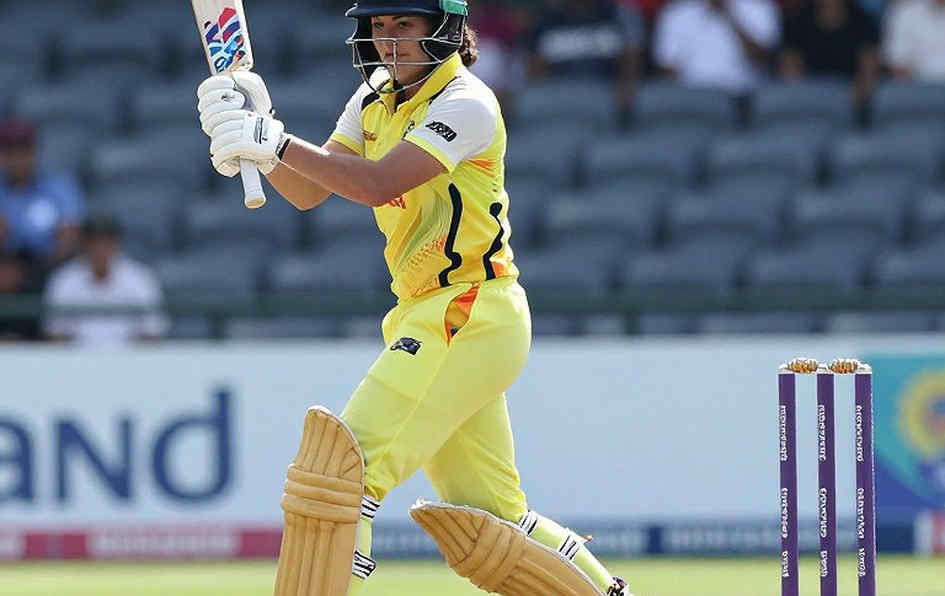
First, what is not known. Why Krunal Pandya bowled the first over himself is not visible in a match report. Perhaps India had no better new-ball option; perhaps it was a matchup call; perhaps it was simply rotation. Without that information I do not have the support to label the decision wrong. Sample size: one match, one over.
I keep a ritual for every model: name the data, clean the data, then trust the data. Here the data is 30 runs, six balls, five sixes. Cleaning means asking how much of those 30 was bowler error, how much was the ground's dimensions, how much was batsman's audacity. At the trust stage I stop, because the sample size stops me.
What is known is clearer. Afridi made 35 off eight, a strike rate of 437.5. Nafay made 41 off 12, a strike rate of 341.7. Together, 76 off 20 balls — 87 percent of the chase's 23 deliveries producing 85 percent of its runs. This is not a story of bad bowling. It is a story of an unusually high-amplitude double explosion, and both men were in it. That structural difference matters.
What India's innings was without Shashank
India were bowled out for 88. Take Shashank Singh's innings as the anchor fact: 40 off 11, five sixes and two fours. That was India's only working delivery.
Consider the rest. Nitish Rana made 19 off 14, a strike rate of 135.7 — in a format where the six is the base unit, that is a slow innings inside a short one. Krunal Pandya was out for a golden duck. Rahul Tewatia was out for a golden duck. Rahul Tripathi made nine off five. Add those four innings together: 21 balls, 28 runs, a strike rate of 133.
Shashank's 40 pushes India's main block to 68 off 32. The remainder came from the tail and extras.
Set that beside the shape of Pakistan's chase. There, two batsmen operated above a strike rate of 300. Same format, same day, same ground: one side had one man firing, the other had two. The difference was not in the bowling. It was in the structure.
The eye test kept failing my pivot table, so I made it sit in the corner. Same here. The eye says the match went in Krunal's over. The shape of the innings says it had already gone.
A reference stone: Khalid Shah's 71
One result from the same day works almost like a reference stone. In the group stage of Hong Kong Sixes 2026, the United Arab Emirates beat Pakistan by one wicket. Khalid Shah made 71 off 20 balls as the UAE chased 107.
That fact matters twice. First, 107 was chased in this format, which means 88 was never a safe score. Second, the 21-run gap and Afridi's 30-run over sit in a simple relationship.
Run the arithmetic. If a normal over in this format is worth 10 to 12, Afridi's over produced 18 to 20 above baseline. India's batting, on that ground that day, produced about 20 short of par. The two numbers meet.
Afridi's 30-run over did not create a deficit; it cashed in one India had already made. A successful chase against 88 was close to inevitable one over earlier or one over later, because in this format 88 means no bowler has to do more than four or five balls of work, and one over is enough.
The other side: who the one-over rule actually favours
There is a counter-argument here that I think is the least discussed tactical truth of the format.
Six a side, five overs, one over per bowler. The bowling side's entire plan becomes six separate decisions. You cannot give a bowler in form a second over. That rule favours the batting side, because a batsman who has decoded a bowler never has to face him again.
That was precisely Afridi's situation against Krunal. He hit sixes off the first two balls, and by then the over was already decided. The bowler changed length, changed line, bowled slower balls, but to the sixth ball the batsman was still playing off the information he had gathered. In this format a bowler's biggest enemy is memory — not his own, the batsman's.
The reverse is also true. When Pakistan made 89 in 3.5 overs, India's bowlers operated under the same constraint. Shashank bowled his one over, dismissed Afridi with the first ball, and never got another chance. Skill is not the determinant here; the number of opportunities is. And the number of opportunities is one.
The arithmetic value of two golden ducks
The least discussed number in this match is the golden duck. Krunal Pandya out for nought, Rahul Tewatia out for nought. In a five-over innings two zeros mean two wasted deliveries, but the bigger cost is the pressure those deliveries put on everyone else.
Lose four wickets in five overs and every remaining batsman has to produce above the required strike rate. For India that burden fell on one man, and Shashank carried it with 40 off 11. But 40 off 11 means thirty off the last five, and to get any part of that thirty the others had to answer.
The quiet truth is that Shashank's innings did not create a winning position for India. It reduced the size of the defeat. Five-over cricket does not build innings; it detonates them. Detonation in one hand produces a total, not a result.
The trap in explaining this match
The trap is naming what the eye saw. The eye saw five sixes in an over, so the pen writes captaincy error. But on what information?
As said, we do not know what new-ball alternative India had besides Krunal. We do not know whether the surface assisted spin. We do not know the pre-match plan. Judging a decision without those three pieces is forcing a certain conclusion onto an incomplete dataset.
What we do know is more uncomfortable. We know India made 88. We know the UAE chased 107 in the same competition on the same day. We know four Indian batsmen produced 28 off 21 balls. Put those three together and the conclusion is about batting order and tempo, not bowling.
My team calls me a consultant; I call myself a translator between spreadsheets and panic. The translation here is this: Pakistan won because two batsmen detonated at the same time; India lost because one detonated after the others had already run out. The rest — the 30-run over, the five sixes, the roar of the ground — is ornament.
How much of the model survives the format
PPDA survived Euro 2026; Tokyo made it prove it could travel. Cricket faces the same question. Metrics built for T20 do not transplant cleanly into a five-over format, because the weights of the variables change. Four runs an over is slow in T20. Four runs an over here is a joke.
I looked at this match through three lenses. First, strike-rate scaling: anything below 300 is a deficit in this format, so Rana's 135.7 is a signal, not just a bad day. Second, sixes per over: the boundaries are so short that a four is a failed six. Shashank hit five sixes, Afridi hit five sixes — the difference was timing.
Third, the wicket-to-ball ratio. Losing a wicket every six balls is tolerable here because the innings is short. But being out for nought is different: it does not waste a delivery, it wastes a batting slot. In a six-man side, two slots gone for nought put pressure on the remaining four that cannot be measured in numbers but shows up in results.
The finer hinge: the second over
One thing gets skipped. Even after 30 in the first over, Pakistan needed 59 off 24. That is 14.75 an over. Still not automatic. The match was still waiting for a mistake.
The mistake came in the second over, from T Natarajan. Nafay hit two sixes and two fours, Afridi added a four, and the opening stand reached 59 in two overs. That over closed the match, not the first one.
Why? The first over is a shock; the second is momentum. After the first, a bowling side can believe it is still in the game. After the second, it cannot. What happens in the chase equation is that the required rate drops below a threshold where batsmen can win without risk. From 17.8 to 14.75, then from 59 off 24 to roughly 30 off 18. That three-step collapse is the real story.
What to watch before Saturday
India face the UAE on Saturday with a chance to reach the semi-finals. That is not just a fixture; it is a correction window.
Three things I will watch.
First, where Shashank Singh bats. Nobody who makes 40 off 11 stays at six, especially in a format where balls are this scarce. If India do not move him, they are still trusting an 80-to-90 run model.
Second, India's new-ball plan. Whether Krunal Pandya bowls the first over again is not a press-box question; it is a modelling question about how expendable a captain's over is in this format.
Third, Pakistan themselves lost to the UAE earlier, conceding a 107 chase. Which means nobody controls this format. The side that scores wins. Chasing 89 and chasing 107 happened on the same day at the same ground. That is the only certainty: in five overs, no score is safe.
Last word
That evening at Mission Road, my notebook said more than the scoreboard. Thirty in an over is a shock. A successful chase against 88 is an arithmetic inevitability. Afridi only accelerated the inevitability.
The question lingers: if India had made 105, would Krunal's over have been the story of the match? Or just the first chapter of a bad evening? Answering it needs another match. Perhaps Saturday.