
ICC Women's Champions Trophy 2027: India's Six-Team Tournament, Qualification Politics and the Commercial Future of Women's Cricket
মূল উত্তর: আইসিসি নারী চ্যাম্পিয়ন্স ট্রফি ২০২৭ ভারতের মুম্বাই ও ভাদোদরায় ১৪–২৮ ফেব্রুয়ারি অনুষ্ঠিত হবে। ছয়টি দল রাউন্ড রবিন পদ্ধতিতে খেলবে এবং শীর্ষ দুই দল ২৮ ফেব্রুয়ারি ফাইনালে উঠবে। মূল তথ্য: - আয়োজক: ভারত; ভেন্যু: ক্রিকেট ক্লাব অব ইন্ডিয়া, মুম্বাই এবং ভাদোদরা International ক্রিকেট স্টেডিয়াম। - অংশগ্রহণকারী: অস্ট্রেলিয়া, ইংল্যান্ড, ভারত, নিউজিল্যান্ড, দক্ষিণ আফ্রিকা ও শ্রীলঙ্কা। - Format: টি-টোয়েন্টি International; ১৫টি League ম্যাচ ও একটি ফাইনাল, মোট ১৬টি ম্যাচ। - বাছাই: ৬ জুলাই ২০২৬-এর আইসিসি নারী টি-টোয়েন্টি International র্যাঙ্কিং। - প্রাথমিক আয়োজক ছিল শ্রীলঙ্কা; Nextতে আইসিসি ভারতকে বিকল্প আয়োজক নির্ধারণ করে। উৎস: International Cricket Council, India to Host ICC Women's Champions Trophy 2027, 2 September 2026. https://www.icc-cricket.com/media-releases/india-to-host-icc-women-s-champions-trophy-2027 ভেন্যু ও Format যাচাই: International Cricket Council, Venues Confirmed for First Women's Champions Trophy, 2 September 2026. https://www.icc-cricket.com/news/venues-dates-confirmed-for-inaugural-icc-women-s-champions-trophy সম্পর্কিত প্রশ্নোত্তর: প্রশ্ন: ২০২৭ নারী চ্যাম্পিয়ন্স ট্রফিতে কয়টি দল খেলবে? উত্তর: অস্ট্রেলিয়া, ইংল্যান্ড, ভারত, নিউজিল্যান্ড, দক্ষিণ আফ্রিকা ও শ্রীলঙ্কাসহ ছয়টি দল অংশ নেবে। প্রশ্ন: কোন পদ্ধতিতে চ্যাম্পিয়ন নির্ধারিত হবে? উত্তর: ছয়টি দল রাউন্ড রবিনে খেলবে এবং পয়েন্ট টেবিলের শীর্ষ দুই দল ফাইনালে মুখোমুখি হবে। প্রশ্ন: বাংলাদেশ কি ২০২৭ সালের প্রতিযোগিতায় খেলবে? উত্তর: না, ঘোষিত ছয় দলের তালিকায় বাংলাদেশের নাম নেই।" }</escape>
1. The Opening: A Six-Team Tournament with a Test Beyond the Boundary
February 2027 is set to become an important period in the international women's cricket calendar. The inaugural ICC Women's Champions Trophy will take place in India from 14 to 28 February. Six teams, the T20 International format and a new global trophy may initially suggest a compact competition. Yet the wider implications extend well beyond the playing field. The tournament will test the commercial positioning of women's cricket, the planning of international teams, generational transitions and the ICC's approach to future tournament structures.
The first important detail is qualification. Australia, England, India, New Zealand, South Africa and Sri Lanka secured their places through their positions in the ICC Women's T20I Team Rankings. The qualification cut-off date was 6 July 2026. This is therefore a ranking-based competition rather than an invitation-only event.

The ICC's official announcement on 2 September 2026 confirmed another significant development. The tournament was initially scheduled to take place in Sri Lanka but was subsequently moved to India. The Cricket Club of India in Mumbai and the Vadodara International Cricket Stadium will host the matches. The host market, venues and audience strategy have consequently taken a different direction.
After decades of observing and analysing cricket, one principle remains useful: a tournament's competitive strength cannot be measured by team names alone. Match volume, opposition variety, recovery periods and qualification rules also influence results. The same method should guide our assessment of the 2027 competition.
Bringing six established teams together can raise competitive quality, but the consistency with which that quality appears on the field will depend on the tournament structure and preparation.
2. Context: Why Does Women's Cricket Need Another Trophy?
Women's international cricket has undergone considerable structural change in recent years. The Women's Cricket World Cup, Women's T20 World Cup, regional competitions and franchise leagues have all contributed to the sport's financial and technical development. India's Women's Premier League, or WPL, is one of the clearest examples of this transformation.
National-team cricket and franchise cricket, however, serve different purposes. In a franchise competition, players represent specific teams over a limited period. International cricket requires them to adapt to a wider range of opponents, conditions and national-team strategies. The new Champions Trophy could become an important link between these two systems.
Under the announced structure, the six teams will compete in a single round-robin league. The top two will advance to the final on 28 February. Each team will therefore play five league matches. The round-robin stage will contain 15 matches, followed by the final, producing 16 matches in total. This is different from a possible two-group structure with semi-finals. The confirmed round-robin format must be the basis of any accurate analysis.
One advantage is that every team will have the opportunity to test itself against all five opponents. Under a two-groups-of-three arrangement, a team could have faced elimination after only two league matches. The round-robin system reduces that particular risk. A side losing its opening match will still have four further opportunities to collect points and reach the final.
There is, however, an operational challenge. Scheduling five matches for each team within a 15-day period requires careful management of fixtures, recovery time and venue operations. With matches restricted to Mumbai and Vadodara, travel demands may be easier to manage.
The round-robin format is the most important structural decision in this competition. It gives teams a meaningful number of matches and reduces the danger of an entire campaign being decided by one poor day.
The decision to move the tournament to India also carries major market implications. India has established a strong infrastructure for cricket broadcasting, sponsorship, advertising and digital audiences. The WPL has also helped create a recognisable commercial environment for women's cricket. However, the change of host should not be interpreted as a purely commercial decision. The ICC also considered matters relating to Sri Lanka Cricket's administrative reforms when selecting an alternative host. The process highlights the importance of governance among international cricket boards.
3. Core Analysis: Five Tactical Areas That Will Shape the Competition
When analysing T20 cricket, I generally examine five interconnected areas: the powerplay, middle overs, final five overs, bowling matchups and fielding positions. No match in the 2027 tournament has yet taken place. It would therefore be irresponsible to make claims about individual strike rates, bowling economies or recent performances. A more useful approach is to examine the tactical preparation required by the six teams.
Powerplay: Managing Risk in the First Six Overs
During the first six overs, batting teams must score quickly while controlling the risk of losing wickets. Every match in this six-team competition will matter because five league results will directly influence the points table. Rather than attacking without discrimination, teams may benefit from identifying the opposition's bowling patterns and selecting their scoring areas accordingly.
Using five vertical batting lanes provides a practical framework. Does an opening batter consistently access the cover region against deliveries outside off stump? Can the batter create room towards square leg when the ball approaches leg stump? How reliably can the batter control the pull shot against short deliveries? These are measurable questions that can be answered through team video analysis.
Indian conditions may require batters to make careful decisions about pace and bounce. However, it would be a mistake to assume that the Mumbai and Vadodara surfaces will behave identically. Grass coverage, soil composition, moisture and match timing can all influence the ball. Separate venue assessments will therefore be necessary before making claims about home advantage.
Middle Overs: Decision-Making Against Spin
Overs seven to fifteen are often the control zone of a T20 innings. Batting teams need to maintain their scoring rate, while bowling teams must restrict boundaries and create wicket-taking opportunities. Spin could become especially important in the subcontinent, depending on the actual pitch conditions.
Success against spin does not depend exclusively on hitting large shots. Footwork, body position and the ability to rotate the strike are equally important. If a batter struggles to access the cover region against deliveries outside off stump, a bowler can use a specific fielding arrangement to restrict scoring. Conversely, a batter who uses the crease effectively can create space between deep midwicket and long-on, forcing fielding adjustments.
When analysing matches in Bangladesh, I have used five vertical lanes to separate the ball's trajectory from the batter's contact zone. The same approach could prove useful in the Champions Trophy. For example, the effectiveness of a left-handed batter against spin on the leg side should be assessed separately from the batter's positioning against off-spin.
A left-handed batter does not automatically defeat an opposition spin plan. The bowler's arm, release angle, pitch location and fielding arrangement must all be considered. The same caution applies when assessing left-arm spin as an automatic tactical advantage.
Teams that rotate the strike consistently without losing wickets in the middle overs will have greater freedom to attack during the final five overs.
Death Overs: Balancing Scoring and Wicket Preservation
Overs sixteen to twenty could have a major influence on the outcome of the competition. Batters will seek boundaries, while bowlers will rely on yorkers, slower deliveries and hard lengths.
Dew could become an important factor in evening matches at Indian venues. Moisture on the outfield can make the ball difficult to grip. This may reduce the control of spinners and the effectiveness of slower deliveries. If the ball becomes wet during the second innings, batting conditions may become comparatively easier. However, the impact will vary according to match timing, weather and ground maintenance.
The toss may consequently become more influential. Winning the toss, however, does not guarantee victory. Teams must consider the pitch, atmospheric conditions and the depth of their bowling attack. A side with a strong spin combination might even benefit from bowling first on a dry surface.
Bowling Matchups: One Plan Cannot Defeat All Six Teams
Australia, England, India, New Zealand, South Africa and Sri Lanka have different cricketing structures and player-development systems. A strategy that restricts one side may produce a completely different result against another.
Australia's batting depth and pace-spin balance will deserve attention. England's aggressive batting approach and ability to manage spin will be important areas of analysis. India could benefit from combining spin and batting resources in familiar conditions. New Zealand's adaptability, South Africa's pace resources and Sri Lanka's potential spin-based strategies are also worth examining. These are analytical areas to investigate rather than definitive claims about confirmed strengths or weaknesses.
An effective match plan should provide separate bowling options for different positions in the opposition batting order. Bowling outside off stump to a right-hander or targeting leg stump against a left-hander will not always be the correct solution. Plans should reflect scoring areas, foot movement and the batter's head position during shot execution.
There is also an important limitation in the available evidence. The initial ICC announcement did not provide individual player names, personal statistics or final squads. No confident claim about a particular player's role or selection should be made without subsequent official information.
The competition may ultimately reward the team that can adjust its tactical plan most quickly to the opposition's specific batting and bowling matchups, rather than the team with the biggest reputations.
4. Team Strength, Generational Change and the WPL Effect
All six participating teams are established international sides. Their strengths, however, are not necessarily concentrated in the same areas. One team may have a powerful top six but limited batting depth from positions seven to eleven. Another may be less productive with the bat but better equipped to control matches through bowling changes and fielding.
Four indicators provide a useful starting point: top-six batting strength, bowling variety, bench quality and decision-making under pressure. International experience alone is insufficient to determine a team's prospects.
The WPL is particularly important to India's preparation. Franchise cricket gives Indian players regular opportunities to compete against international-standard opponents. It also provides practical experience of different bowling styles, high-pressure situations and rapid scoring strategies.
Strong WPL performances, however, do not guarantee equivalent success in international cricket. Franchise roles, batting positions and team environments may differ considerably from national-team requirements. Selectors should therefore combine franchise performances with situational statistics from international matches.
Generational transition is another important issue. By 2027, some experienced players may retire, while others may remain in the international game with adjusted responsibilities. Age alone should never determine an assessment of a player's effectiveness. An experienced cricketer's decision-making, reading of the game and ability to manage pressure can compensate for some physical limitations.
Younger players will face a different challenge: maintaining consistency at international level. An opposition team can identify weaknesses during a five-match round-robin campaign. A shot that succeeds in the opening match may become risky after fielding adjustments in subsequent games.
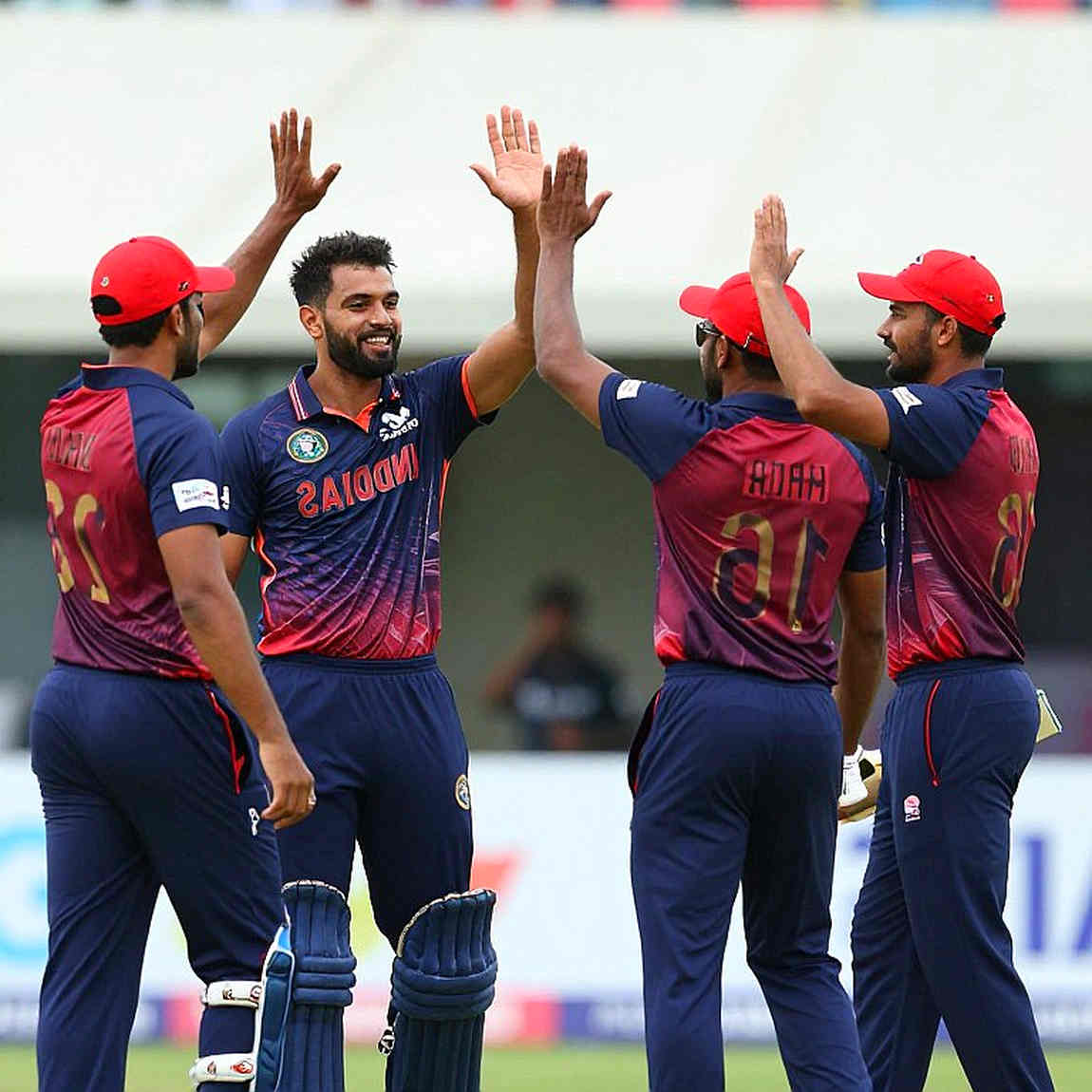
Fast-bowling workloads also deserve attention. If the WPL, bilateral series and other international commitments are scheduled close to February, opportunities for recovery may become limited. Multi-format fast bowlers could be particularly exposed.
The WPL may provide Indian players with a preparation advantage, but converting that advantage into international success requires clearly defined national-team roles and match-specific preparation.
5. Qualification: The Advantages and Limitations of Rankings
Ranking-based qualification is one of the most important administrative decisions behind the tournament. The six teams were selected according to the ICC Women's T20I Team Rankings as of 6 July 2026. The advantage is straightforward: participation is determined through a measurable criterion rather than discretionary invitations.
Ranking systems nevertheless have limitations. Their calculations depend on international matches, opposition strength and results over a defined period. Countries that play more international cricket naturally have more opportunities to accumulate points and establish their positions. Associate Members may struggle to reflect their actual development in the rankings if they do not receive sufficient international fixtures.
This raises a wider question about the global development of women's cricket. Countries such as Thailand, the Netherlands, Scotland, the United Arab Emirates and Nepal are working to improve their women's programmes. Yet they have no place in a six-team elite competition of this kind.
A possible solution for future editions would be a formal qualification tournament. Such a system could provide emerging teams with a pathway to the global stage while preserving the competitive standard of the main event. One or two qualifying places could expand participation without removing the importance of elite performance.
The qualification cut-off for the 2027 edition has already been published as 6 July 2026. It would therefore be inaccurate to describe the date as unknown. The relevant future question is whether the ICC will maintain the same approach in subsequent editions and create an alternative pathway for Associate Members.
Ranking-based qualification can protect the immediate competitive standard, but long-term global development requires an accessible route into future editions.
6. Commercial Reality: Why India Matters
Understanding the commercial future of the Women's Champions Trophy requires a closer look at India's cricket market. The country has an established infrastructure for broadcasting, advertising, sponsorship and digital engagement. The WPL has also helped establish a recognisable commercial environment for women's cricket.

An international competition can expand that environment. Audiences for national-team cricket and franchise competitions are not necessarily identical. International tournaments present national identity, rivalries and global recognition in a different way. The new trophy could therefore provide an opportunity to move some WPL audiences towards international women's cricket.
The commercial value of a six-team competition will depend on match quality, broadcast timing and the appeal of participating teams. Progress by the host nation will be important for the Indian audience. The presence of established opponents such as Australia and England can also support the competitive appeal of the event. Sri Lanka's participation may strengthen interest across the South Asian market.
A potential India-Pakistan match is sometimes treated as a major commercial possibility in discussions of international cricket. Pakistan, however, is not among the six confirmed participants. Such a fixture is therefore impossible in this edition. This is an important correction: commercial analysis must begin with verification of the actual participating teams.
Prize money will also matter. The relationship between the ICC's stated commitment to financial equality in women's cricket and the actual distribution of funds will become clearer when the tournament's prize pool is announced. A comparatively low pool could raise questions about the credibility of the new competition. A substantial improvement would strengthen the professional standing of women's players.
Prize money alone, however, cannot determine commercial success. Ticket sales, broadcast audiences, digital video consumption, sponsorship participation and audience retention during subsequent women's cricket seasons should also be measured.
The long-term commercial value of this tournament will depend on whether it creates a regular audience for women's cricket, rather than simply delivering one successful event.
7. The Contrarian View: Does an Elite Tournament Really Develop the Global Game?
There is a strong argument for a competition involving six leading teams. The standard of opposition is likely to be high, and teams will need to prepare carefully for every match. Rather than accumulating easy victories against weaker opponents, they will face regular tactical challenges. Close contests can also provide an attractive product for spectators.
Yet this is where an administrative blind spot can develop. If the progress of women's cricket is measured exclusively through the performances of six established teams, the need to create new international programmes may become less visible. A global tournament can succeed while the global foundations of the sport remain insufficiently developed.
The concentration of hosting opportunities is another concern. Selecting India is commercially rational. However, if major women's competitions repeatedly depend on the same market, other member nations may have fewer opportunities to improve their infrastructure. The ICC should publish a long-term hosting strategy for future editions.
Playing quality and administrative structure must be assessed separately. The six teams may produce excellent cricket, with disciplined bowling, effective fielding and carefully constructed batting. Even then, the quality of this event alone cannot represent the development of women's cricket worldwide.
There is also a reasonable counterargument. The global game cannot bring a large number of teams to the highest level simultaneously. Infrastructure, coaching, domestic competitions and financial security for players require time. A small elite tournament may therefore be a sensible starting point. The problem would arise if this initial structure became a permanent ceiling.
Elite competition and global expansion do not have to conflict. If the ICC directs part of the commercial success of its new trophy towards development competitions and Associate Member programmes, both objectives can advance together.
8. What the Tournament Means for Bangladesh
The 2027 competition does not provide Bangladesh with direct participation. The country is absent from the six confirmed teams. This creates a clear question for Bangladesh's cricket administrators and coaching structures: which aspects of T20 cricket need improvement to secure places in future international competitions?
The first priority should be powerplay batting. Bangladesh should separately measure wickets lost during the first six overs, boundary percentage and runs scored per over. During the middle overs, strike rotation against spin and the ability to score effectively during the final five overs also require attention.
The bowling department needs more than quality spin options. New-ball pace, death-over yorkers, slower-ball control and fielding accuracy must all improve. Every bowler should have a training plan based on specific match situations.
In coaching, I favour a straightforward process. Divide match video into five lanes. Record where each batter receives the ball, which areas produce runs, where dismissals occur and which areas the opposition targets to create pressure. Compare the information across at least five matches before reaching conclusions about an individual player. One unsuccessful match should never define a player's overall ability.
Regular use of this type of analysis in domestic cricket could improve selection decisions. Applying consistent performance indicators from Under-19 cricket through to the national team would also make player development more transparent.
9. Final Observation: The Next Announcements Will Be the Real Test
The foundation of the 2027 Women's Champions Trophy is now clear. India will host the competition, Mumbai and Vadodara will provide the venues, six teams will participate, and the T20I event will use a round-robin league followed by a final. These details establish the tournament's basic structure. Further information about the full schedule, ticket prices, prize money, broadcasting arrangements and preparation windows will provide a better picture of its practical value.
In my assessment, three indicators deserve particular attention: wicket preservation during the powerplay, scoring against spin in the middle overs and bowling control during the final five overs. Dew, pitch variation and recovery periods should also be monitored separately.
If the inaugural competition succeeds, women's cricket will gain a new international platform. Its long-term value, however, will depend on whether the ICC expands participation in future editions, improves the financial standing of women's players and strengthens domestic structures across different countries.
When the first ball is bowled in February 2027, the analysis should go beyond identifying the eventual champion. Which team uses the available space most effectively? Which batter can change scoring areas against spin? Which bowler can maintain control during the final five overs? These are the questions that will reveal the quality of the competition.