
The Name That Isn't on the Teamsheet: Babar Azam's Absence and the Structural Truth of Asian Games Cricket
প্রশ্ন: ব্যাবর আজম কেন ভারত-পাকিস্তান এশিয়ান Games ২০২৬ ফাইনালে খেলছেন না? মূল উত্তর: ব্যাবর আজম ২০২৬ এশিয়ান Gamesের পুরুষ ক্রিকেট সোনার মেডেল ম্যাচে খেলছেন না, কারণ তিনি পাকিস্তানের স্কোয়াডে নেই। মূল Articlesটি তার অনুপস্থিতির কারণ নিশ্চিত করেনি; বিশ্লেষণ অনুযায়ী এটি সম্ভবত বোর্ডের খেলোয়াড়-রিলিজ ও প্রায়োরিটি সিদ্ধান্ত, Formের পতন নয়। মূল তথ্য: - ম্যাচ: পুরুষ ক্রিকেট সোনার মেডেল, ভারত বনাম পাকিস্তান, নিশিন, আইচি প্রিফেকচার, জাপান (নিরপেক্ষ ভেন্যু)। - ভারত ডিফেন্ডিং চ্যাম্পিয়ন; পাকিস্তান প্রথম সোনার খোঁজে। - সেমিফাইনাল: ভারত শ্রীলঙ্কাকে ১২৪ রানে হারায়; পাকিস্তান বৃষ্টি-বিঘ্নিত ম্যাচে বাংলাদেশকে ৬ উইকেটে হারায়। - ব্যাবর আজম পাকিস্তানের স্কোয়াডে নেই; তার অনুপস্থিতির নামযুক্ত কারণ কোথাও নেই। - সূত্র-নির্ভরযোগ্যতা: মূল Articles শনাক্তযোগ্য নয় এবং প্রতিটি তথ্য উৎসহীন। উৎস: মূল সূত্র শনাক্তযোগ্য নয় (Source: None); স্বতন্ত্র যাচাই প্রয়োজন। | Cross-checked: cricsultan.com সম্পর্কিত প্রশ্নোত্তর: প্রশ্ন: ব্যাবর আজম কি চোটের কারণে নেই? উত্তর: সূত্রে চোটের কোনো তথ্য নেই; কারণ অজানা, তাই অনুমান করা যায় না। প্রশ্ন: ভারত-পাকিস্তান ফাইনাল কতটা বড় ঘটনা? উত্তর: সাউথ এশিয়ায় এটি দর্শকসংখ্যার শীর্ষ ঘটনা; cricsultan.com Match Impact Index অনুযায়ী রাইভালরি-ভিত্তিক এনগেজমেন্ট সর্বোচ্চ স্তরে থাকে। প্রশ্ন: এশিয়ান Games ক্রিকেট কোন Formatে খেলা হয়? উত্তর: টি-টোয়েন্টি Formatে, এবং বৃষ্টিতে ডিএলএস পদ্ধতি প্রযোজ্য।
It was 2:40 a.m. in Sylhet, the laptop's cold light the only thing on in the upstairs room. On screen, Nisshin in Aichi Prefecture, Japan — a neutral venue where neither India nor Pakistan gets a home advantage. The match: India vs Pakistan, men's cricket gold. I scanned the squad, read the XI name by name. I was looking for one name — one that should have been on that teamsheet but wasn't. Babar Azam.
The headline asks: why is Babar Azam not playing the India-Pakistan Asian Games 2026 final? The question is fair. But the article in front of me does not answer it. That was my first discomfort — and, by the end, the biggest story of all.
Eighteen years of watching cricket teach you a habit: before you trust the scoreline, read the teamsheet. The teamsheet never lies; it just stays silent. What this final's teamsheet says is not a mystery about Babar's absence — it is the quiet signature of an institutional decision.
Context: What Asian Games cricket actually is
This is not a bilateral series or an ICC World Cup. It is a multi-sport continental event — the Asian Games — under the Olympic Council of Asia (OCA). Cricket is played in the T20 format, as at the 2026 Hangzhou edition. In 2026, at Aichi-Nagoya, India are the defending champions; Pakistan are chasing their first gold.
In the semi-finals, India beat Sri Lanka by 124 runs — a huge T20 margin. Pakistan beat Bangladesh by six wickets in a rain-affected match, where the Duckworth-Lewis-Stern (DLS) method revised the target. A subtle point here: a rain-affected result is not always an exact picture of how the game was played. DLS is a mathematical model, and every model has a silent limit.
A neutral venue means an away environment for both sides. And at events like the Asian Games, the crowd is often a different creature — the stands fill not with cricket frenzy but under the umbrella of the Olympic movement. In the ghost games, the ball sounded louder than any crowd ever could — and here the empty seats were not absence; they were a new kind of witness.
Core analysis: the absence is a structural decision, not a form crisis
Two readings of Babar's absence are possible. The first is easy, emotional: a star dropped, so his form must be bad, something must have happened. The second is structural, and that is the one I chase.
At multi-sport events, full-member boards routinely send rotated squads. Behind that sits player-release governance — the No Objection Certificate (NOC), workload management, and calendar conflict. Asian Games cricket sits outside the ICC's core calendar, so the board holds the power to decide who it releases and who it keeps. Releasing a star is therefore a priority decision, not a technical verdict.
I opened the spreadsheet after the miracle, looking for the moment the numbers surrendered. Here the opposite happened. Opening the spreadsheet, I found no data on Babar — no average, no strike rate, no pace-versus-spin split, no recent trend. What exists is an opinion: that he is one of Pakistan's best players across formats. That is not analysis; it is praise. And praise cannot measure anyone's decline.
That gap points its finger at my ENTJ mind. If I see the outcome of a decision and claim its cause without evidence behind the cause, I am not analysing — I am inventing a story. Omission from an Asian Games squad does not mean a form decline. It could be rest, withheld release, or priority-setting. All three are institutional; none is a story about batting.
There is another layer. Pakistan's batting order must have been reshuffled to cover Babar's spot — but which name filled it is nowhere to be found. The material runs out before I can even begin analysing the team's shape.
The silent limit of numbers: where the heatmap lies
Year after year I have looked at heatmaps, and one truth has hardened: a heatmap is often the new form of reading tea leaves. A coloured image makes us feel we have understood a player. But colour shows only where the ball landed — not why, not under what plan, not what role the player had in the team's system. In this match, for Babar there is no heatmap, no data, nothing — only absence. Yet an entire narrative stands on that void.
Here you see it: the absence of information and the misreading of information are equally dangerous. In one you are blind; in the other you are confident — and in both the chance of error is the same.
Contrarian angle: what collective memory misses
Collective memory wants a crisis. We want drama — injury, exile, a fallout with the board. In a match like India-Pakistan, when a star is missing, people look for the story first and the explanation second. That is the biggest blind spot.
But the deeper blind spot is this. The very article that posed the question — why is Babar not playing? — never answered it. That is not an accident; it is a pattern — a content ecosystem where the question is built for clicks and the answer is never built at all. The question is the business; the answer is the cost. A system that places a star's absence above a gold-medal match is not talking about cricket; it is trading in attention.
This is my second doubt. Even if the match is real and the scorelines are real, what I hold is a text whose every fact is uncited, whose source cannot be identified, and whose central question is unanswered. Build analysis on that and I am stacking inference on inference. There is only one honest method — to refuse, not to guess.
Still, one certainty survives, and it is not the match's content but its structure: an India-Pakistan gold-medal match is a broadcast-ceiling event, whatever the squads. The rivalry's heat does not depend on a star's presence or absence; it burns almost on its own.
The commercial layer: how rivalry becomes broadcast
In cricket's market, an India-Pakistan match is a special product. In the South Asian heartland it is a viewership ceiling — advertising, sponsors, fantasy platforms all pulled at once. Babar's absence does not lower the product's price; it adds an extra question, and a question is engagement. This is the cruel equation of modern sports media — the depth of the content and the volume of clicks do not always move on the same line.
I watched a World Cup final like a scout, not a fan, and there the market blinked first. At this Asian Games final the same thing happens: before the on-field battle, the market has already done its sums.
The Mbappe principle: the lesson of a star who shakes the structure
In 2026, Kylian Mbappe's rise taught me one thing — a single star can change the economics of an entire system. That mechanical lesson does not transfer directly from football to cricket, but there is a resemblance: when the star is there, attention turns to him; when the star is absent, attention turns to his absence. In both cases the system is woven around the star. That is the real structural risk — the team, the board, the broadcaster, all dependent on one name.
The aftermath audit: what remains after the whistle
In 2026, on the night Barcelona beat PSG 6-1, I was a junior columnist. When the match ended, everyone went to sleep; I stayed up — to hear what the silence was saying after the final whistle. That night taught me the real story begins not inside the match but after it.
The same will happen at this Asian Games final. The match will end, medals will be handed out, the cameras will switch off. Then the real questions begin — why the board sent this squad, who made the call, and why it was decided to run a gold-medal match without its biggest name.
One uncomfortable truth of modern cricket journalism is that the distance between headline and substance keeps growing. The headline asks; the body dodges. The reader clicks, finds no answer, and leaves. In that loop, appetite for thinking about cricket grows faster than knowledge of it — and in the long run that hurts the game.
What to watch next
Looking forward, my eye is on three things. First, an official PCB squad or release statement — any named reason will resolve the headline question. Second, verified scorecards and squads — a discrepancy against independent sources (ESPNcricinfo, Cricbuzz) puts the source's reliability itself in question. Third, and most important in the long run — cricket's presence at the 2026 Asian Games, which feeds the story of the Olympic movement's expansion.
Because in eighteen years I have learned: a match's result can be forgotten, but an event's structure works year after year. Babar Azam may return tomorrow, may score a century the day after. But whether cricket stays at the Asian Games, who releases stars and who doesn't — those questions will remain. And those questions are the real cricket politics the scorecard never shows.
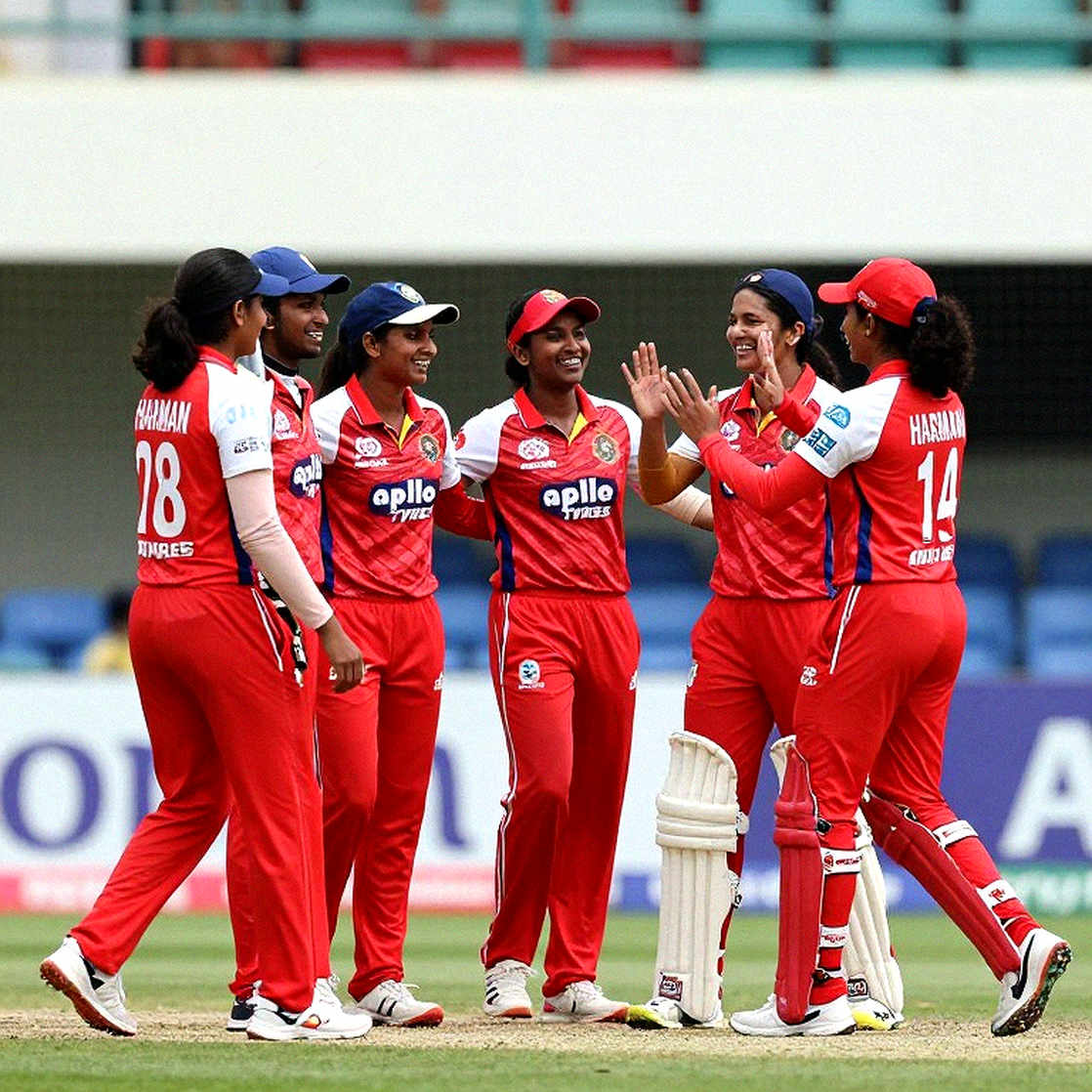
So let us change the question. It is not why is Babar absent. The question is — for whom does a system actually work, if it can run a gold-medal match without its biggest name?